
Lithuanian traditional foods
Čenakai
Čenakai are a meat and vegetable stew cooked in individual pots. This page follows a specific contemporary Kamado Bono version with pork and white beans, cooked over indirect heat in a barbecue.
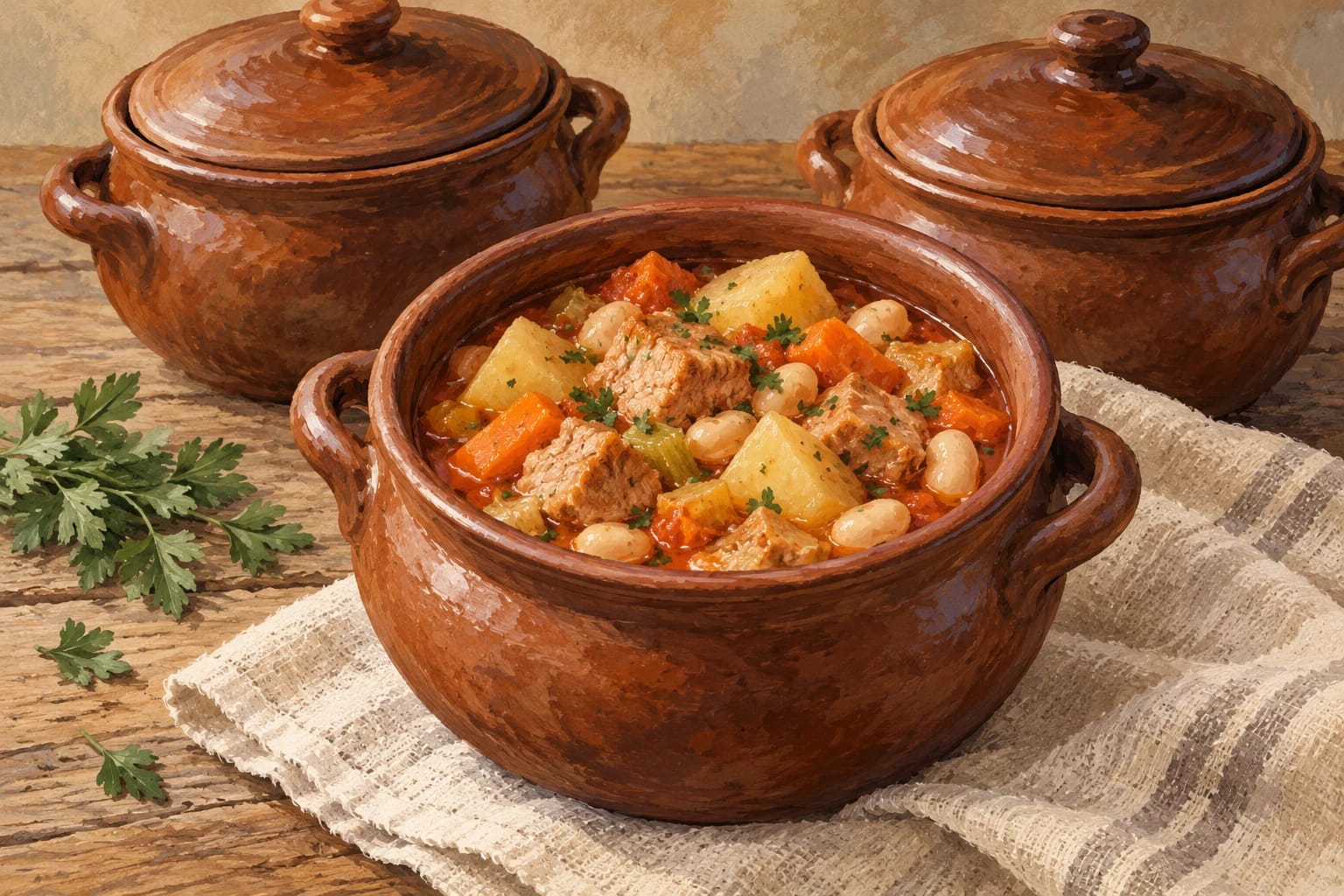
a contemporary recipe published in Lithuania
Recipe
Barbecue čenakai based on Kamado Bono
Quantities and heat settings come from the public Kamado Bono recipe; the instructions are written afresh. Lietuva.love has not kitchen-tested it.
Ingredients
Method
- Dice the pork, brown it and season with salt and pepper.
- Cut the potatoes, carrots and celery; slice the onions into rings and chop the garlic.
- Divide the meat, all vegetables, beans and parsley between the oiled pots. Add seasonings and bay leaves.
- Give each pot 50 g tomato sauce and enough water to barely cover the ingredients.
- Set up indirect barbecue heat with a deflector and a baking stone between the coals and pots, as in the source method.
- Cook at 180–200 °C for approximately 1.5–2 hours, until the meat and vegetables are tender.
Notes
The source lists tomato sauce among the ingredients but calls it paste in one instruction. This page consistently follows the ingredient list: 200 g sauce.
Total preparation time is not established: 1.5–2 hours describes cooking only.
Food and heritage context
- Category
- Meat dishes
- Type
- pork and vegetable stew cooked in individual pots
- Heritage status
- a contemporary recipe published in Lithuania
- Context
- Čenakai, pork, potatoes, clay pots, indirect heat
Names and variants
Cenakai, Čanachai
Which version of čenakai?
There is no single formula behind every use of the name. Kamado Bono uses pork, vegetables and canned beans; Beata Nicholson’s 2014 version includes pearl barley and dried mushrooms. These are distinct recipes rather than ingredients to combine into an invented universal tradition.
Pots and heat
This version needs four heatproof clay cooking pots and a barbecue set up for indirect heat. The source uses a heat deflector and a baking stone. Follow the pot manufacturer’s heat limits and handling instructions; a decorative mug is unsuitable.
The temperature and duration below apply to this barbecue method. An oven conversion or a single large pot has not been tested for this page.
Questions
Is this an ancient Lithuanian recipe?
It is a contemporary recipe published in Lithuania. Neither its name nor the clay pot establishes an ancient Lithuanian origin.
Are beans essential?
They belong to the selected Kamado Bono version. The other linked recipe uses pearl barley and mushrooms; changing that composition means choosing a different recipe.