- Category
- Farm Buildings
- Type
- Building for storing firewood and fuel
- Context
- Malkinė, firewood shed, roofed shelter, fuel, drying, stove, sauna, farmstead working zone
- Source status
- well attested
Firewood shed, Firewood shelter, Firewood barn
Malkinė, the Woodshed: types and elements
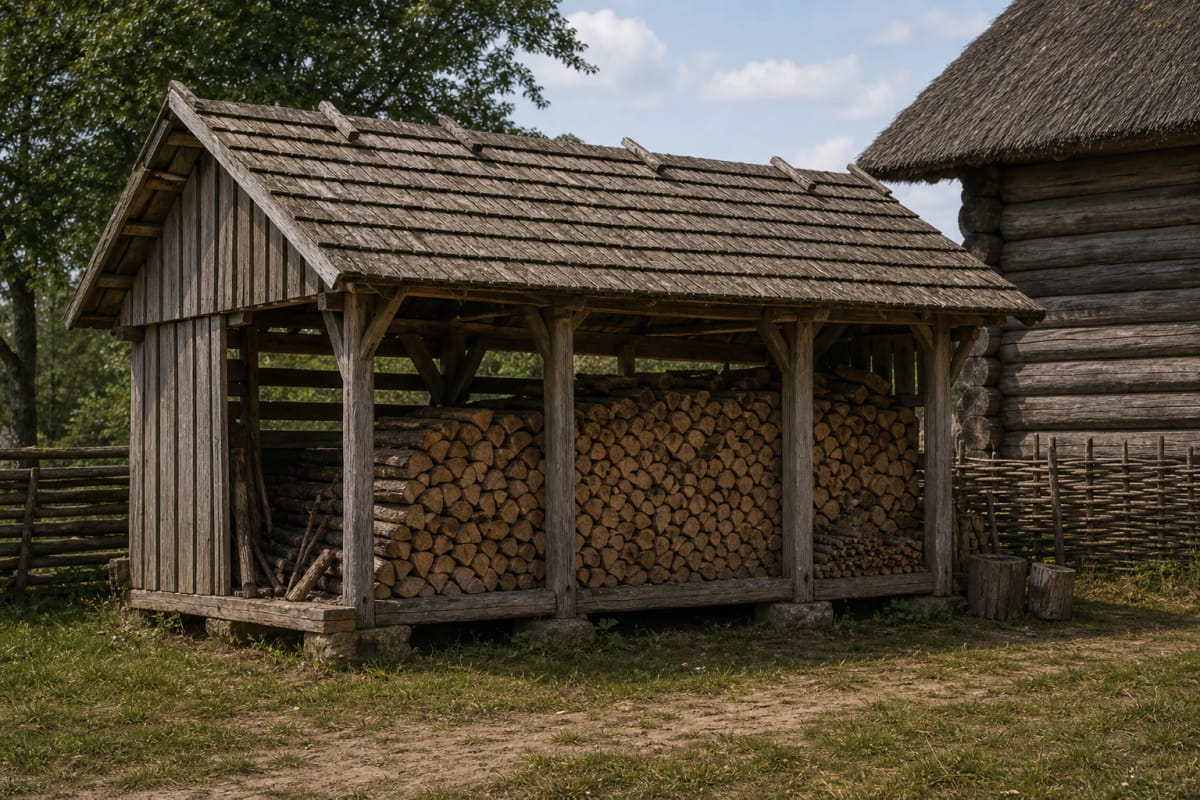
Separate woodshed: A small building for stacking firewood and protecting it from precipitation.
Firewood shelter: A more open structure where roof cover and air movement matter most.
Firewood under an overhang: In smaller farms, firewood could be stored under the overhang of a barn or another building.
What is a malkinė?
A malkinė is a building or shelter for storing firewood. It may look modest, but in a traditional farmstead no stove, pirtis, virenė, bread oven, or other fire installation worked without dry firewood.
Its architecture is highly functional: the roof keeps out rain, while open or spaced walls let air move and the wood dry.
Place in the farmstead
The malkinė belonged to the working zone of the farmstead. It had to be easy to reach, but it did not necessarily stand in the clean yard. It was often combined with other sheds, shelters, or overhangs.
On smaller farms there might be no separate woodshed: wood could be kept under the overhang of the kluonas, beside a barn, or in another dry place.
Form and materials
A malkinė was usually a light wooden structure. It did not need sealed log walls; excessive tightness could actually stop the firewood from drying.
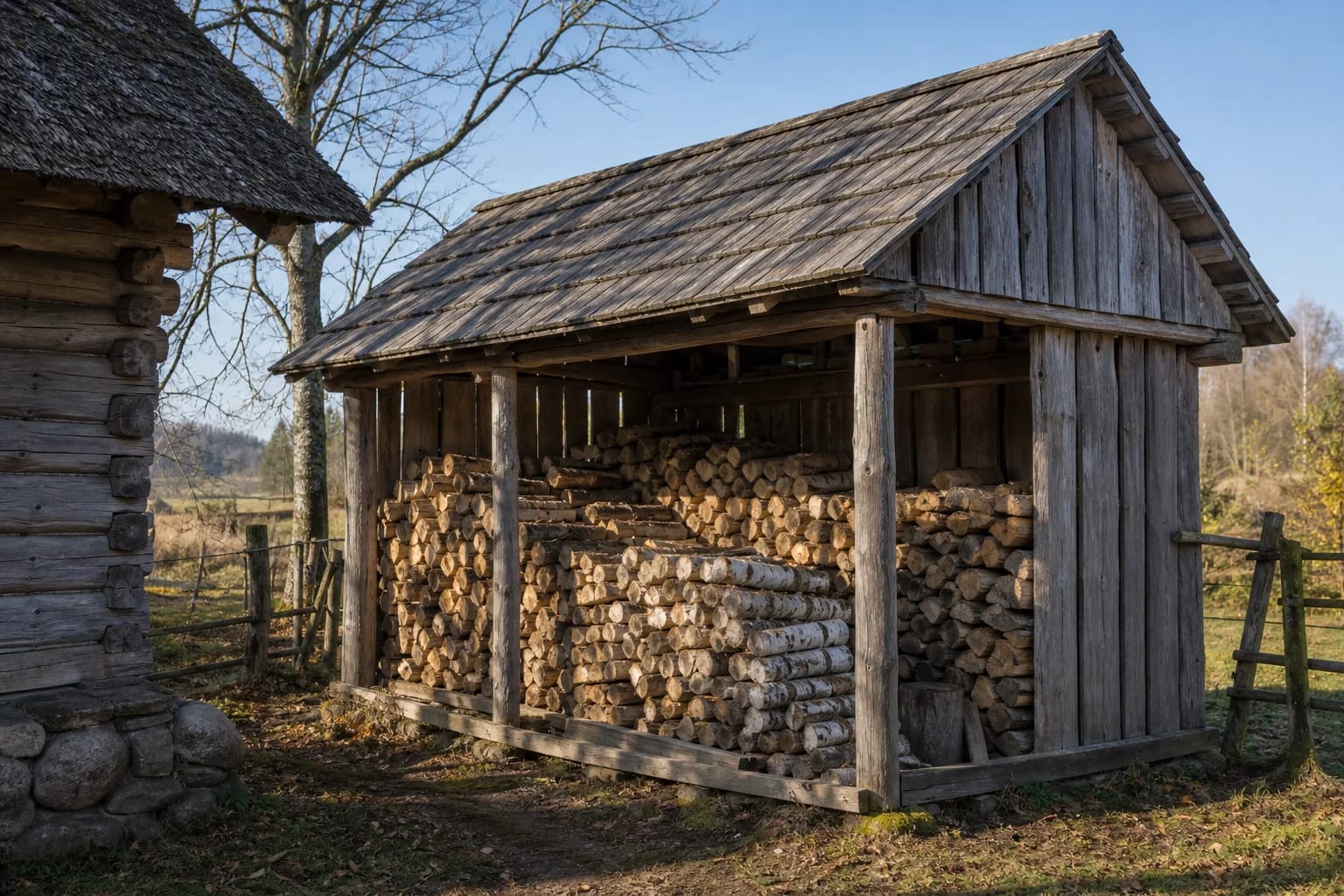
The key elements were a reliable roof and a raised place protected from ground moisture.
Why it matters
The malkinė reveals the invisible infrastructure of the traditional house. A handsome house with a stove cannot function without fuel storage, and a pirtis or bread oven without dry wood remains only a building.
That is why the malkinė deserves its own page as a small but essential part of the energy system of the traditional farmstead.