- Category
- Farm and Household Buildings
- Type
- Bathing, steam, and ritual-cleanliness building
- Context
- Pirtis, priepirtis, steam room, plautai, stone stove, bath whisks, water, Aukštaitija, farmstead edge
- Source status
- well attested
Village pirtis, Smoke pirtis, Steam pirtis
Pirtis, the Lithuanian Sauna: types and elements
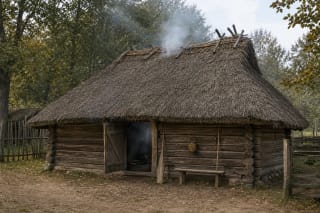
Smoke pirtis: An older pirtis type without a chimney, where smoke is released before bathing.
Pirtis with priepirtis: A type with an unheated changing or resting room and a heated steam room.
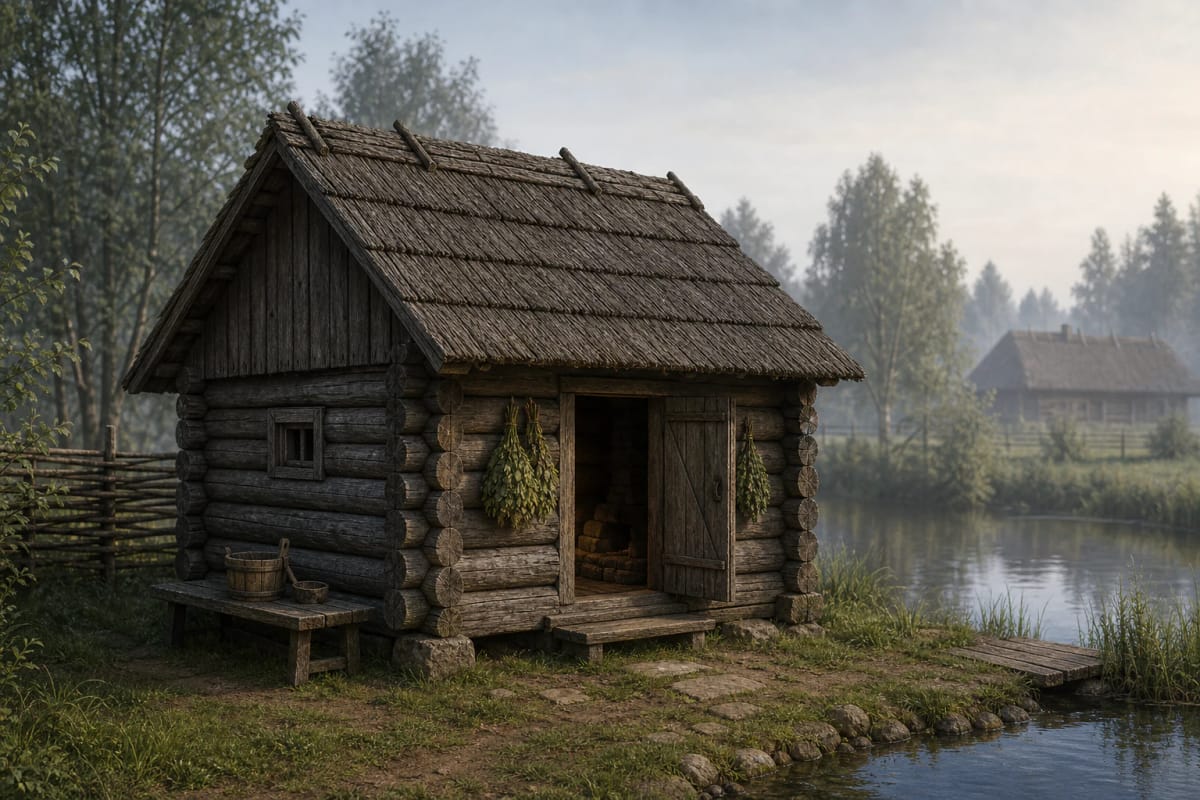
Pirtis by water: A common placement beside a stream, lake, or pond because water was needed.
What is a pirtis?
A pirtis is a traditional bathing and steam building. It mattered for cleanliness, health, childbirth, healing, seasonal work, and communal customs.
Architecturally, the pirtis differs from the dwelling house: it is smaller, wetter, hotter, and often set apart from the main farmstead buildings.
History
Pirtys in Lithuanian territory are mentioned in very old sources. The village pirtis remained an independent farmstead building for a long time, especially in Aukštaitija.
In some regions pirtys declined because of bans, fear of fire, changing hygiene, or new domestic conditions. As a cultural form, however, the pirtis remained highly recognisable.
Plan and equipment
A typical pirtis had a priepirtis and a steam room. The priepirtis was a cooler changing or resting space, while the steam room held the stove, plautai, and water vessels.
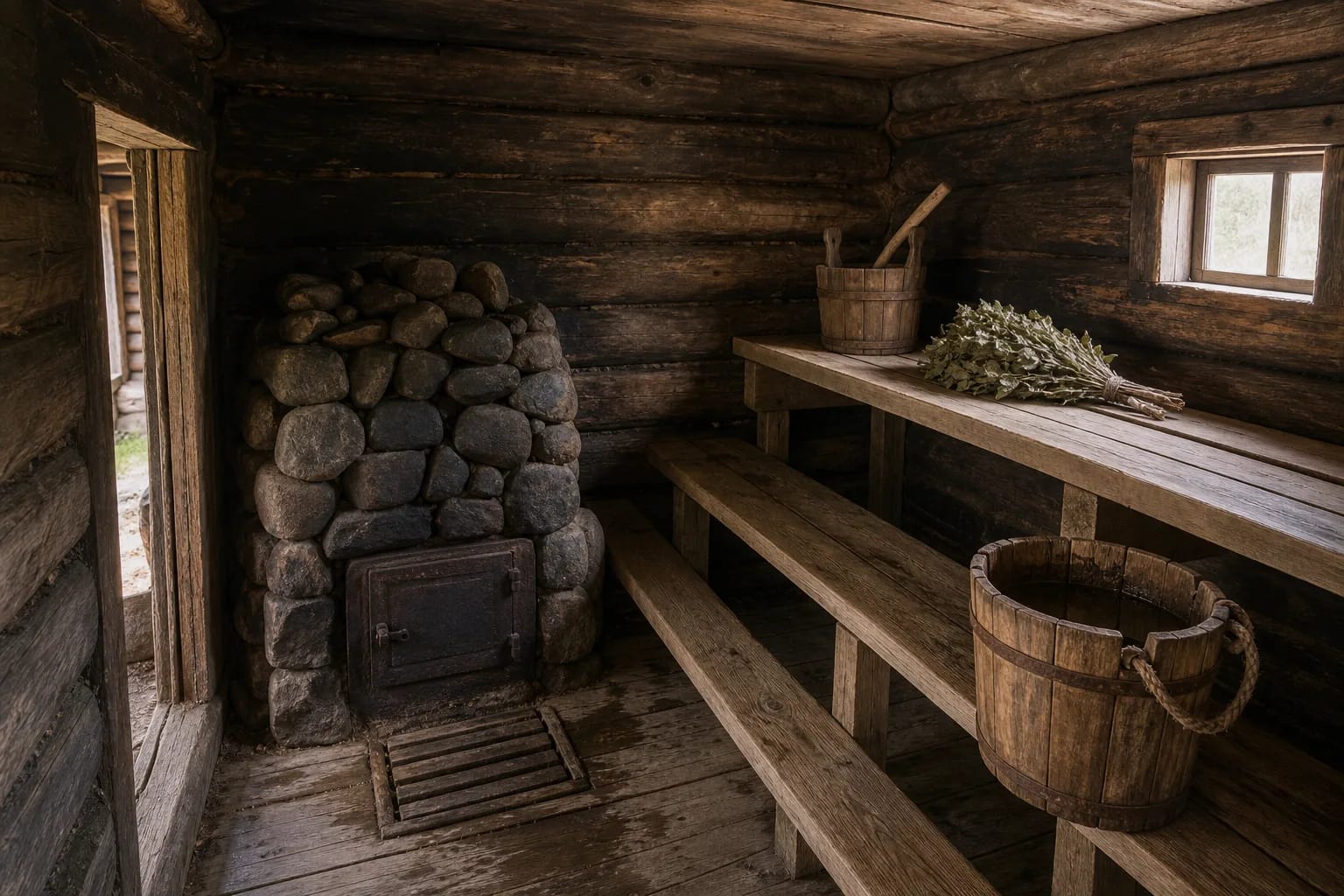
In older pirtys the stove was a heap of stones without a chimney. After heating, smoke was released and the stones held warmth for steam. According to VLE, in the Eastern European type of pirtis a steam room is arranged beside the bathing room: when water is poured on stones heated to about 70 C, the air temperature rises to about 75 C and humidity to 100%; people beat the body with birch or oak bath whisks.
Place in the farmstead
The pirtis was often built apart because of fire risk and moisture. Water was essential, so a convenient place beside a stream, lake, pond, or well was useful.
Its apartness also gave the pirtis symbolic separation: it was a different space from the everyday pirkia or working cowshed.
Heritage value
In an old pirtis, it is important to preserve not only logs but also the stove, plautai, door position, ventilation openings, and relationship with water. Without these details it becomes only a small house.
The pirtis is one of the architectural forms whose function is still understood through the body: heat, steam, water, smell, and darkness are part of its heritage.