- Category
- Dwelling-House Spaces
- Type
- Fire, cooking, and smoke-management space
- Context
- virenė, chimney, Žemaitian troba, hearth, flue, meat smoking, vąšas hook, stove
- Source status
- well attested
Chimney, Virenė, Hearth room, Smoke room
Virenė and Chimney: types and elements
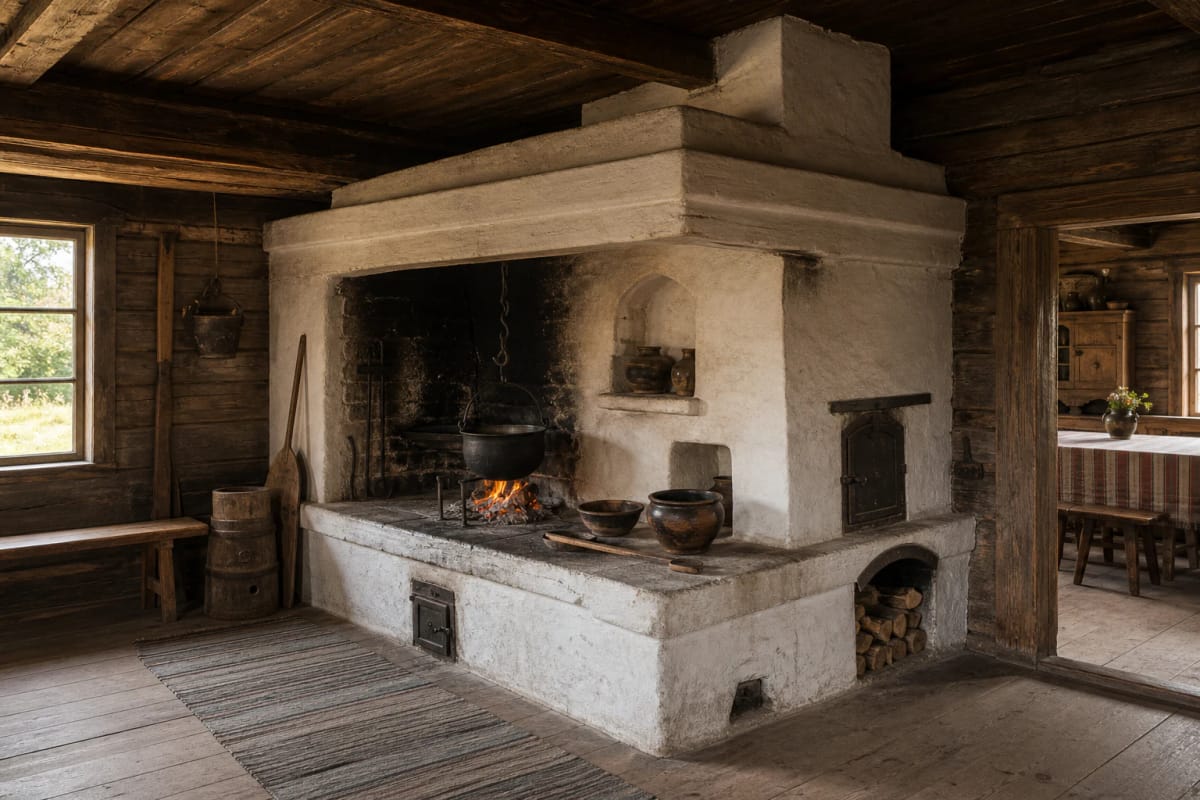
Open virenė: A room with an open hearth where food was cooked and smoke handled before stoves modernized the house.
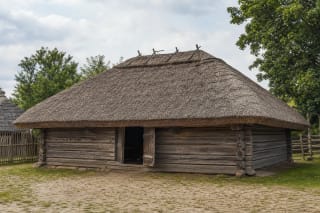
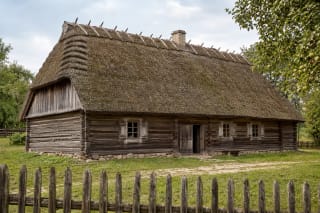
Troba chimney: The middle room of a Žemaitian troba whose walls rose and narrowed into the flue.
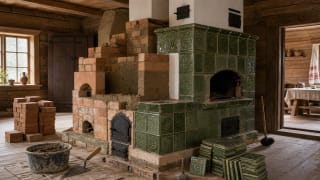
Virenė with stove: A later variant in which the open hearth was replaced by a masonry stove or cooking range.
What are the virenė and chimney?
In the traditional Žemaitian troba, the virenė and chimney were the zone of fire, cooking, and smoke. This was not only a flue, but also a room or system where food was prepared, products were smoked, and fire was controlled.
This space continues the older open-hearth tradition but belongs to a later stage of the house, when smoke began to be directed into a clearer structure. According to VLE, a virenė is a large hearth with a broad masonry hood that passes into a narrowing chimney; in late 16th-century Northern Europe it developed from the open hearth, and food was boiled in a cauldron on a hook, meat was smoked, and firewood dried there.
Center of the Žemaitian troba
In the troba, the chimney was often in the middle part between entrance halls. It separated different house zones and at the same time linked them through the fire function.
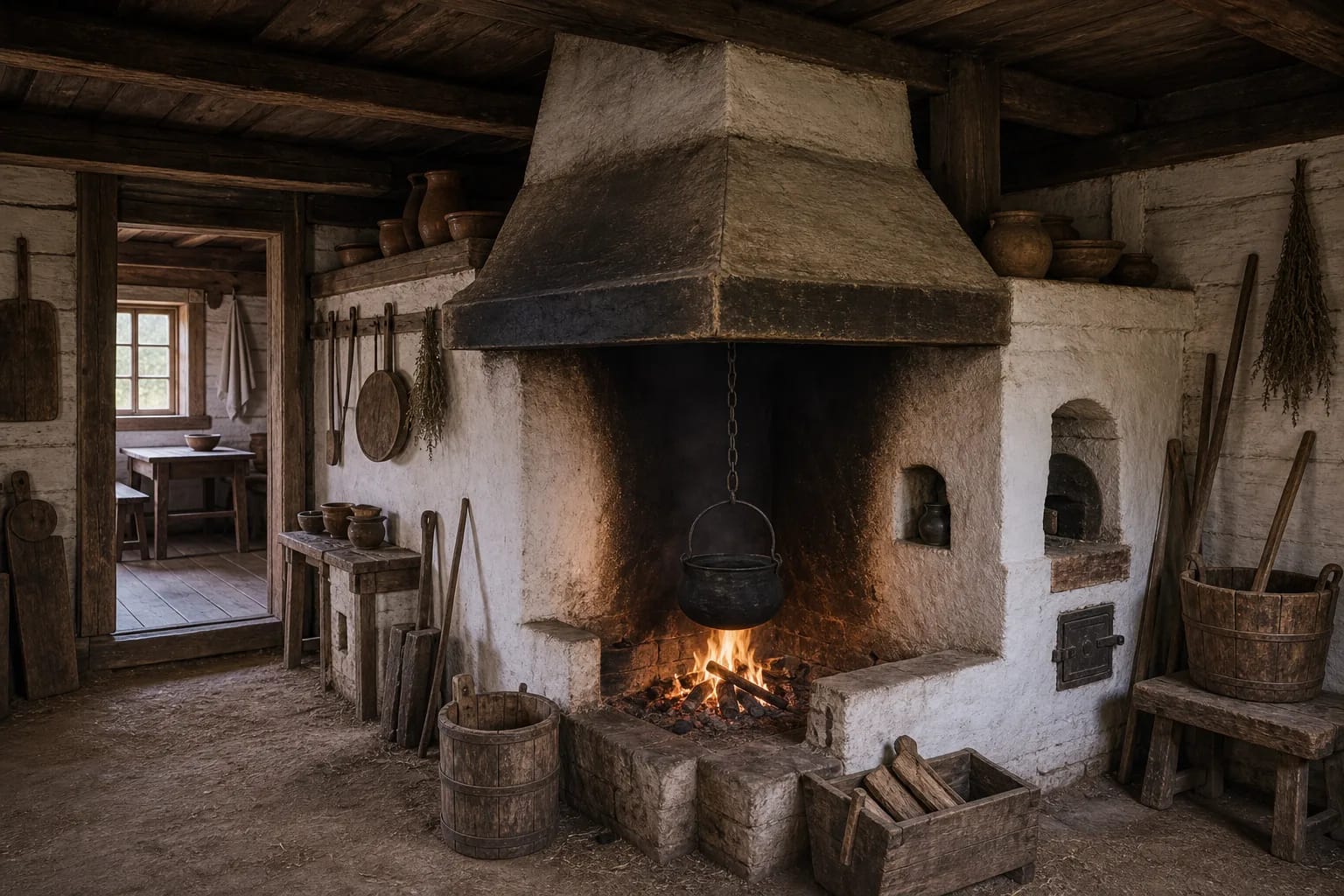
The chimney could have clay-packed or masonry walls that narrowed into the flue. Inside there was a hearth, a cooking place, a hanging cauldron, and meat could be smoked above or on the sides.
From open fire to stove
The earlier fire model was more open: hearth, smoke, hanging cauldron, vąšas hook. In the early 20th century, the open hearth was often replaced by a stove or masonry cooking range, and the virenė room lost part of its old function.
This change is one of the key modernization lines of the traditional house. It changed not only smoke, but also hygiene, warmth, food preparation, interior light, and the use of rooms.
Smoking and storage
The chimney was suitable for smoking meat because smoke and heat could be managed in one vertical system. This again shows how traditional architecture linked food preparation, storage, and heating.
Such a room could also work as a warmer, drier, but smoky zone. It was useful for products that needed smoke rather than a clean room.
How to read it in heritage
When assessing an old troba, the place of the virenė or chimney helps reveal the original plan. Even if the system has been rebuilt, its traces show where the house's fire center stood.
When restoring such a space, it is important not to erase smoke marks, clay, masonry, old openings, and structural traces. They tell as much as fine shutters or roof form.