- Category
- Farm Buildings
- Type
- Bread-baking and drying building
- Context
- ubladė, bread oven, Žemaitija, outdoor kitchen, clay oven, thatch roof, food preparation
- Source status
- regional tradition
Bread oven, Outdoor kitchen, Bread-baking building
Ubladė Bread-Oven House: types and elements
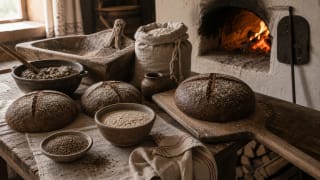
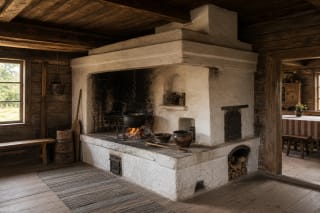
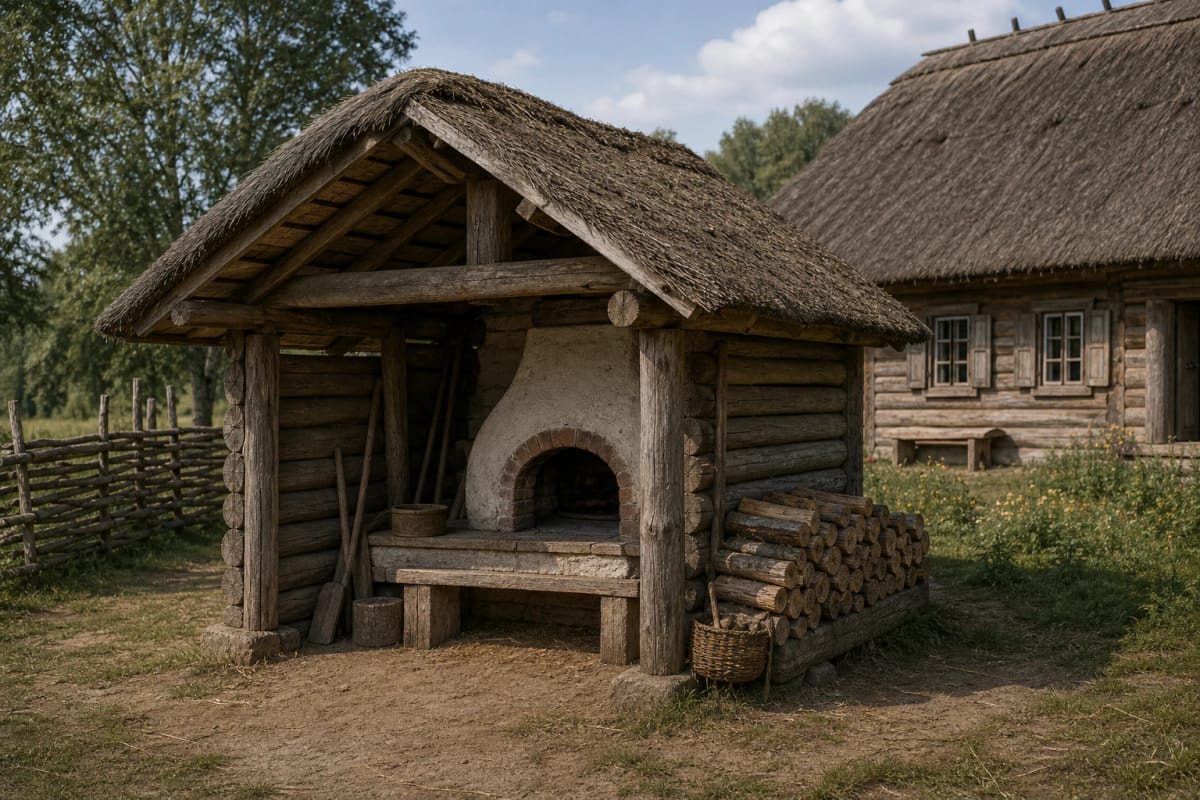
Ubladė with bread oven: A small building whose core is a clay or masonry bread-baking oven.
Ubladė-dryer: A building used not only for bread but also for drying mushrooms, fruit, grain, or other products.
What is an ubladė?
An ubladė is a small Žemaitian building with a bread oven. It allowed bread baking, drying, and some fire-related work to move from the dwelling troba into a separate farm space.
It is an important example of how fire was distributed across several buildings in the traditional homestead: in the troba, sauna, jauja, ubladė, and virenė.
Form
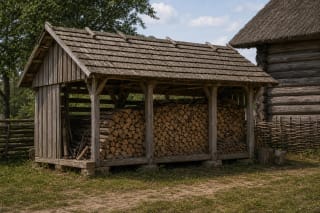
The ubladė was usually small, wooden, and thatch-roofed. At the front it could have a broad roof overhang protecting the door and firewood.
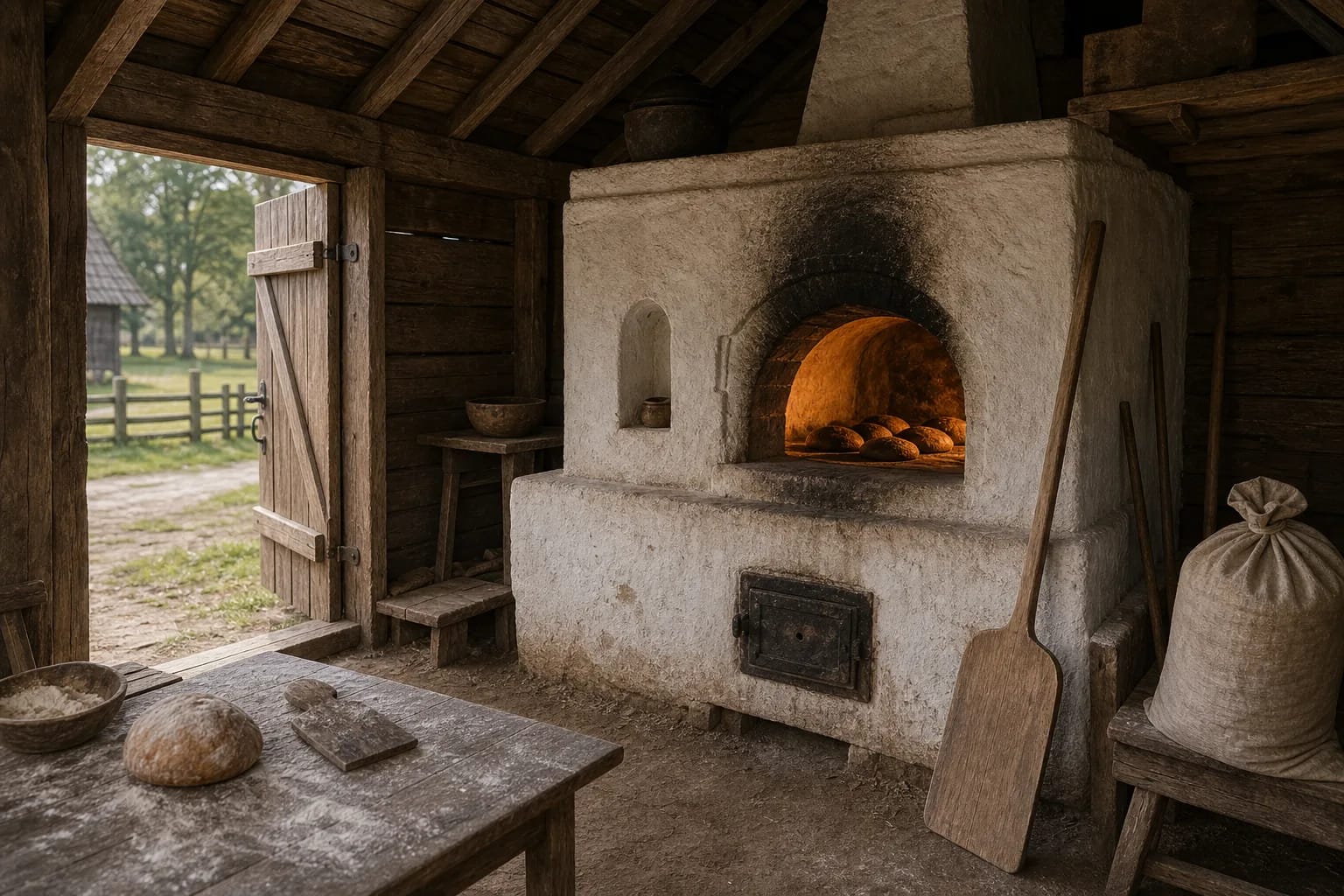
The oven was the main element. To protect the roof from sparks and heat, clay, brushwood, or other protective solutions were used.
Uses
The first function was bread baking. But the ubladė could also be used for drying meat, fish, mushrooms, apples, grain, or other materials. According to VLE, the ubladė is characteristic only of Žemaitija; Simonas Daukantas wrote that in the first half of the 19th century people baked not only bread there but also meat and fish, dried mushrooms, apples, and grain, and even ground with hand querns.
Because of this variety, the ubladė was not only a bakery but also a food-processing building, strongly tied to the season.
Regional meaning
The ubladė is especially associated with Žemaitija. The term and building help identify a regional homestead structure in which food production was divided among several specialized places.
In later development, some ubladė functions could move into outdoor kitchens or modern utility rooms, but the older form remains important to ethnoarchitecture.