- Category
- Homestead Setting
- Type
- Plantings, flower beds, and homestead landscape
- Context
- garden, flower bed, plantings, clean yard, fruit trees, lindens, maples, southernwood, vegetable garden
- Source status
- well attested
Flower bed, Homestead plantings, Fruit-tree orchard, Clean yard
Garden, Flower Bed, and Homestead Plantings: types and elements
Flower bed: A plot of decorative, medicinal, culinary, and ritual plants near the house.
Fruit-tree orchard: A zone of apple, pear, plum, or other fruit trees for food and shade.
Protective plantings: Trees and shrubs protecting the homestead from wind, dust, and views.
Why are plantings part of architecture?
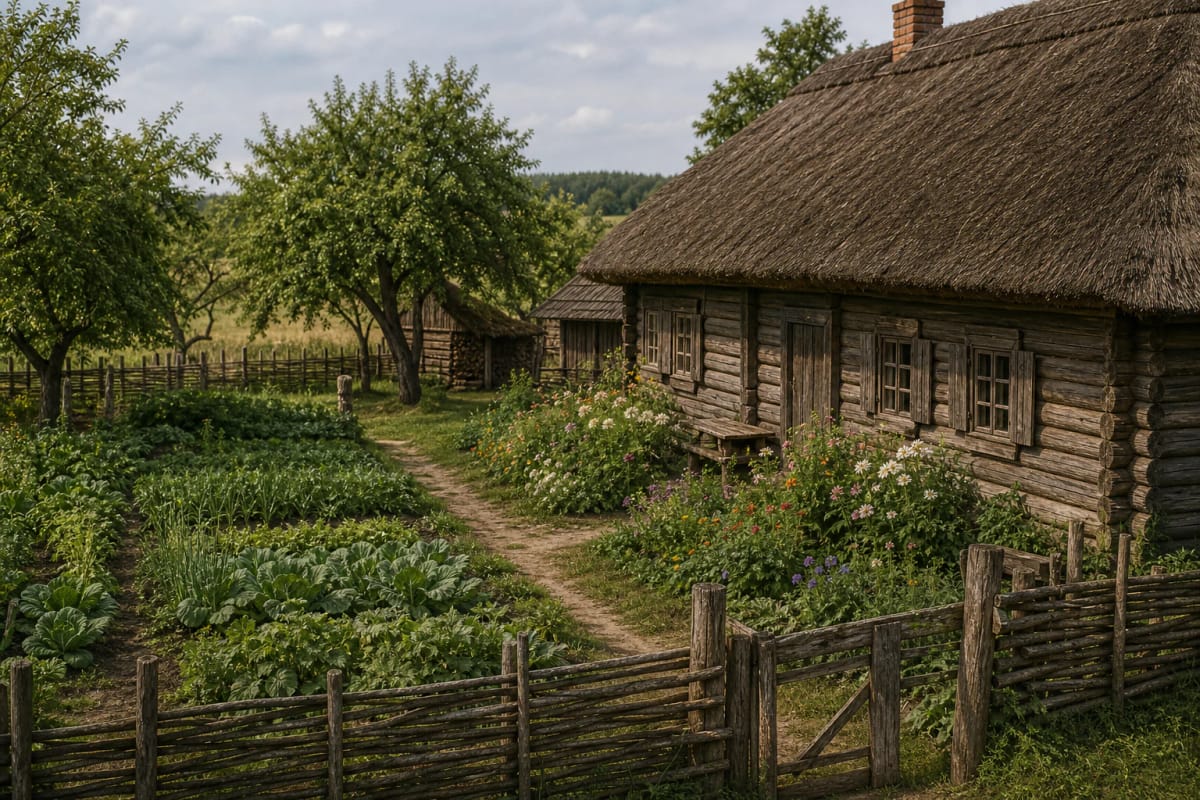
A traditional homestead is not just a set of buildings. The orchard, flower bed, trees, shrubs, vegetable garden, and yard boundaries create the living environment.
Plantings shape the view, microclimate, scents, shade, food, and ritual order of the homestead.
Flower bed
The flower bed was often near the dwelling house, especially in street villages, between the house and the street. Flowers, medicinal plants, spices, and ritual plants grew there.
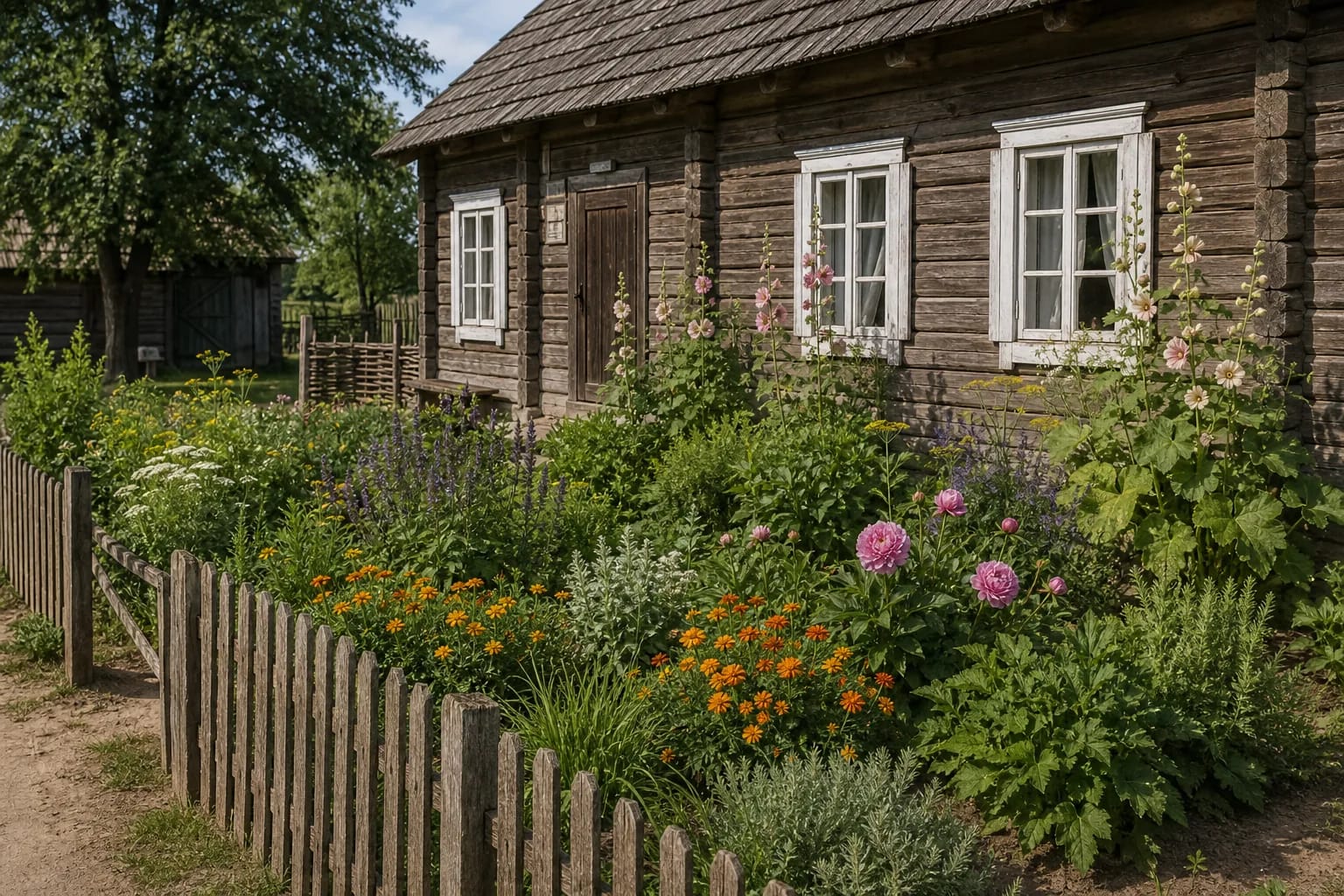
Flower-bed forms changed over time: older round or square beds, later heart, rhombus, triangle, or national-sign forms. According to VLE, regular flower beds have geometric forms such as squares, circles, or triangles, while irregular ones are free-form groups, single flowers, or combinations with shrubs.
Orchard and trees
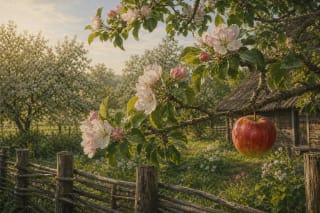
The fruit-tree orchard provided food and shade. Apple trees, pears, plums, cherries, and other fruit trees linked the farm with family memory.
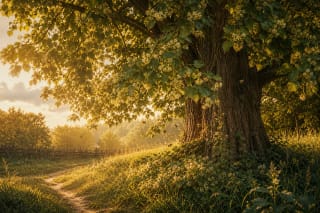
Homesteads planted lindens, maples, birches, rowans, lilacs, mock oranges, guelder roses, southernwood, and other plants. They protected from wind, decorated the place, and marked the home.
Heritage care
Restoring a homestead should not leave only buildings. Without the flower bed, orchard, and trees, the yard becomes too bare and loses traditional scale.
Old trees, fruit-tree locations, flower-bed edges, paths, and the relationship with fences are worth preserving.