- Category
- Dwelling Houses
- Type
- Traditional Žemaitian dwelling house
- Context
- Žemaitija, numas, troba, geroji troba, prastoji troba, entrance hall, virenė, chimney, alkierius
- Source status
- well attested
Žemaitian troba, Geroji troba, Prastoji troba, Traditional Žemaitian house
Troba: the Žemaitian House: types and elements
Single-ended troba: A simpler type where living and utility rooms are concentrated at one end.
Two-ended troba: A more complex Žemaitian house where the central entrance and chimney zone separated different sides of the troba.
Geroji troba: The cleaner, representative room used for guests and family celebrations.
Prastoji troba: The everyday part of the troba, more often used for work and living.
What is a troba?
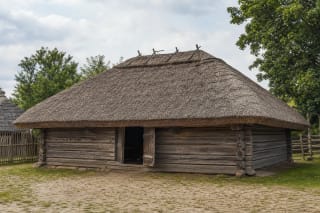
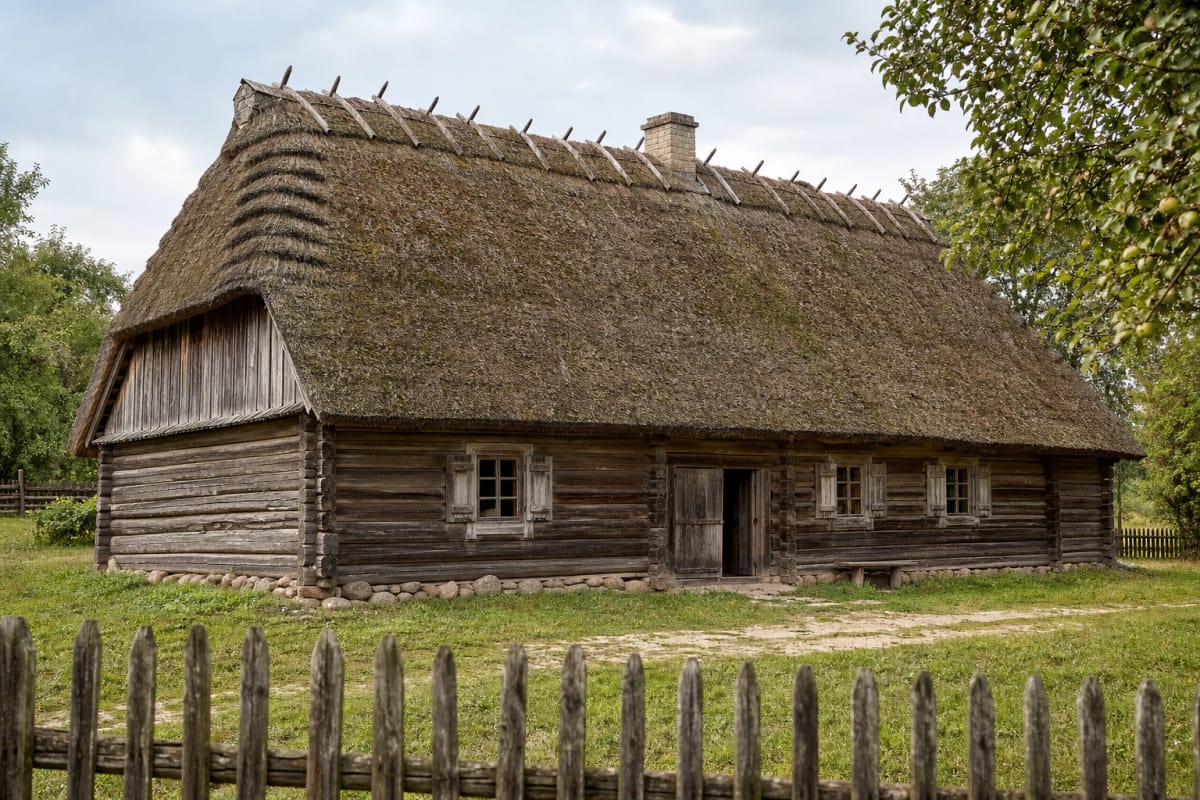
A troba is the traditional Žemaitian dwelling house. It is usually understood as a broad, long log building with a large roof, deep eaves, and a more complex interior plan than earlier one- or two-room dwellings.
The troba was not only a place to live. It ordered the whole daily life of the family and farm: where food was cooked, where people ate, where guests were received, where food was stored, and where owners, children, or hired workers slept.
Origin from the numas
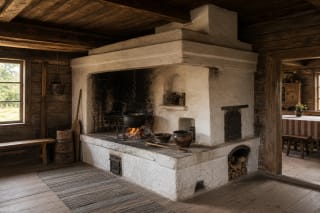
The Žemaitian troba is often explained as a later development from the older numas, a building with an open hearth. As the numas declined as a dwelling, the heated house with stove, entrance halls, chimney, and room system took over living functions.
In the 16th century the troba could still be simpler, a one-room house with a clay chimney. By the 19th century it was often complex: divided by several transverse walls into many rooms, with 5-15 rooms and utility spaces in some farms.
Plan and rooms
The middle of the troba was especially important. It could hold the virenė or chimney, with the prastoji and geroji priemenės nearby. From these transitional spaces one entered living rooms, storage rooms, and alkieriai.
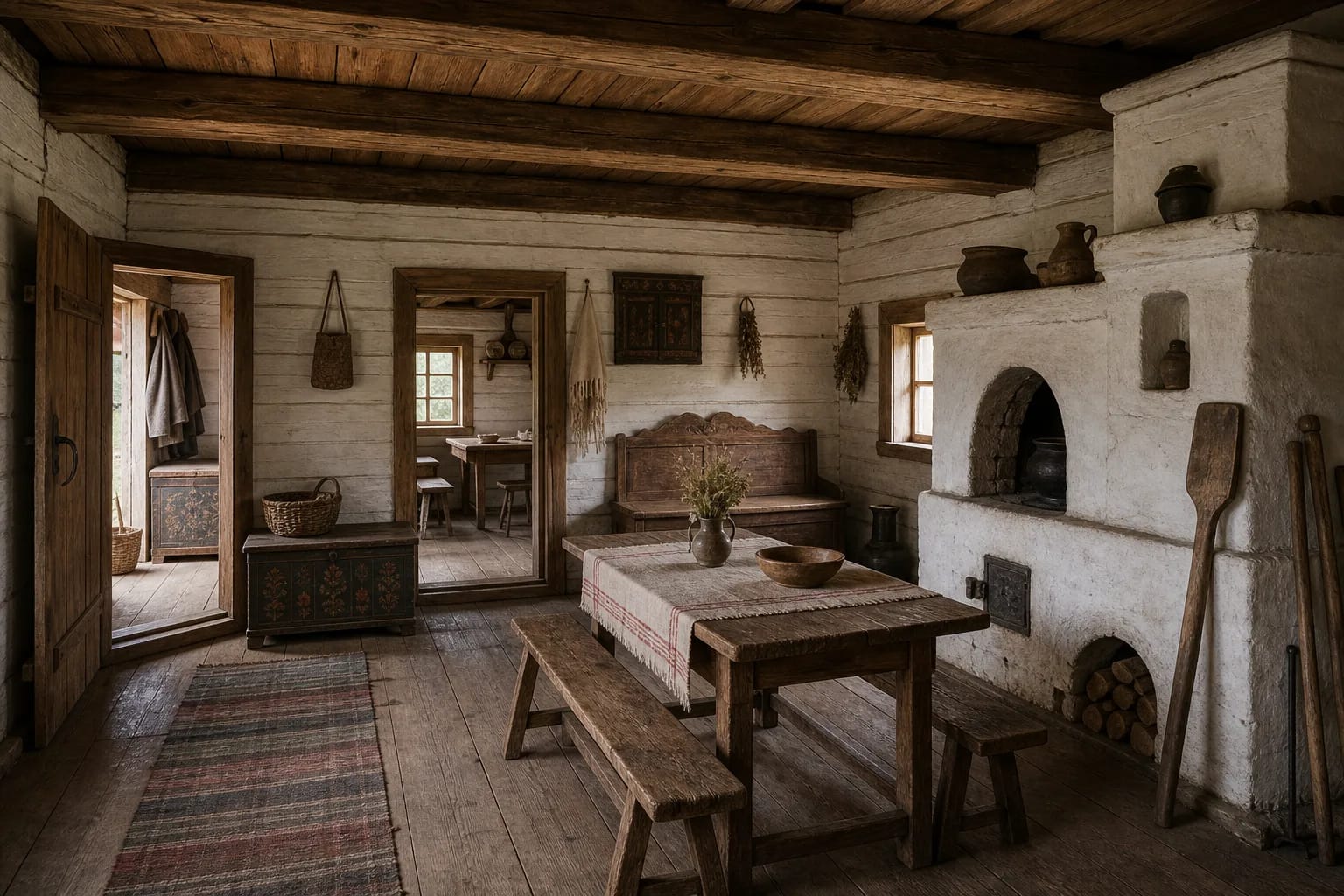
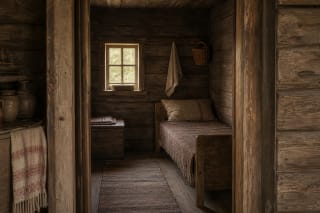
The geroji troba was cleaner and representative, while the prastoji troba was the zone of everyday life, work, and food preparation. Alkieriai served as sleeping rooms, storage rooms, or guest rooms.
Form and building
The traditional troba was log-built, often more massive and broader than the pirkia of southeastern Lithuania. The roof was often half-hipped or hipped, with broad eaves that protected walls from rain and gave the building a horizontal, solid expression. According to VLE, such a roof formed two thirds to three quarters of the building height, and in a 19th-century troba with 5-15, most often 4-12, rooms, up to two thirds were heated.
The exterior decoration of Žemaitian trobos is often restrained. Ornament focuses on window trim, doors, porches, windboards, or structural details, while the general impression remains calm and practical.
How to recognize a Žemaitian troba
A Žemaitian troba is often recognized by its broad volume, large roof, deep eave shadow, and complex interior plan. It stands in the homestead with a svirnas granary, jauja, cattle shed, žardinė, sauna, or other regional buildings.
The term troba is also linguistically important: it does not mean just any house, but a specific model of Žemaitian dwelling architecture. It is therefore worth using more precisely than the general word house.