- Category
- Living Houses
- Type
- Developed pirkia plan type
- Context
- Dvigalė pirkia, family pirkia, priemenė, kamara, seklyčia, nineteenth-century pirkia development, Dzūkija, Aukštaitija
- Source status
- well attested
Two-ended pirkia, Pirkia with seklyčia, Expanded pirkia
Dvigalė Pirkia: types and elements
Three-part pirkia: A house with a family pirkia, middle priemenė, and cleaner seklyčia.
Pirkia with kamara: A type in which a room for food, objects, or sleeping is arranged beside the priemenė.
Pirkia with pirkaitė: A larger-farm variant with an additional smaller heated side room.
What is a dvigalė pirkia?
A dvigalė pirkia is a developed pirkia plan in which the two ends of the house have different functions. One end was more often everyday and heated; the other was cleaner, used for guests, young people, or festive occasions.
This plan shows that the inside of the traditional house became more differentiated. The family no longer lived only in one smoke-filled room: the kamara, seklyčia, and a clearer priemenė zone appeared.
Nineteenth-century development
Dvigalės pirkios spread more widely from the middle of the nineteenth century. This was connected with improving farm conditions, the spread of chimney and stove systems, the need for more rooms, and the importance of a cleaner representative space.
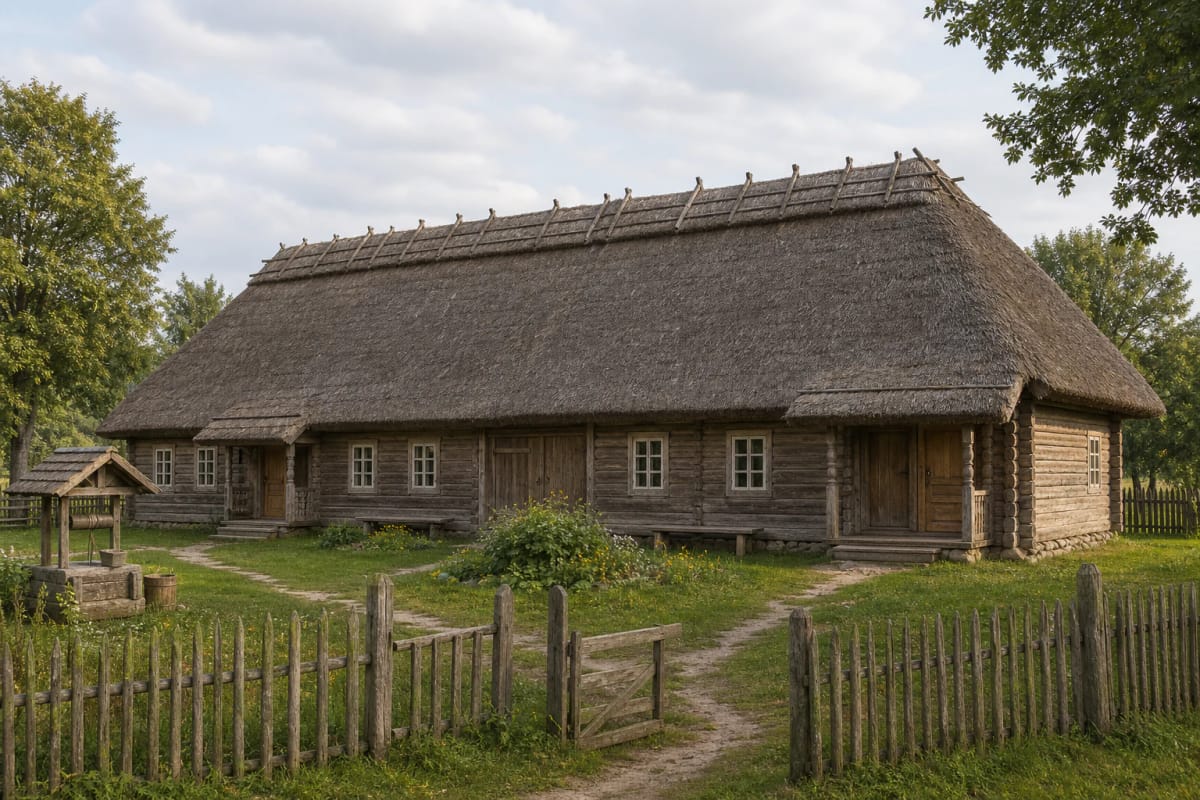
The interior of such pirkios was often divided by two cross walls. These created three main zones: the family pirkia, the priemenė with kamara, and the seklyčia. According to VLE, such dvigalės pirkios usually had 3-6 rooms, while on large farms in the forests of Dzūkija the pirkia plan could become cross-shaped, with stoves at both ends.
Logic of the rooms
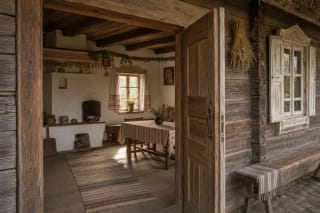
The family pirkia remained the center of daily life. It held the stove, table, benches, beds, and work tools. Here the family ate, worked, warmed themselves, and slept.
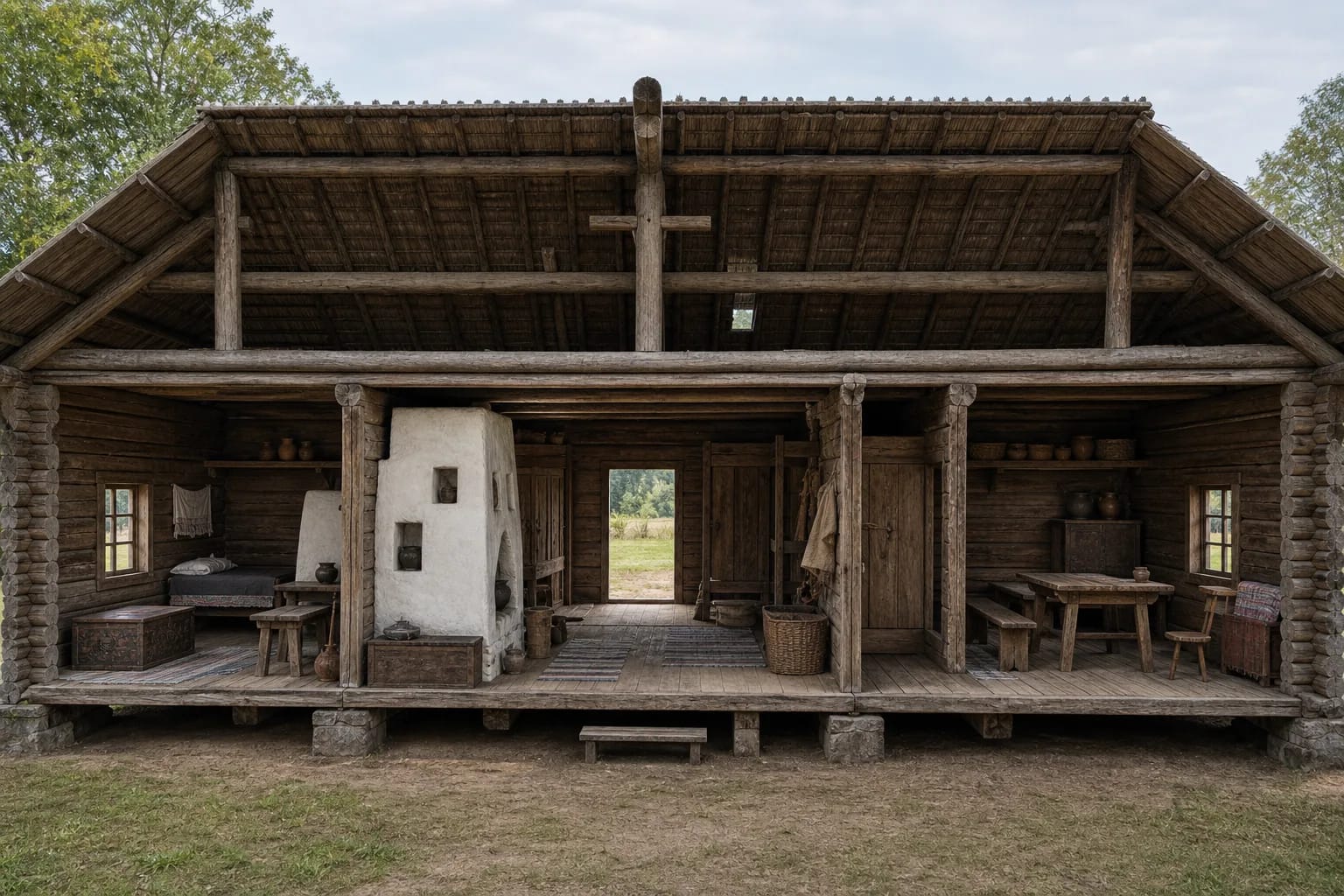
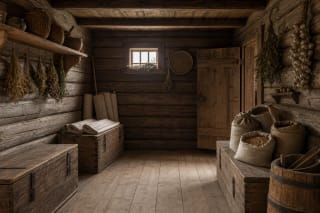
The priemenė connected the outdoors with the inner rooms. The kamara beside it stored food, dishes, clothing, or other objects. The seklyčia served as a cleaner, less frequently used, but socially important space.
Regional features
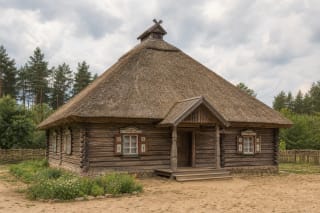
In Dzūkija and Eastern Aukštaitija, dvigalės pirkios survived in street villages and forest-region farmsteads. Their exterior was often log-built, with high roofs, smoke vents, or broad eaves.
On larger farms the plan could become cross-shaped when a heated pirkaitė was added to the side. It expanded the functions but did not change the essence of the pirkia as the main living house.
Why this topic matters
The dvigalė pirkia helps explain how traditional architecture modernized from the inside. Change is visible not only in roof or facade but in the organization of life: everyday work, guests, sleeping, stores, and holidays received clearer places.
It is one of the best examples of how a wooden rural house adapted to social changes while keeping its log structure and regional appearance.