- Category
- Dwelling Houses
- Type
- Oldest Žemaitian dwelling type
- Context
- Žemaitija, numas, open hearth, numgalis, lėpis, smoke vent, origin of the troba, old farmstead
- Source status
- well attested
Nomas, Žemaitian numas, Old dwelling building
Numas: types and elements
Dwelling numas: An older house type in which life gathered around the open hearth.
Numgalis: The rear part of a numas, used for storage, provisions, or animals.
Lėpis: An addition at the end or side of a numas, connected with a semi-open lean-to or practical shelter.
What is a numas?
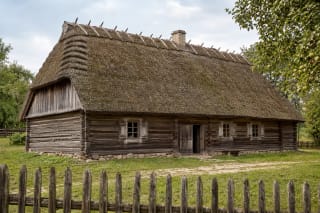
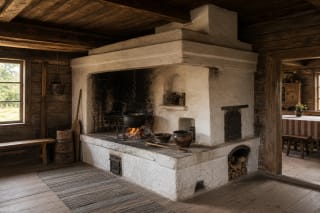
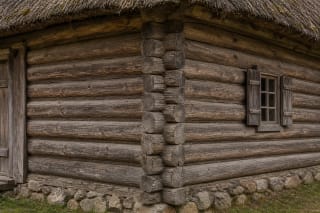
A numas is an old Žemaitian dwelling building associated with the early above-ground architecture of peasants. Unlike the later troba, a numas had an open hearth at its centre, and the room volume often lacked a ceiling in the modern sense.
This building matters not only as a specific house type. It shows a stage of architecture in which people, fire, smoke, animals, and provisions were still closely connected in one practical building.
Historical role
The numas is considered one of the oldest Lithuanian dwelling types. In later Žemaitian architecture it was gradually replaced by the troba, which had a clearer room plan, stove, and chimney system.
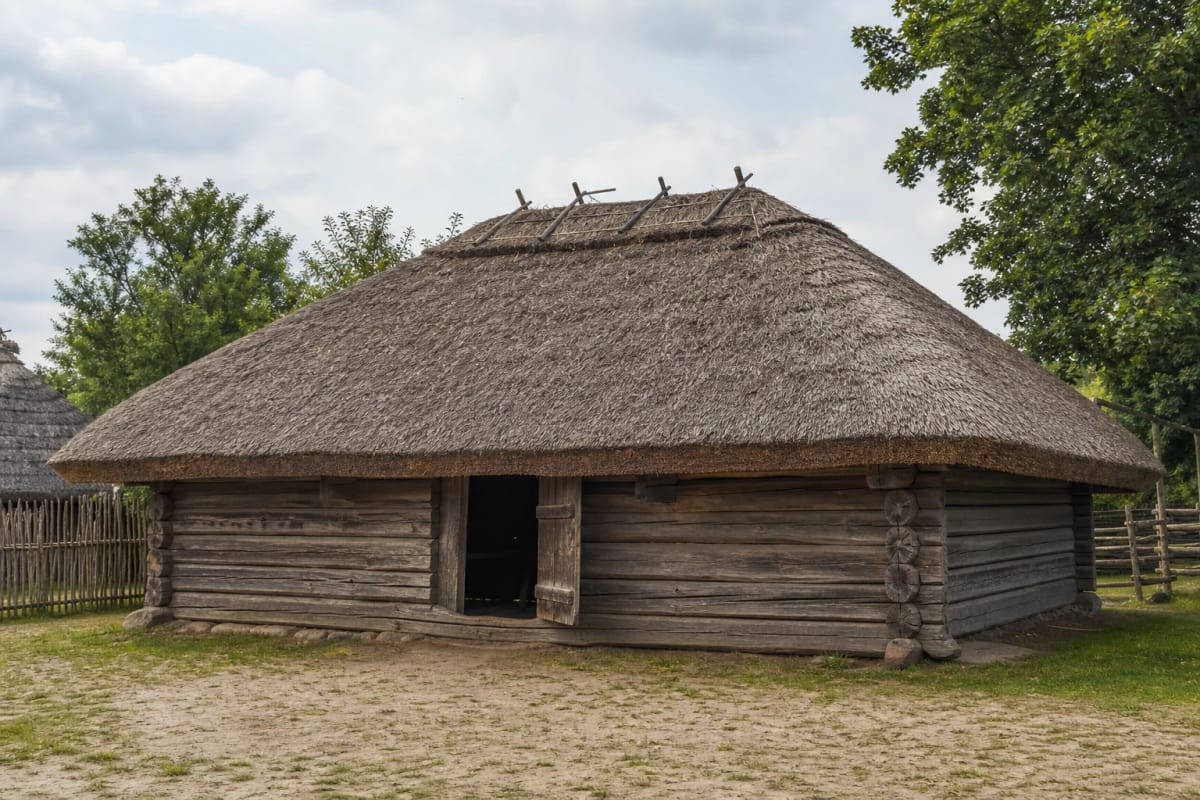
In the nineteenth century, many numai lost their dwelling function. Some became farm buildings, cowsheds, or auxiliary spaces, while life moved into the more modern troba. The numas is mentioned already in works by Jan Długosz and Sigismund von Herberstein and in seventeenth-century manor and farmstead inventories. In western Aukštaitija, and from the nineteenth century throughout Žemaitija, it turned into a cowshed, while in parts of western Žemaitija such buildings survived until the second half of the twentieth century. Architectural historian Klemensas Čerbulėnas studied the numas as a primary Lithuanian dwelling type in 1958.
Open hearth and smoke
The hearth of a numas was usually open and paved with stones. Smoke rose into the roof space and escaped through smoke vents or other openings. This system required a high roof, smoke-resistant surfaces, and everyday adaptation to a smoky interior.
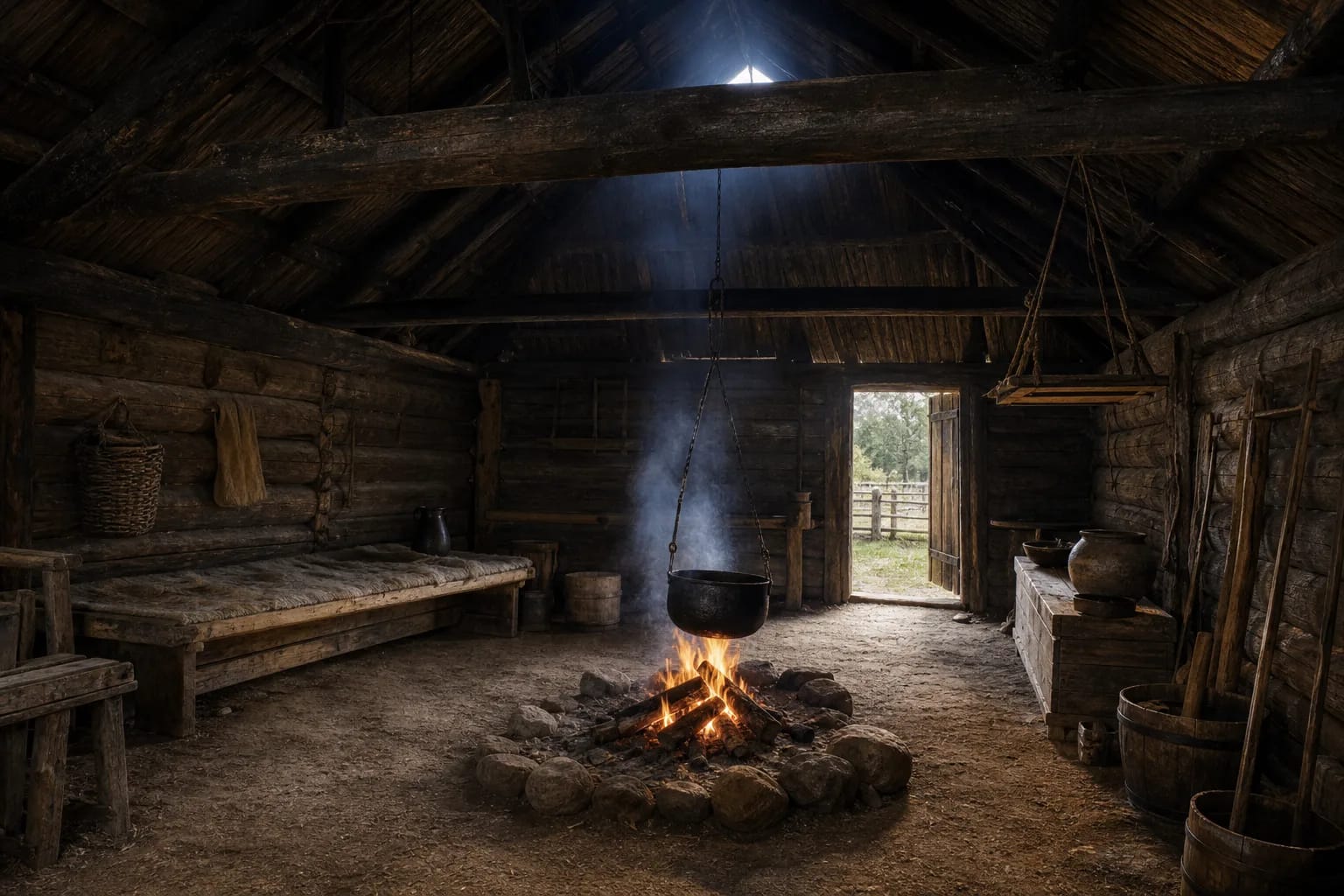
Open fire was the centre of cooking, warmth, light, and home. The numas can therefore be understood as early fire architecture, before the chimney became a separate masonry system.
Numgalis and auxiliary spaces
The numgalis, or rear part of the building, is important in the plan of a numas. It was used for storage, animals, or other practical needs, showing that the old dwelling was not yet strictly separated from farm work.
A numas could have a lėpis or similar sheltered part. Such spaces protected tools, firewood, fodder, or everyday objects from rain and snow. According to VLE, the lėpis was a semi-open porch in front of wide, 1.4-1.6 m double rear doors; manor inventories mention it from the early seventeenth century under names such as liptas, leptas, and leiptas.
How the numas relates to the troba
The troba took over the dwelling-house function, but kept part of the numas memory in room logic and the importance of the fire zone. The virenė, chimney, and priemenė belong to another stage of development, yet they continue the numas idea of a fire centre.
The numas is therefore essential to the system of Lithuanian traditional architecture: without it, it is harder to understand why the Žemaitian troba is broad, with a central fire and smoke zone, rather than only a row of rooms.