- Category
- Villages and Settlements
- Type
- Old settlement with an irregular plan
- Context
- Padrikasis kaimas, irregular village, grouped settlement, old farming settlement, Dzūkija, bajorkaimiai, okolica tradition
- Source status
- well attested
Padrikas kaimas, Irregular grouped village site, Irregular village
Padrikasis Kaimas, an Irregular Village: types and elements
Irregular grouped settlement: Farmsteads are placed without one axis, and boundaries between yards are not always clear.
Irregular bajorkaimis: A petty-noble settlement preserving irregular landholding and plan.
What is a padrikasis kaimas?
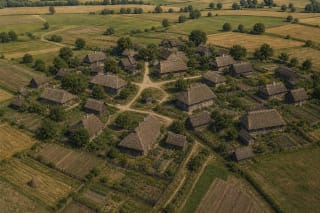
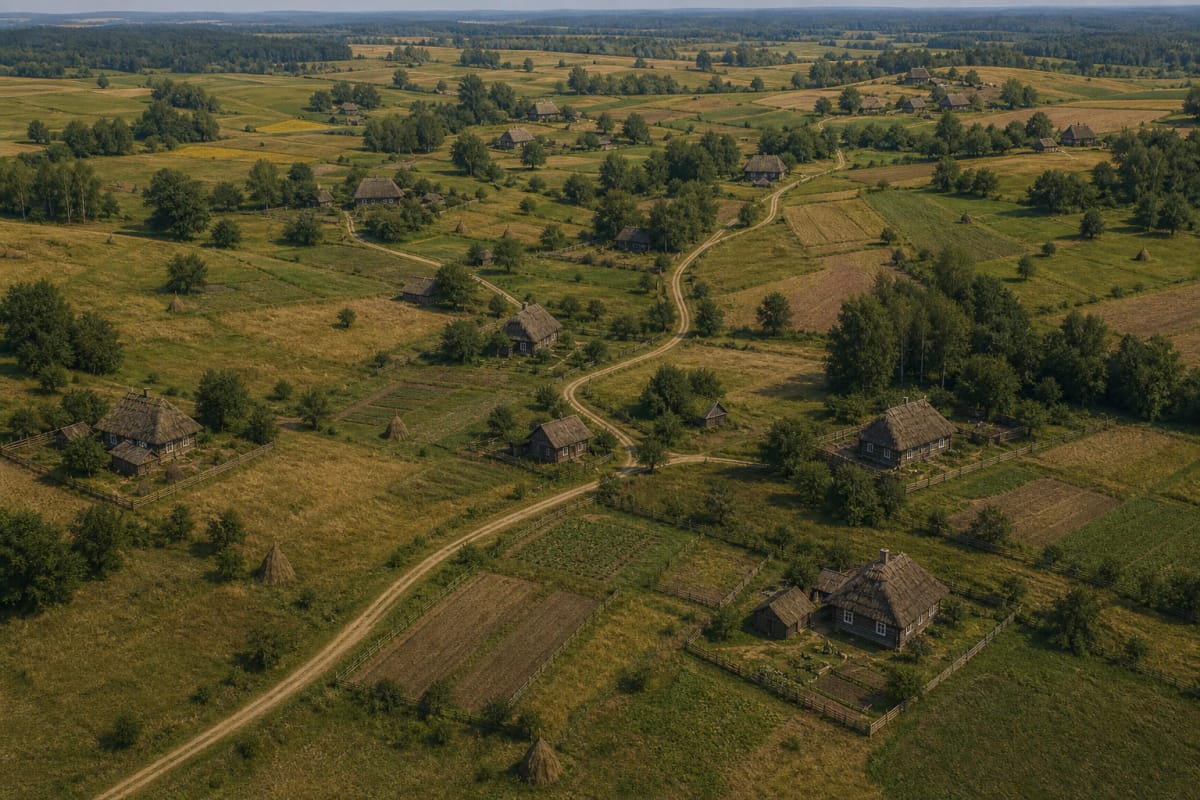
A padrikasis kaimas is a settlement without a clear plan, one street, or a strip-field landholding order. Farmsteads are built freely, and their boundaries can be less clear than in a planned village.
Here irregularity does not mean poor architecture. It is the logic of an old settlement, formed by local needs, kinship ties, land use, and terrain.
Historical significance
Padrikieji villages are considered one of the oldest farming settlement types, widespread before the Valakų reform. In many places that reform replanned them as street strip-field villages. According to VLE, padrikieji villages were most widespread before the Valakų reform of 1557; unlike kupetinis villages, their farmstead boundaries and landholdings were not clearly defined. Notable surviving examples include Strazdai, Šuminai, Vaišnoriškė, and Varniškės villages, all in Utena district.
In some Dzūkija and petty-noble settlements, irregular structures survived longer because they were not always reorganised according to the Valakų system.
Plan form
In a padrikasis kaimas, lanes, yards, and buildings may form a free network. Buildings of several families sometimes connect into a shared space where strict plot boundaries are harder to distinguish.
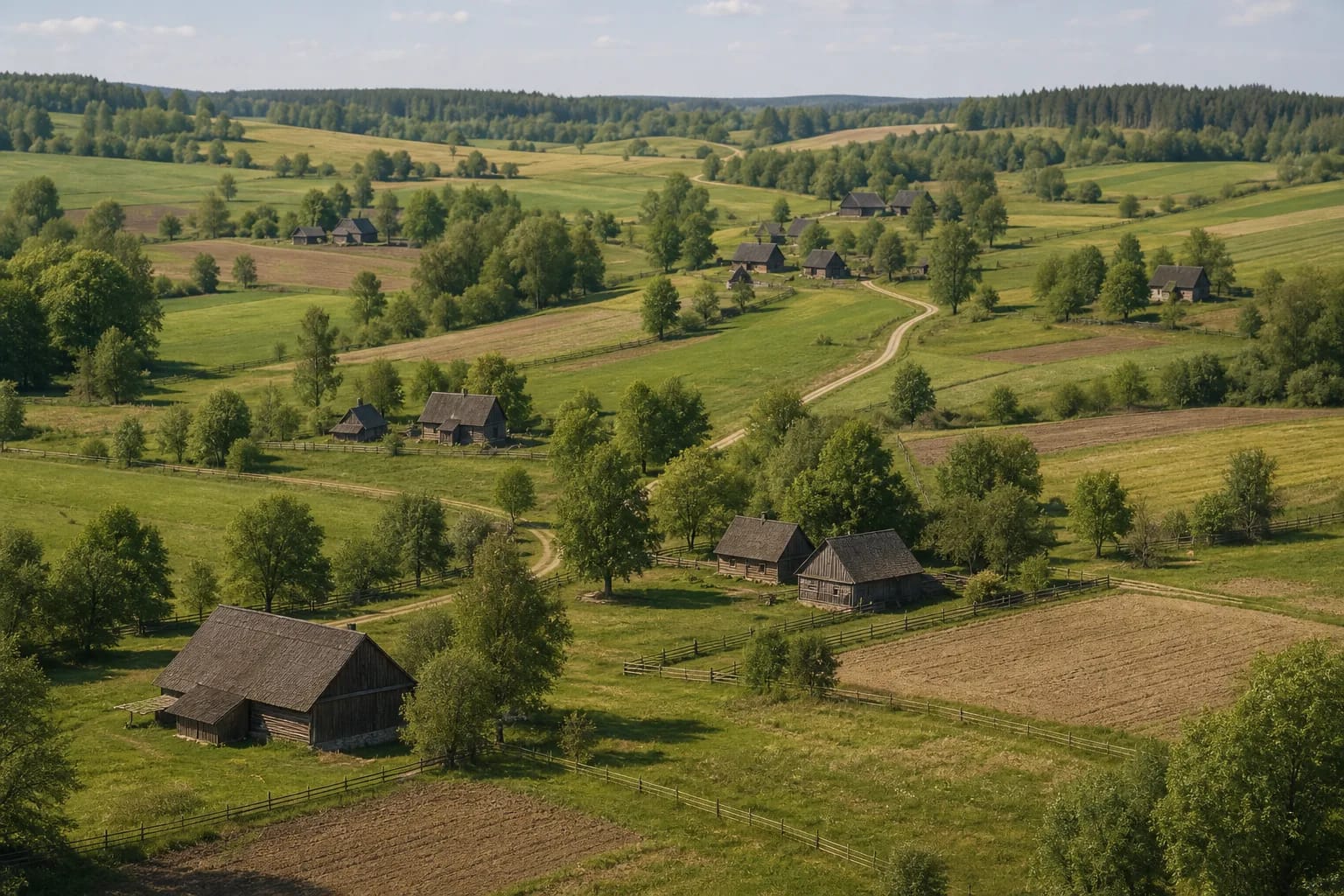
The value of such a village lies in relationships among farmsteads, the structure of spaces between them, and traces of long life, not in a straight street composition.
Heritage protection
A padrikasis kaimas is easily damaged by standardising plots, straightening lanes, or adding new buildings according to urban-block logic.
Protection should document farmstead locations, common passages, trees, fences, old paths, and spaces between buildings.