- Category
- Villages and Settlements
- Type
- Freely grouped old settlement
- Context
- Kupetinis kaimas, spontaneous village, farmstead cluster, hills, lakes, forests, before the Valakų reform, Dzūkija, Žemaitija
- Source status
- well attested
Kupetinis kaimas, Spontaneously formed village, Clustered settlement
Kupetinis Kaimas, a Clustered Village: types and elements
Terrain-shaped village: Farmsteads are placed according to hills, valleys, water bodies, and forests.
Farmstead nucleus: A settlement growing from one or several close groups of farmsteads.
What is a kupetinis kaimas?
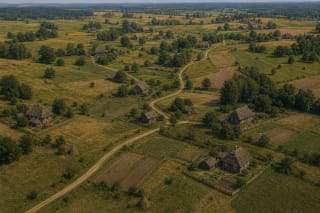
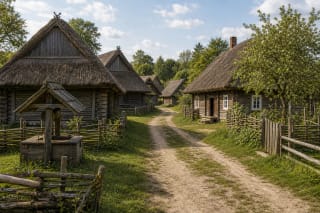
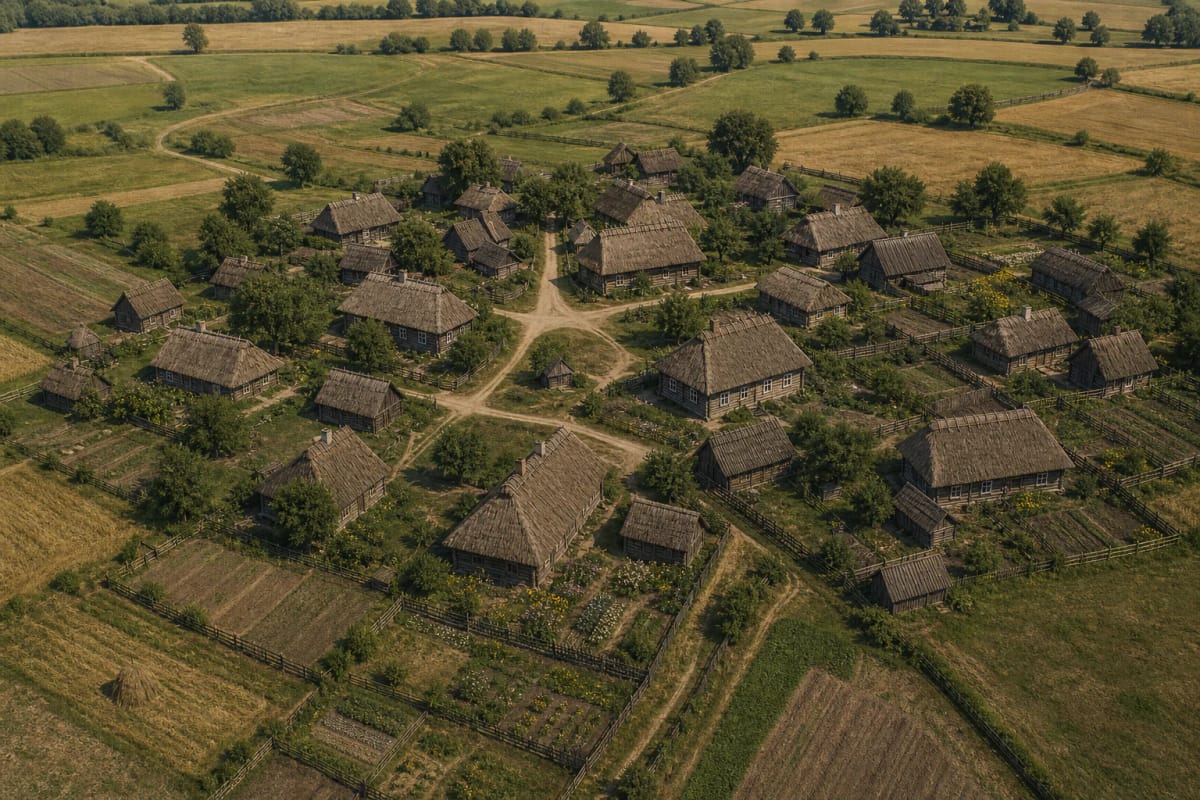
A kupetinis kaimas is a settlement where farmsteads stand in groups, without a straight street and without a strict strip-field plan. Its appearance suggests a naturally grown cluster of homesteads.
Such a village often developed from an old settlement nucleus, as new farmsteads were built near existing ones while adapting to terrain and land use.
An old settlement layer
Kupetiniai villages are considered one of Lithuania's oldest settlement types. They are associated with the period before the Valakų reform and with places where later reforms did not fully replace the old structure.
More of these features survived in Dzūkija, Žemaitija, the Klaipėda region, and elsewhere where environment and history allowed a freer form to remain. According to VLE, kupetiniai villages are thought to have formed in the thirteenth and fourteenth centuries and to have made up most settlements before the Valakų reform; where reforms did not reach them, they survived in Dzūkija and the Klaipėda region. Bajorkaimiai are also assigned to this group, while some researchers, including K. Šešelgis and M. Urbelis, call them padrikieji, or spontaneously formed, villages.
Planning logic
In a kupetinis kaimas, lanes, farmsteads, and yards adapt to hills, forests, lakes, or streams. What matters is not one straight road, but a network of related homesteads.
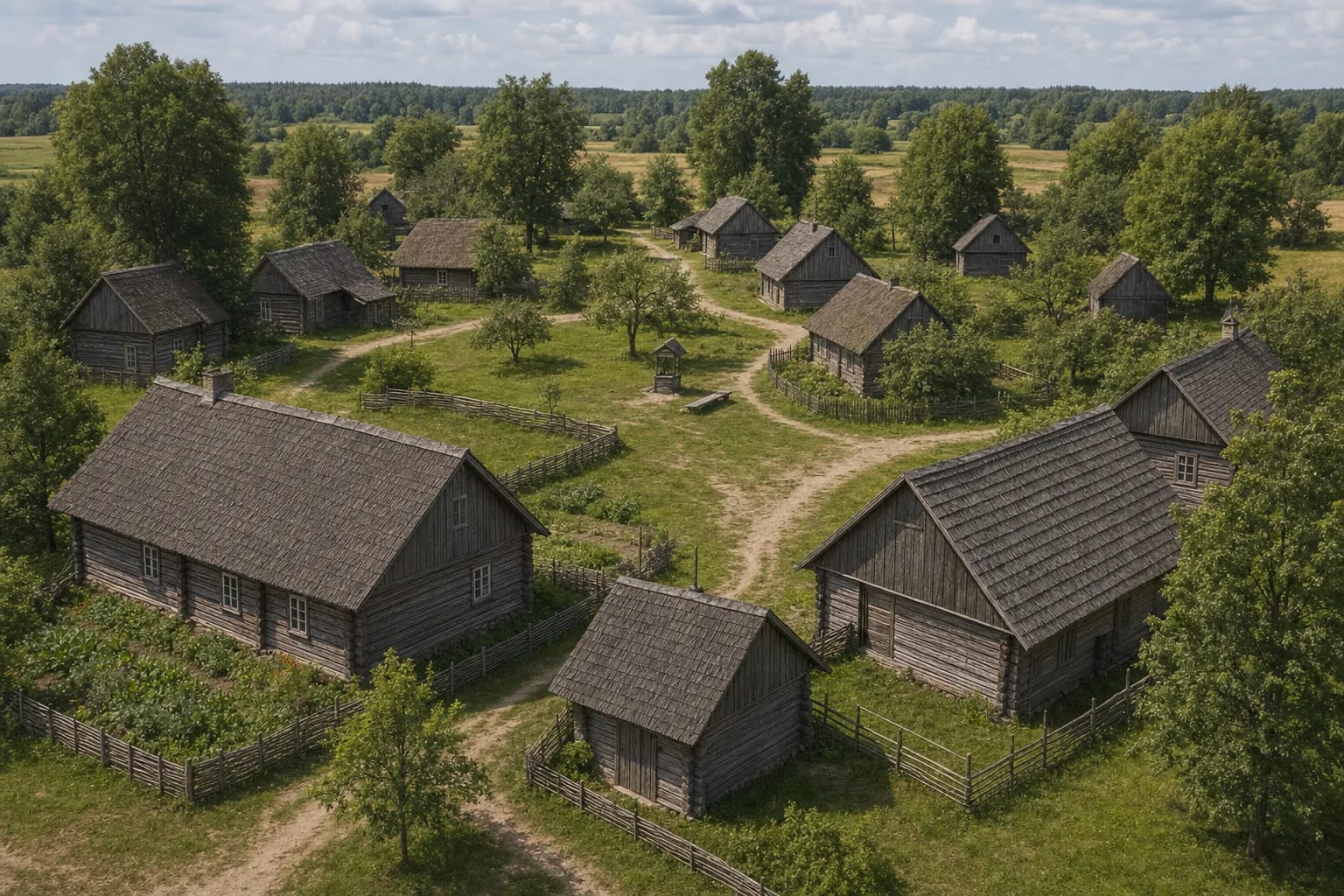
This does not mean chaos. The village has its own logic, but that logic comes from long life in a place rather than from geometric reform.
Reading the heritage
A kupetinis kaimas can be damaged by straightening lanes, standardising plots, or moving buildings into regular lines. Its value lies in an irregular plan fitted to its site.
For that reason preservation has to consider terrain, greenery, spaces between farmsteads, old lanes, and visual relationships.