- Category
- Villages and Settlements
- Type
- Linear rural settlement
- Context
- Gatvinis kaimas, street-strip village, Valakas Reform, farmsteads along the street, Eastern Lithuania, Dzūkija
- Source status
- well attested
Street-strip village, Linear village, Two-part street village
Street Village: types and elements
One-sided street village: Farmsteads are arranged on one side of the street.
Two-sided street village: Farmsteads line both sides of the main street.
Riverine street village: In lagoon or riverside areas, the water route sometimes performed the function of a street.
What is a street village?
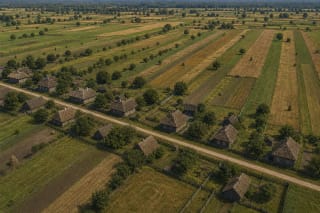
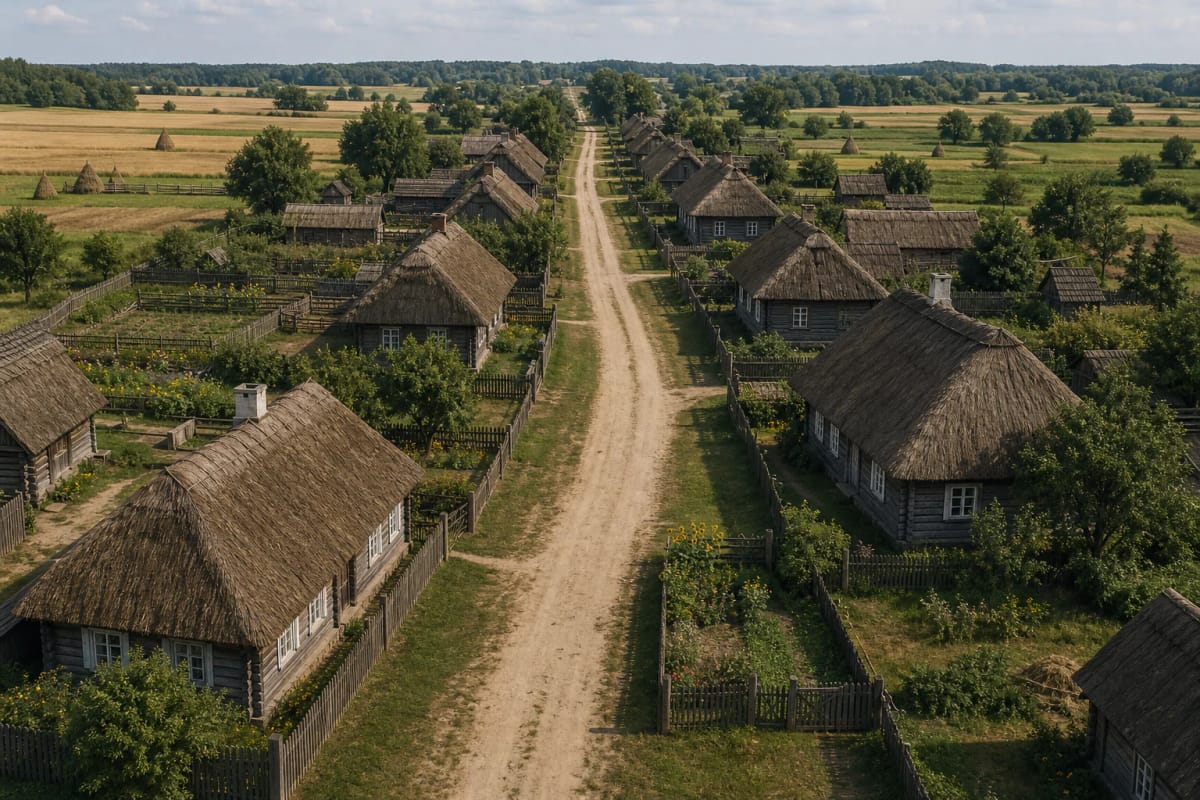
A street village is a settlement where farmsteads are arranged along one main street. Buildings, fences, gates, and flower gardens create the image of a long, clearly ordered village.
Farmsteads may stand on one or both sides of the street. The street becomes not only a road but a community space.
Effect of the Valakas Reform
Street-strip villages spread especially after the sixteenth-century Valakas Reform, when land was reorganized into strips and farmsteads were deliberately lined along the street.
Such a system matched three-field agriculture and a clearer order of land division. According to VLE, the street of a gatvinis kaimas was about 300-600 m long and divided each farmstead into two parts, while the strips of one family in three fields made up one valakas; by later development, street-strip, two-part, irregular, and linear villages are distinguished.
Farmstead plan
In a street village the living house and klėtis often stood closer to the street, while livestock buildings, kluonai, and daržinės stood deeper in the plot. This kept the street facade more orderly while the farm zone lay behind it.
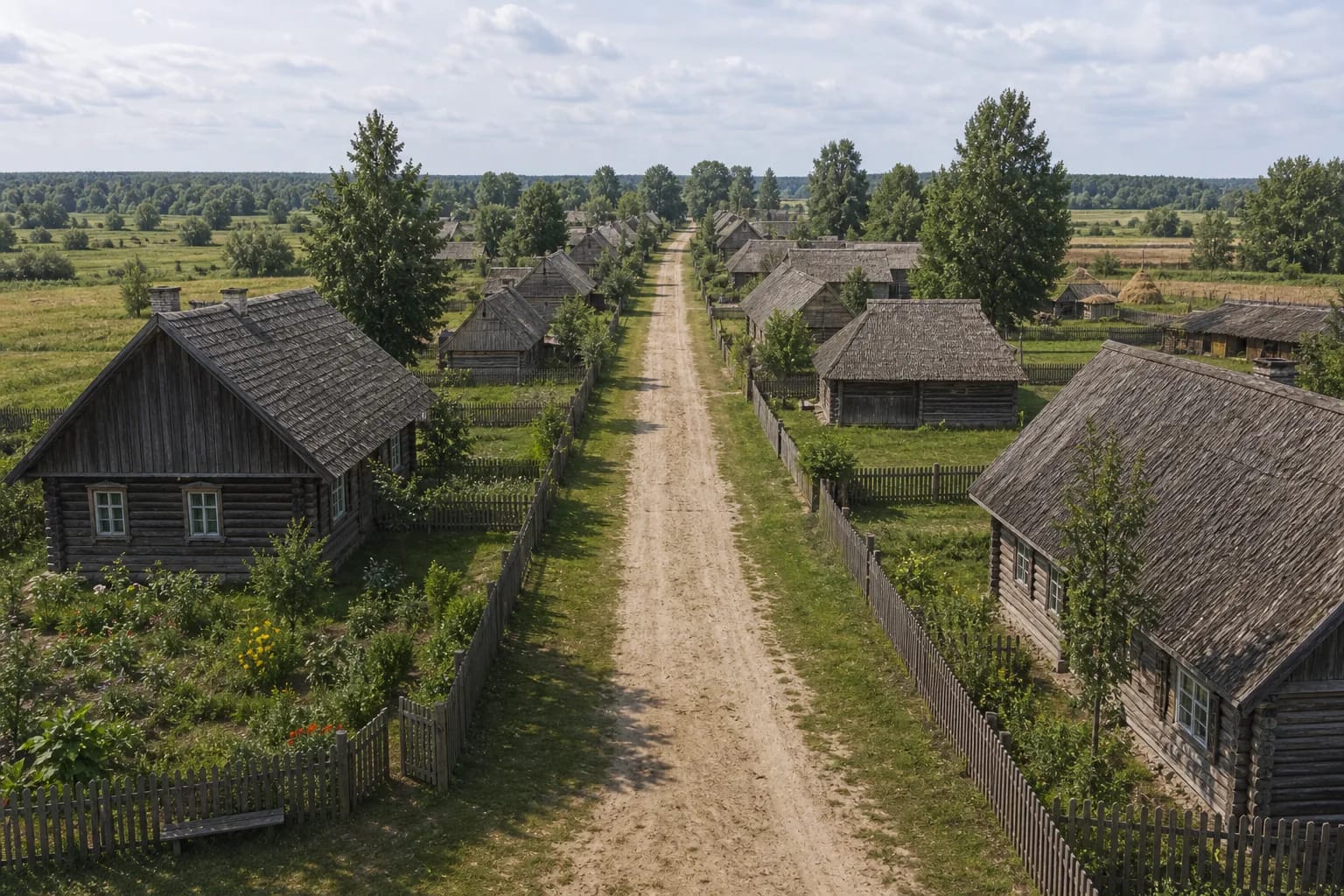
Fences, gates, flower gardens, and wells formed the public front view of the village.
Survival
Many street villages survived in Eastern and Southeastern Lithuania, where later reforms did not dismantle them everywhere. Villages in Dzūkija and the Vilnius region are important heritage examples of this type.
Protecting a street village means protecting not only individual houses but also the street line, plot rhythm, fences, and landscape.