- Category
- Villages and Settlements
- Type
- Settlement of petty nobility
- Context
- Bajorkaimis, akalica, okolica, szlachta village, petty nobles, irregular plan, Dzūkija, Eastern Aukštaitija
- Source status
- regional tradition
Akalica, Okolica, Szlachta village, Petty-noble village
Bajorkaimis: types and elements
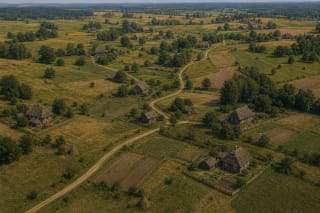
Irregular bajorkaimis: A petty-noble settlement with an irregular structure of farmsteads and land.
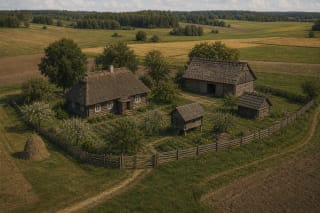
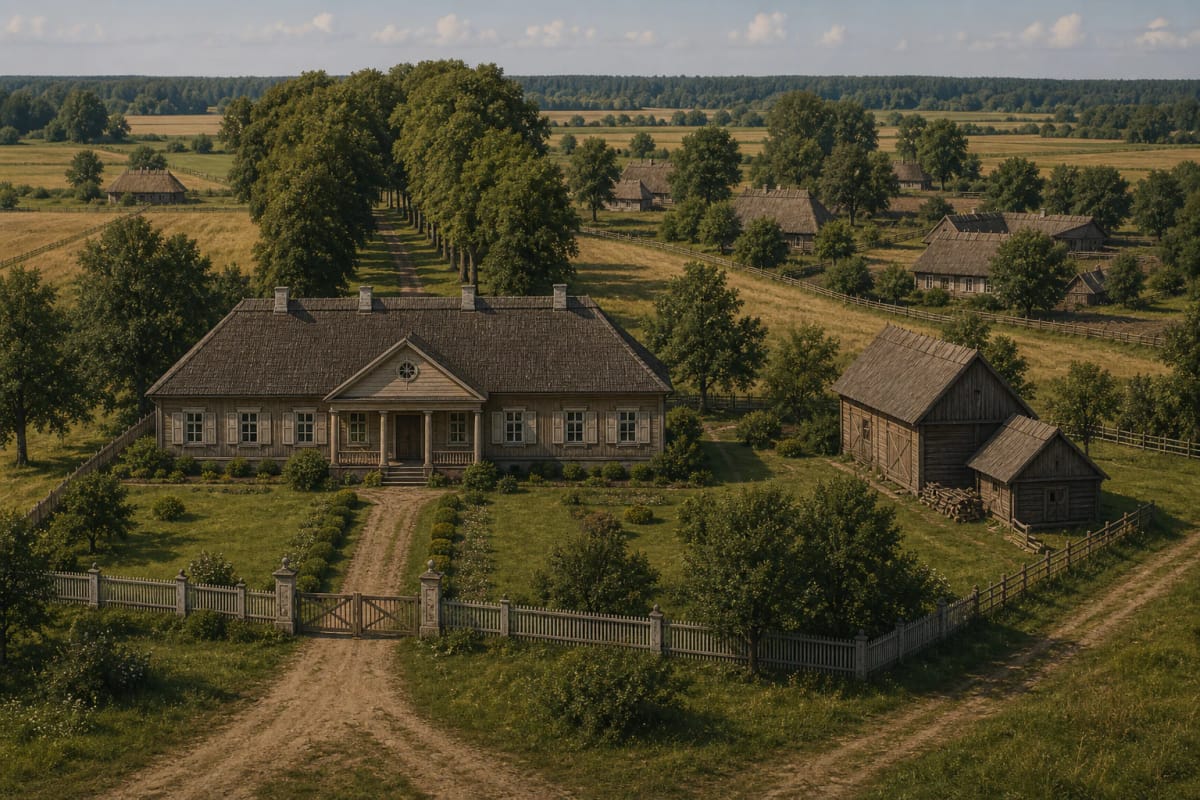
Noble isolated farmstead: A separate or semi-separate noble homestead that sometimes became the nucleus of a bajorkaimis.
What is a bajorkaimis?
A bajorkaimis is a settlement of petty nobles or szlachta. In it, traditional village life intersects with noble legal, social, and landholding history.
Such settlements were often called akalicos or okolicos. They were not always planned, so their architecture can resemble irregular villages.
Plan form
Bajorkaimiai often remained outside the rearrangements of the Valakas Reform or were reorganized less thoroughly. Their farmsteads could therefore be placed more freely, and landholding could be less orderly than in strip-field villages.
In Eastern Aukštaitija, some bajorkaimiai formed at the edges of Valakas-period villages; in Dzūkija, from okolicos and old homesteads. According to VLE, bajorkaimiai are classed with kupetinis villages, one of the oldest free-plan settlement types, formed already in the thirteenth-fourteenth centuries and making up most settlements before the Valakas Reform.
Architectural character
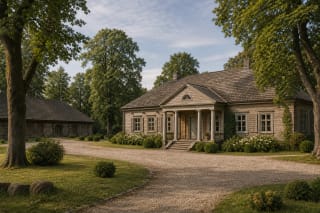
Buildings in a bajorkaimis were not necessarily ornate or manor-like. Petty nobles often lived in wooden farmsteads close to peasant architecture, but social status and landholding gave the settlement a different context.
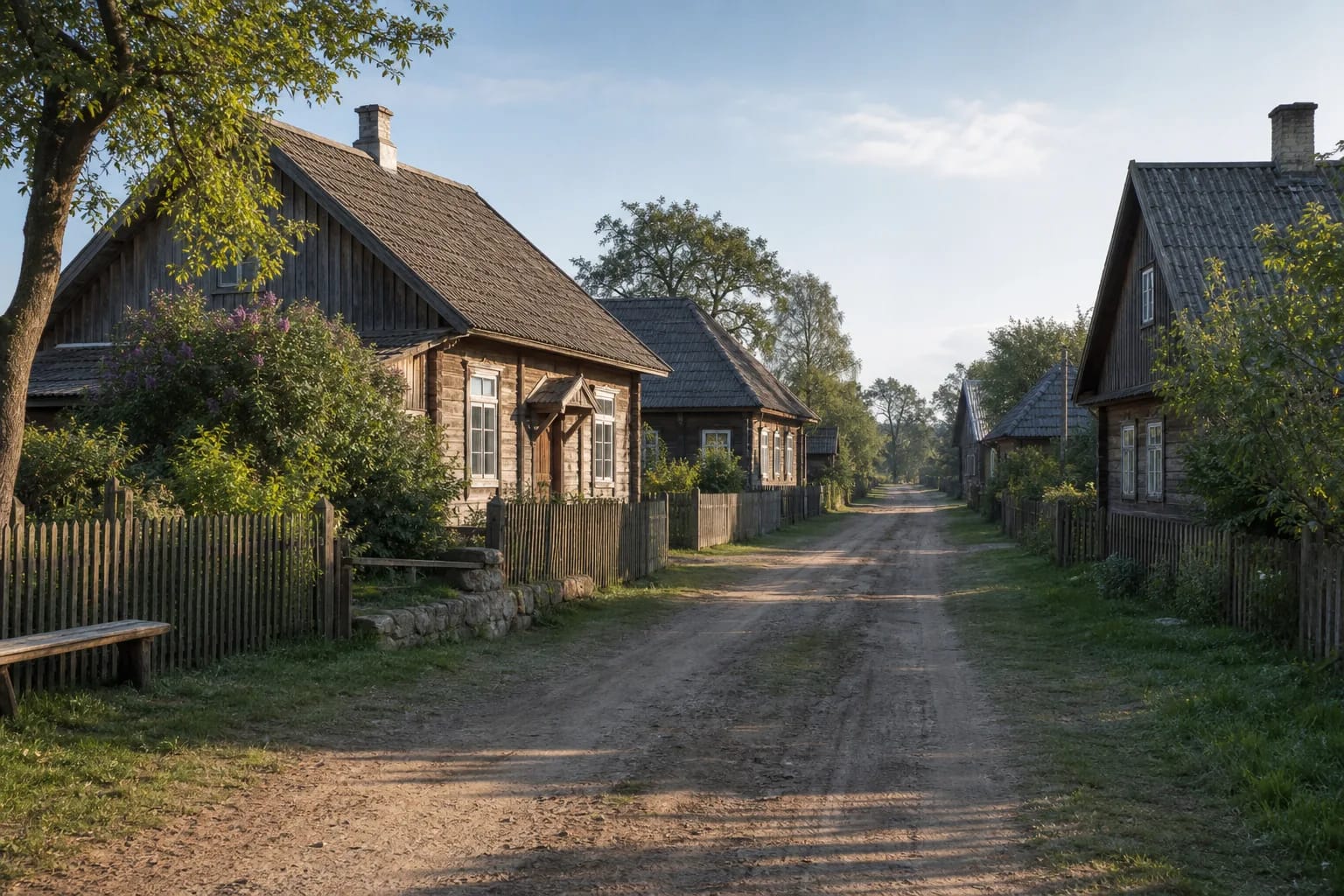
This matters for heritage: the appearance of a building may be modest while the history of the settlement is socially complex.
Why bajorkaimis matters
The bajorkaimis reminds us that Lithuanian traditional architecture is not only the story of peasant farmsteads. Petty nobility also lived in the rural landscape.
This topic links architecture, social history, dialects, landholding, and settlement forms.