- Category
- Villages and Settlements
- Type
- Old village settlement form and term
- Context
- sodžius, soda, village, laukininkai settlement, before the Volok Reform, irregular settlement, Aukštaitija
- Source status
- well attested
Soda, Old village, Laukininkai settlement
Sodžius: the Old Village: types and elements
Historical sodžius: An old irregular settlement associated with a laukininkai community.
Sodžius as village in general: In later usage, the word often means village broadly.
What is a sodžius?
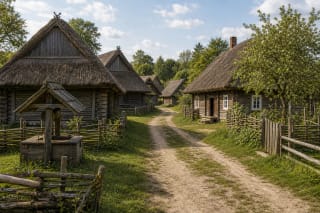
Sodžius is an old Lithuanian term for a village settlement. Historically it is associated with laukininkai settlements that were not strictly planned like later street-and-strip villages.
In later language sodžius often means village in general, but in architectural history it is worth retaining the older meaning as well.
Before the Volok Reform
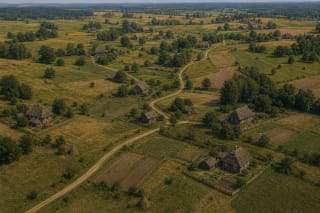
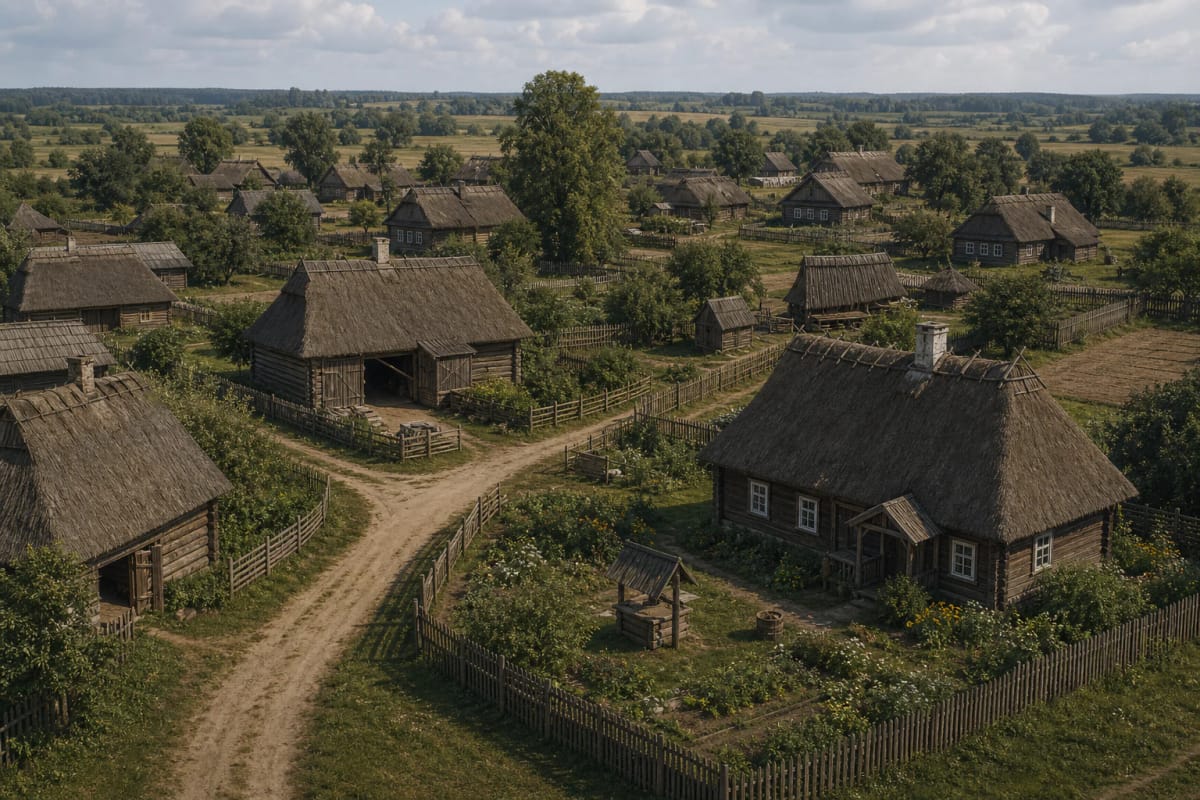
The historical sodžius was an irregular settlement where homesteads were not arranged along a single reform line. Such a form arose from field communities, family dispersal, and local landholding.
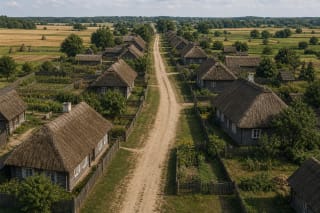
During the Volok Reform, many sodžiai were replanned into street-and-strip villages, especially in Aukštaitija. According to VLE, sodžius or soda is a presumed Lithuanian village settlement type that existed in the 12th-16th centuries; it formed from the breakup of the viešė settlement, when by around the 12th century families dispersed into so-called sėdėjimai, some of which gave rise to viensėdžiai and others, as homesteads multiplied, became sodžiai.
Sodžius as cultural image
The word sodžius carries a broader emotional weight in Lithuanian culture: it means village community, fields, homesteads, customs, and everyday life.
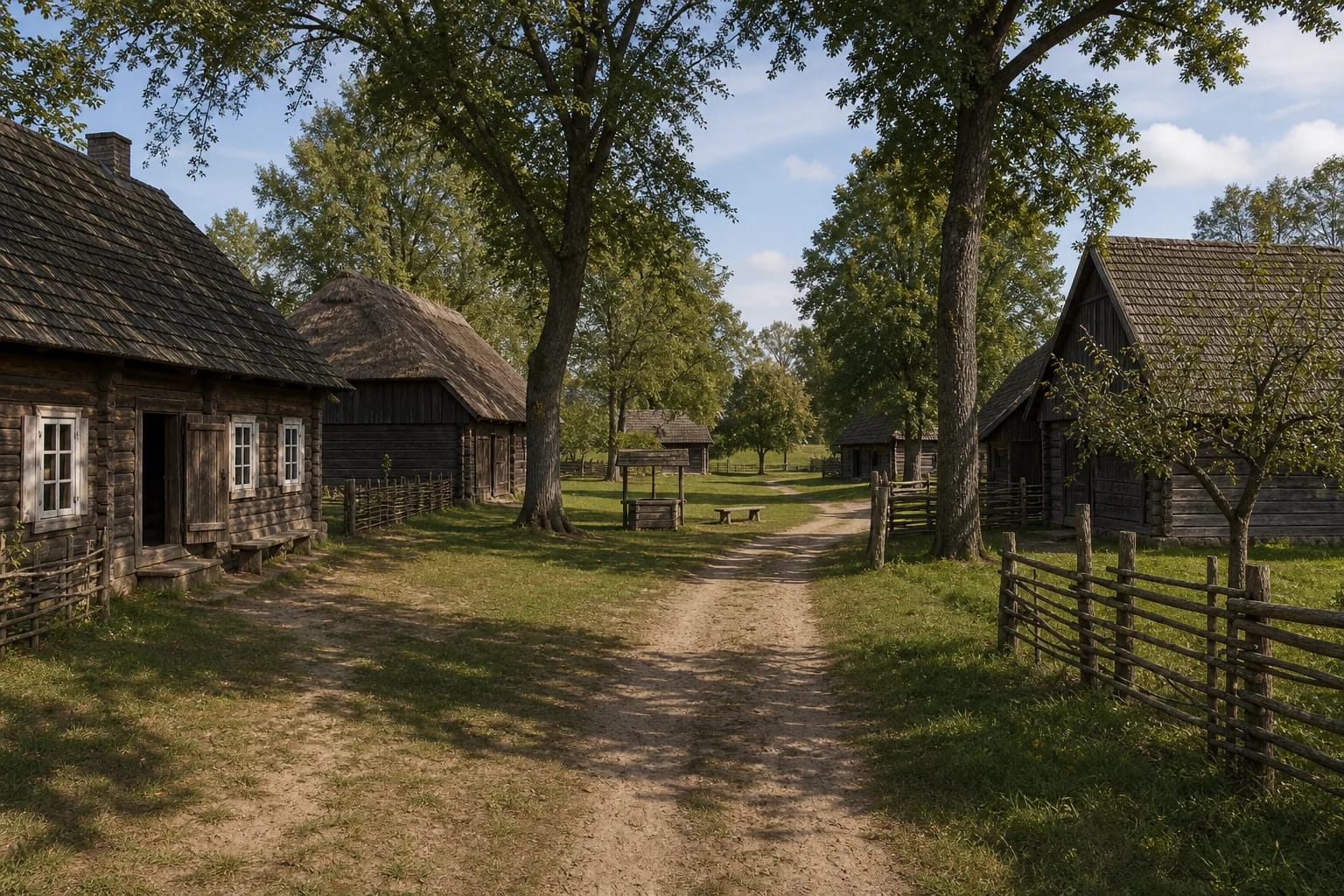
For that reason sodžius is both an architectural term and a category of cultural memory.
How to read it on this site
In this architecture hub, sodžius connects historical settlement forms with concrete types: irregular, cluster, street, and strip-field villages.
It is not an extra synonym without content. It helps explain how the Lithuanian village changed through reforms and language.