- Category
- Villages and Settlements
- Type
- Overview of traditional settlement heritage
- Context
- Ethnographic villages, traditional settlements, Zervynos, Musteika, Žižmai, Poškonys, Rimašiai, street villages, Dzūkija
- Source status
- well attested
Ethnographic village, Ethno-architectural village, Traditional settlement
Ethnographic Villages in Lithuania: types and elements
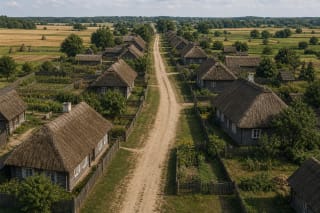
Street-strip ethnographic village: A settlement with farmsteads along a street and traces of strip-field landholding.
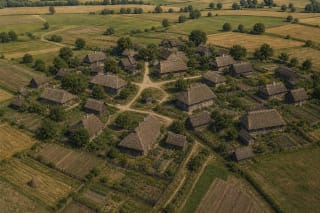
Kupetinis or irregular ethnographic village: An old free-plan settlement adapted to terrain and history.
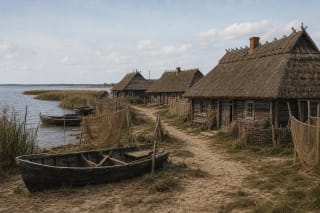
Lagoon ethnographic village: A traditional settlement shaped by water and fishing.
What is an ethnographic village?
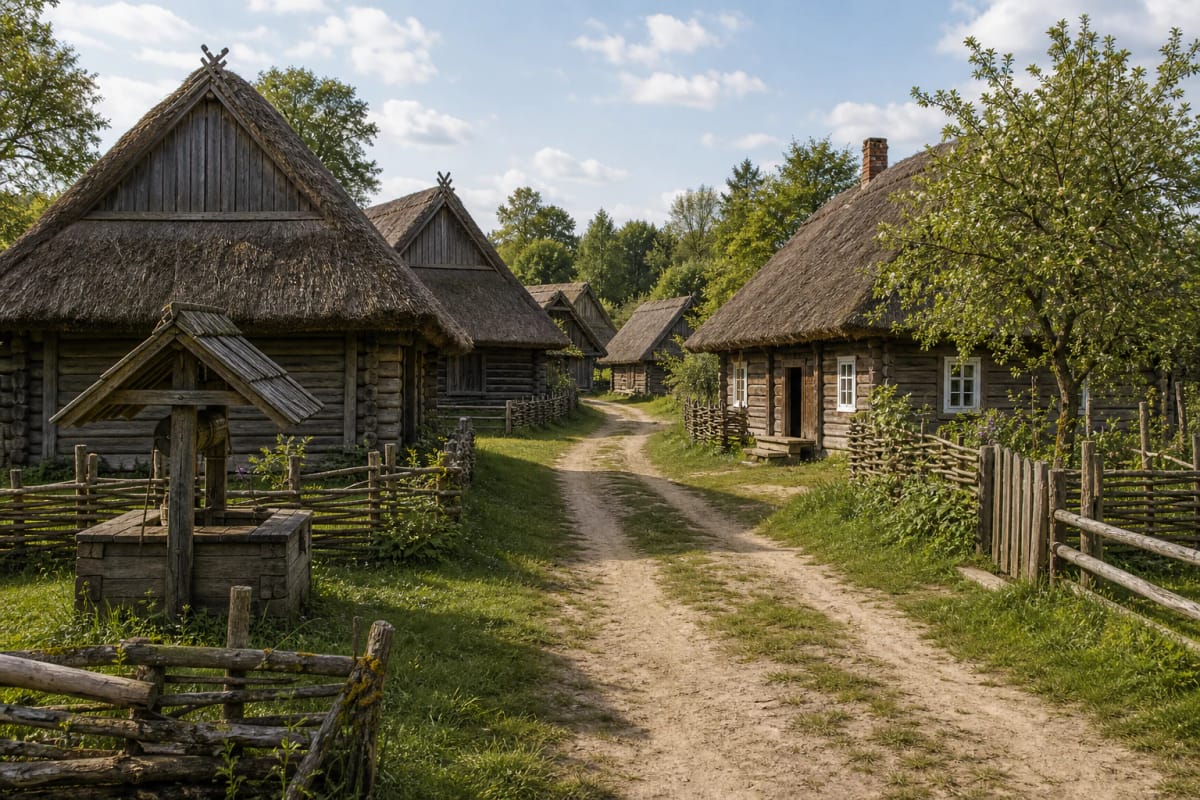
An ethnographic village is a traditional settlement in which valuable features of plan, farmsteads, buildings, planting, fences, roads, and landscape have survived.
Its value is ensemble value. A single house can be valuable, but an ethnographic village matters as the settlement as a whole. According to VLE, the medieval village nucleus consisted of several neighboring peasant yards with a shared meeting square, roads, wells, and cult places, while a village with a church is traditionally called a bažnytkaimis in Lithuania.
Variety of settlements
Lithuania preserves features of street-strip, kupetinis, irregular, isolated-farmstead, lagoon, and other traditional settlements. Their distribution was shaped by regional history, reforms, nature, and social structure.
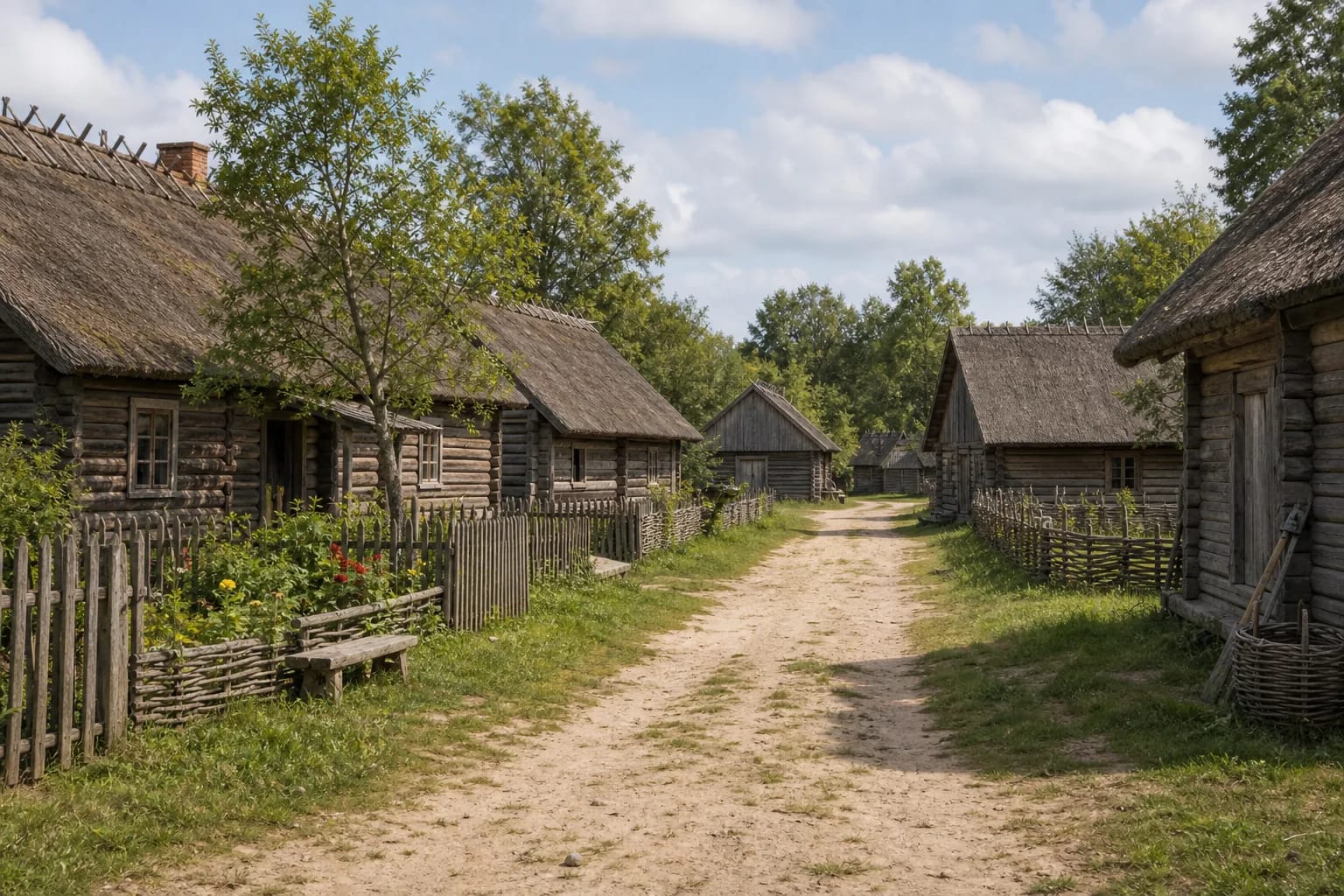
The street villages of Dzūkija, the Vilnius region, and Eastern Lithuania, the lagoon villages of Lithuania Minor, and the isolated farmsteads of Sūduva show different directions of heritage.
The Soviet-period rupture
Collectivization, land drainage, and rural reorganization destroyed many old farmsteads, isolated homesteads, and settlement structures. Surviving ethnographic villages are therefore especially important.
They preserve not only buildings but also the logic of a lost landscape: roads, field strips, water connections, flower gardens, orchards, and community spaces.
How to visit them
An ethnographic village should be read by walking through its plan: where the street is, where the farmsteads are, where the kluonai are, where the wells and flower gardens are, and where the fields or forest begin.
Such a village cannot be understood by photographing one attractive facade. The rhythm of the whole settlement must be seen.