- Category
- Villages and Settlements
- Type
- Water-route and fishing settlements
- Context
- Lagoon villages, fishing villages, Curonian Lagoon, Nemunas Delta, Minija, Mingė, Karklė, Dreverna, Lithuania Minor
- Source status
- well attested
Fishing village, Lagoon village, Fishermen's village, River street village
Lagoon and Fishing Villages: types and elements
River street village: A settlement where the water route functions as the main street.
Lagoon fisher farmstead: A farmstead where house, outbuildings, and fishing gear are oriented toward water.
Pelkininkai and pievininkai villages: Settlements of flooded meadows and drained marshes in Lithuania Minor.
What are lagoon and fishing villages?
Lagoon and fishing villages are settlements whose plan and architecture were shaped by water. The Curonian Lagoon, Nemunas Delta, rivers, canals, and seacoast determined the orientation of farmsteads, building functions, and everyday movement.
In such villages water was not only scenery. It was a road, workplace, food source, and settlement axis.
Lithuania Minor context
In the Klaipėda region and Lithuania Minor, settlement development differed from Great Lithuania. Lagoon, riverside, pievininkai, and pelkininkai village traits survived here.
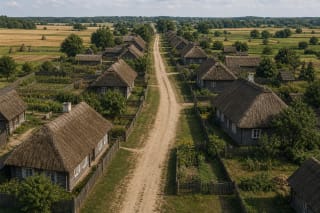
Minija, or Mingė, is a known example where water served as the street. Farmsteads and working functions faced the river. According to VLE, the fishing villages of the Nemunas Delta are classified as street villages in which a river performs the function of a street, and Minija village is the characteristic example.
Architectural traits
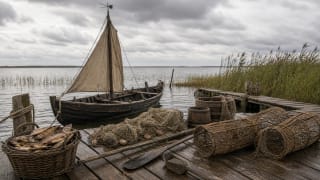
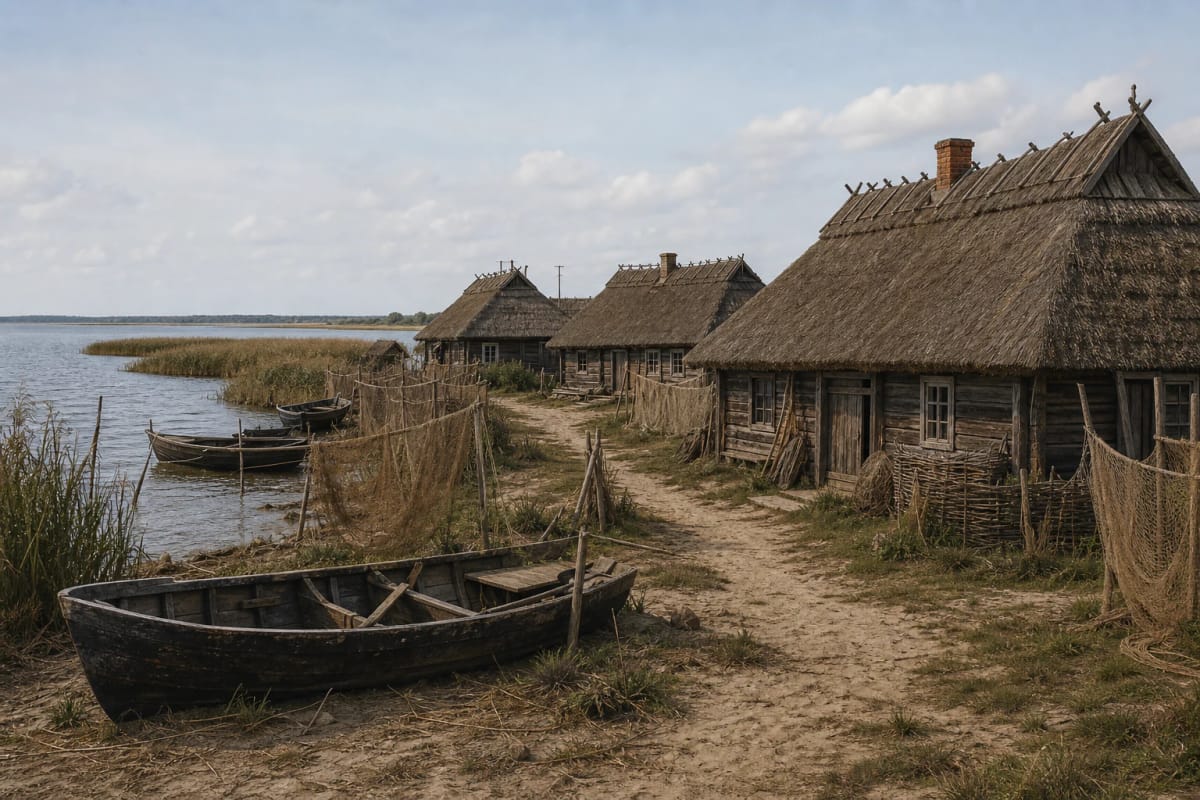
Lagoon farmsteads are marked by wooden houses, outbuildings for fishing gear, places for boats and nets, reed roofs, weathervanes, and signs of fishing culture.
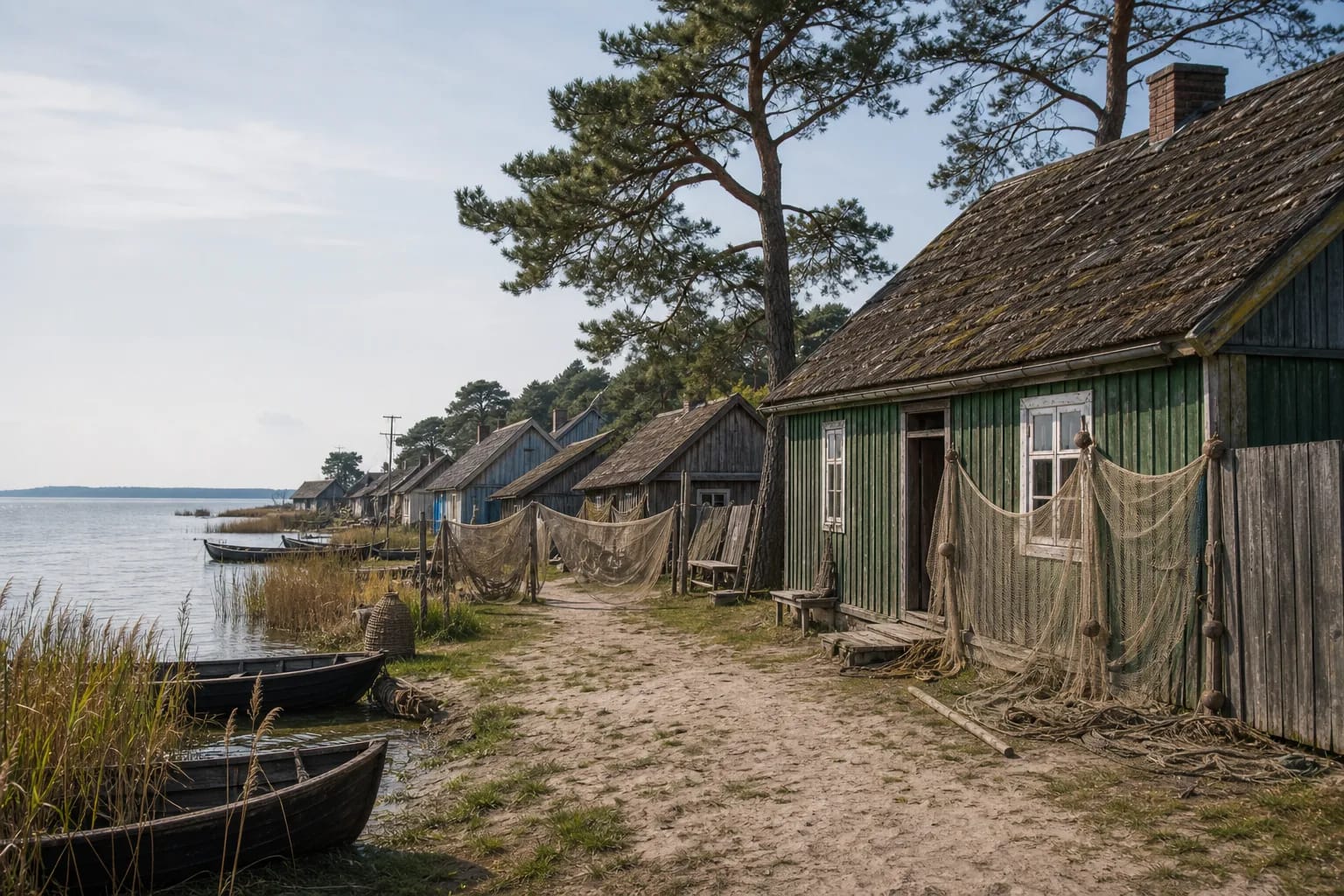
Flooded meadows and moisture required adaptation: careful choice of place, raised elements, convenient landings, and reliable coverings.
Heritage risks
Lagoon village architecture is easily reduced to a resort image. In reality its value lies in the connection between work and water: boats, nets, farm buildings, shores, canals, and settlement plan.
Protection must see the whole water landscape, not only one beautiful house.