- Category
- Farm Buildings
- Type
- Underground or semi-underground food-storage space
- Context
- rūsys, kelderis, kelneris, kelnorius, earth storage, potatoes, vegetables, stones, logs, earth covering
- Source status
- well attested
Kelderis, Kelneris, Kelnorius, Earthen rūsys
Rūsys Cellar: types and elements
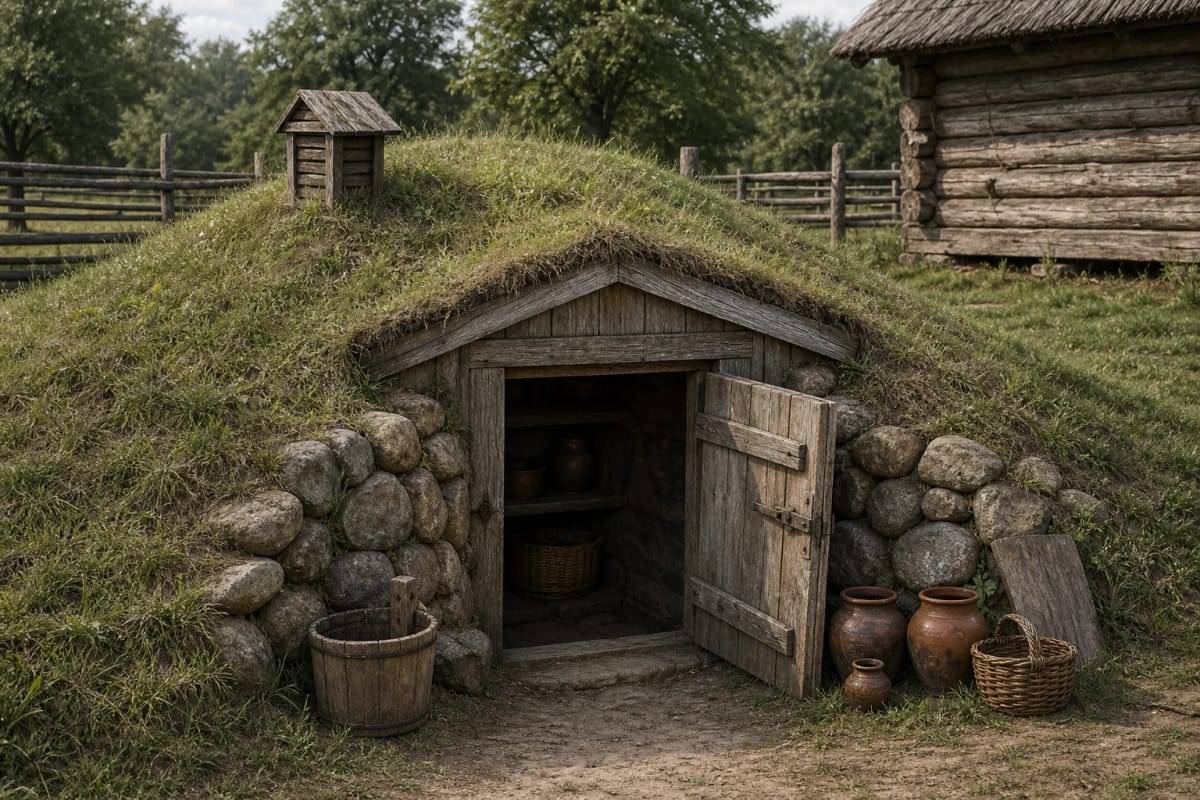
Earthen rūsys: The simplest dug-in store with reinforced walls and an earth-covered top.
Stone cellar: A sturdier fieldstone structure intended for longer use.
Kelderis: A name used in Lithuania Minor for a semi-dug cellar.
What is a rūsys?
A rūsys is a cool food store built underground or partly underground. Its purpose was to keep potatoes, vegetables, dairy products, meat, or other foods at a lower and steadier temperature.
The rūsys belongs less to facade architecture than to microclimate architecture. What mattered most was not visible beauty but coolness, moisture control, protection from frost, and protection from rodents.
Structures
The simplest rūsys could be a deep earthen pit with timber-reinforced walls and an earth-covered top. Stronger cellars were built from stones, logs, clay, or bricks.
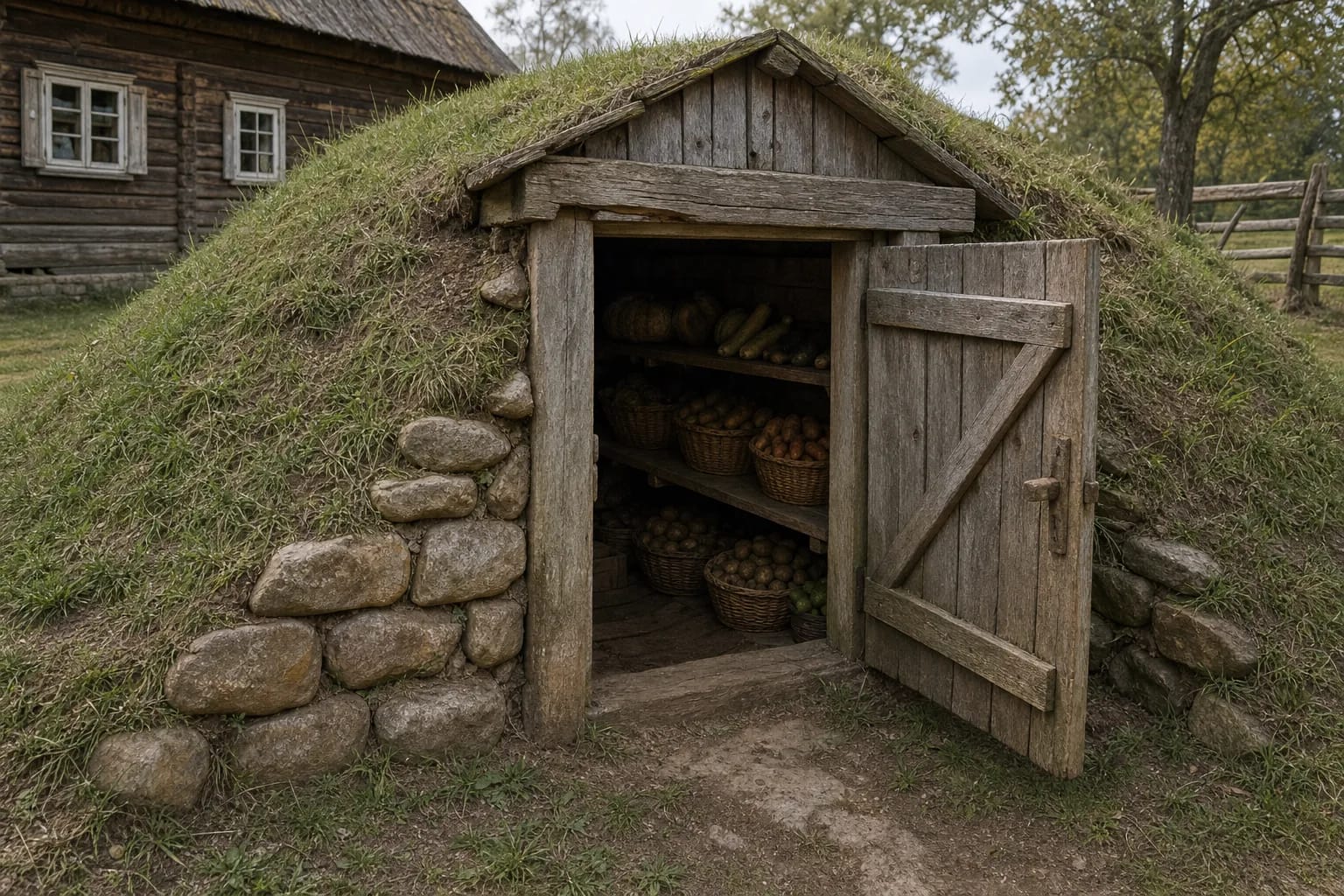
An earth layer often covered the cellar and acted as insulation. Doors, a small entrance space, or a slope had to prevent water from entering. According to VLE, a basement is a building floor set into the ground by more than half the room height; old-house cellars were often vaulted and built of stones, bricks, or mixed masonry.
Regional names
In Lithuania Minor, names such as kelderis, kelneris, or kelnorius were used. These words show local language and neighboring cultural influence.
In Užnemunė, semi-underground tent-shaped cellars with entrance porches are known. Such differences show that even a simple storehouse had regional forms.
Place in the homestead
The rūsys had to be convenient but protected from standing water. It was placed where soil and relief allowed dryness.
It complemented the kamara and klėtis: the kamara suited frequently used items, the klėtis stored grain and dowry goods, and the rūsys kept food cool.