- Category
- Farm Buildings
- Type
- Livestock building
- Context
- tvartas, kūtė, gurbas, livestock, diendaržis, laidaras, staldas, stone foundations, logs, clay
- Source status
- well attested
Tvartas, Kūtė, Gurbas, Staldas, Abarė, Punia
Tvartas / Kūtė / Gurbas: types and elements
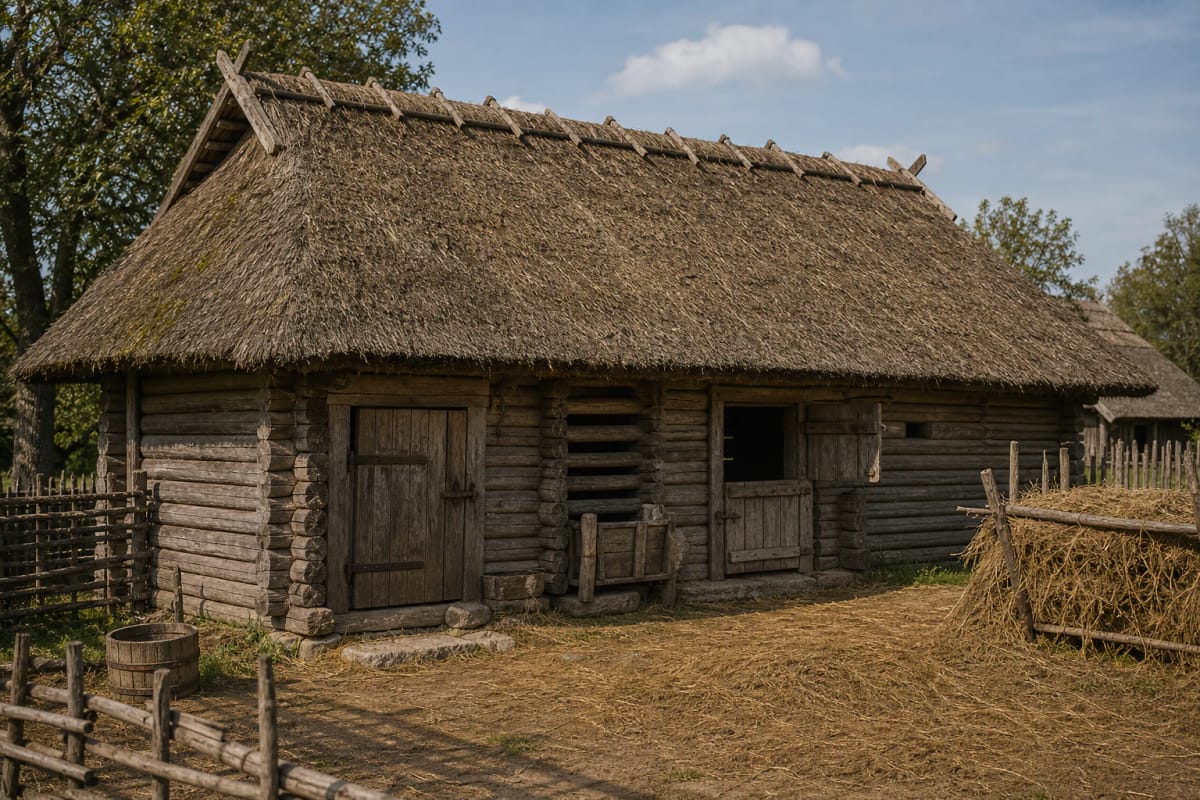
Linear cattle shed: A simpler elongated building for livestock.
L- or U-plan cattle shed: A larger farm complex forming a more enclosed livestock yard.
Cattle shed with diendaržis: A building or group of buildings connected with a fenced animal yard.
What is a tvartas?
A tvartas is a livestock building. Other names were used in different regions: kūtė, gurbas, staldas, abarė, punia. This variety of names shows how regional livestock farming was.
The cattle shed was not only shelter for animals. It organized fodder, manure, animal movement, warmth, and the order of the farmyard.
History and sources
Livestock buildings are mentioned already in early manor inventories. In peasant homesteads, the form of the tvartas depended on farm size, the animals kept, and regional building materials.
In larger farms of Žemaitija, Central Lithuania, and Northern Lithuania, cattle sheds could form L, U, or even more enclosed yard plans with a diendaržis or laidaras.
Construction
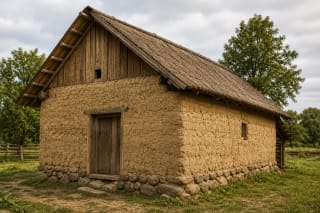
Cattle sheds were built of logs, clay, stone, or brick, sometimes with mixed techniques. They characteristically had higher stone foundations, smaller windows or very small openings, and broad eaves. According to VLE, by the animals kept, cattle buildings are divided into horse stables, sheepfolds, cow barns, pigsties, and calf sheds, while inside they had partitioned places such as stalls, cages, pens, and feeding and service passages.
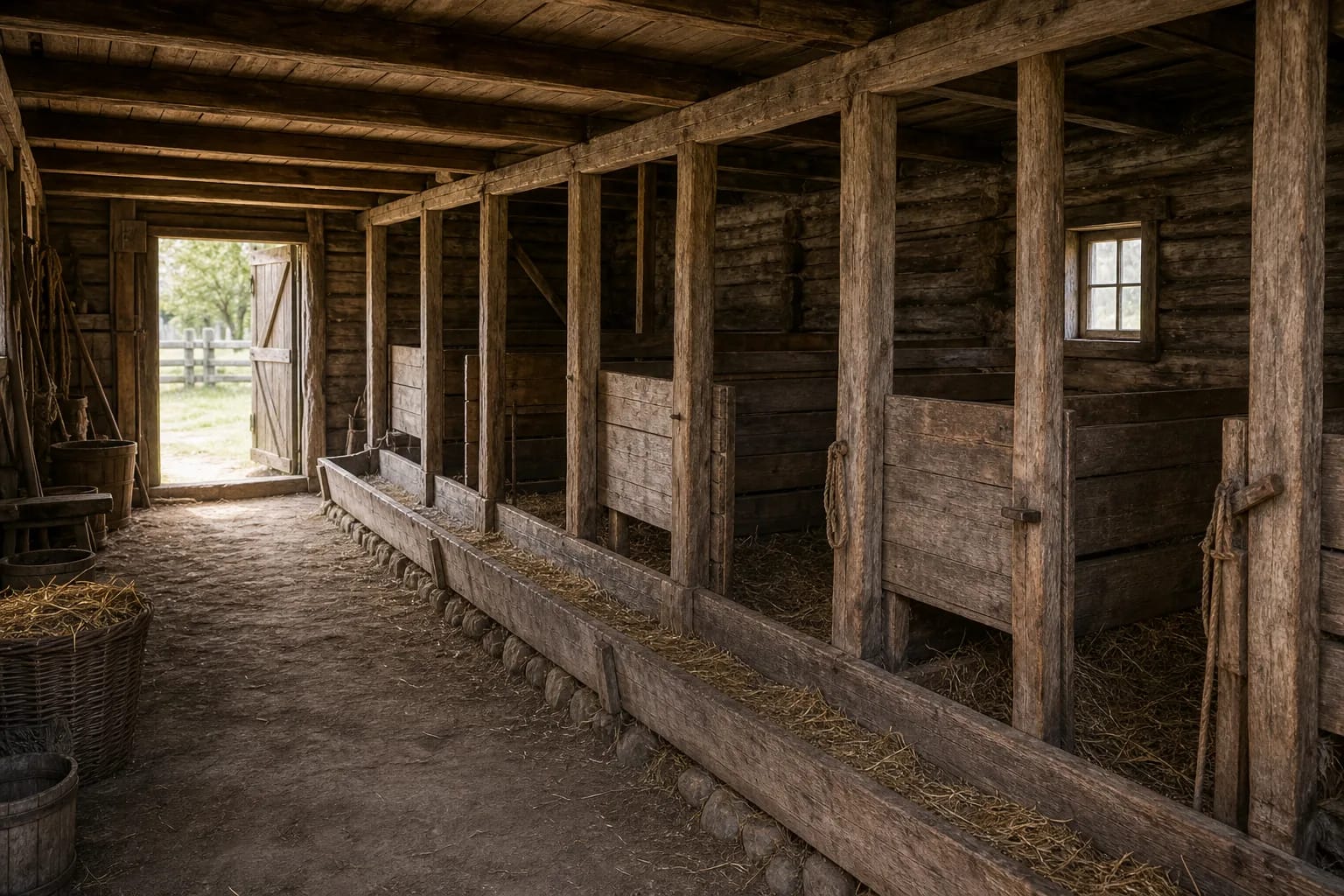
A livestock building needed warmth but also ventilation. Its structure therefore had to manage moisture, smell, cold, and animal safety.
Place in the homestead
The tvartas belonged to the farmyard zone. It had to be conveniently reached from the dwelling house, but not too close to the clean yard or flower bed.
Beside the cattle shed there was often a diendaržis or laidaras, a fenced place for livestock. Fences and gates here were as important as the building itself.