- Category
- Homestead Setting
- Type
- Boundary, entrance, and yard-ordering elements
- Context
- fences, gates, wicket gates, žiogrių fence, paling fence, horizontal fence, antvartė, yard, flower bed
- Source status
- well attested
Žiogrių fence, Paling fence, Horizontal fence, Homestead gate
Homestead Fences and Gates: types and elements
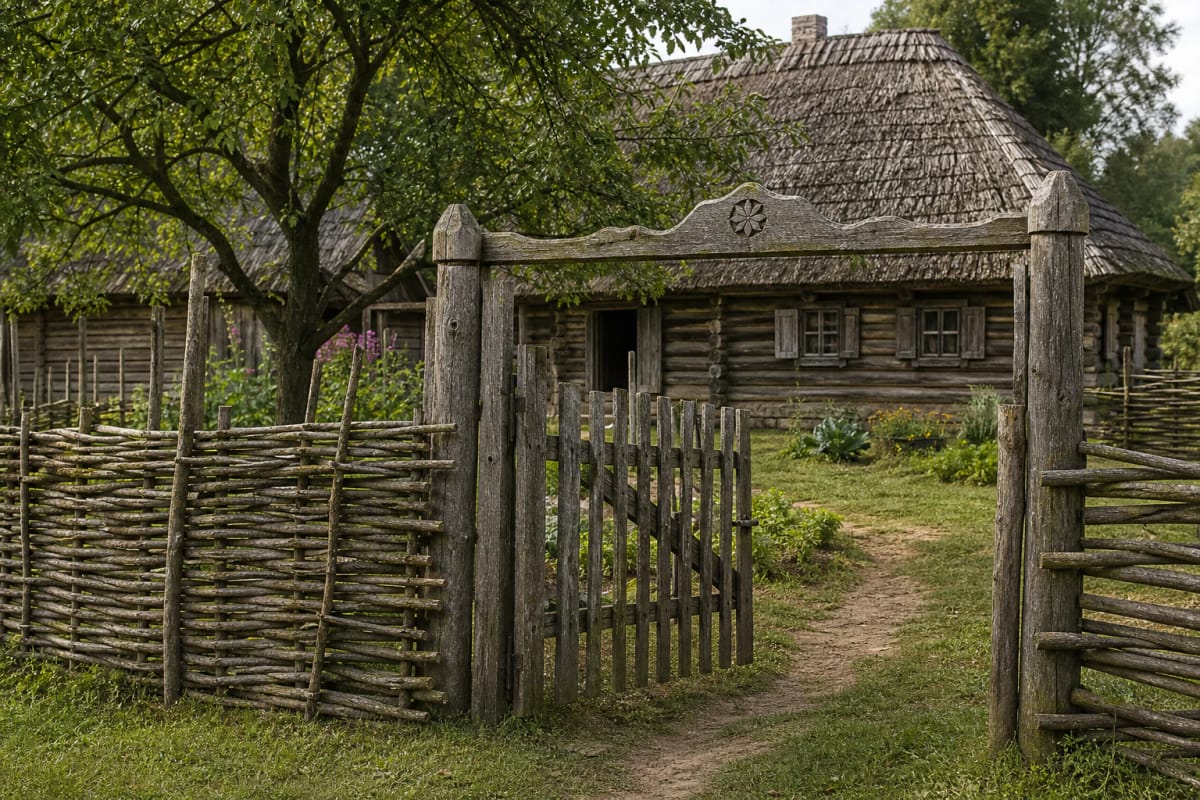
Žiogrių fence: A woven or crossed wooden fence, often denser and decorative.
Paling fence: A fence made of vertical wooden pales, suitable for the clean yard or flower bed.
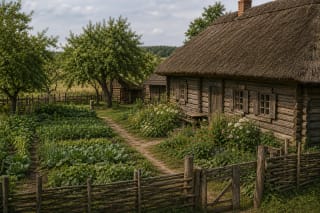
Horizontal fence: A sparser horizontal fence for vegetable gardens, meadows, or roadsides.
Stone fence: A boundary built of fieldstones in stony areas.
Why were fences needed?
Fences separated yards, flower beds, orchards, vegetable gardens, livestock paths, meadows, and the farm zone. They protected plants from animals, managed movement, and created order.
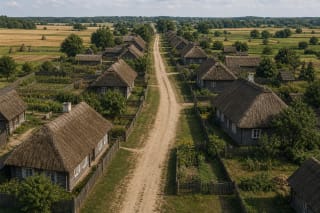
In a street village, the fence was also a public facade. It showed the homestead boundary, the owner's care, and the relationship with the village street.
Fence types
Denser žiogrių or paling fences were more typical for the clean yard and flower bed. Sparser horizontal fences were used for vegetable gardens, roadsides, and farm boundaries.
In stony areas, stone fences were built. They not only separated spaces but also used stones gathered from fields. According to VLE, the oldest Lithuanian fences were wooden, and defensive fences on hillforts sometimes formed up to six defensive lines; in the Baroque and Classicist periods, fieldstone fences spread around churchyards and cemeteries.
Gates and threshold
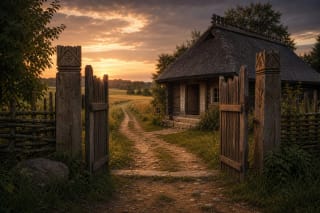
Gates mark entry into the homestead. They were practical but also symbolic: guests come through the gate, weddings depart through it, the owner returns, or livestock is driven in.
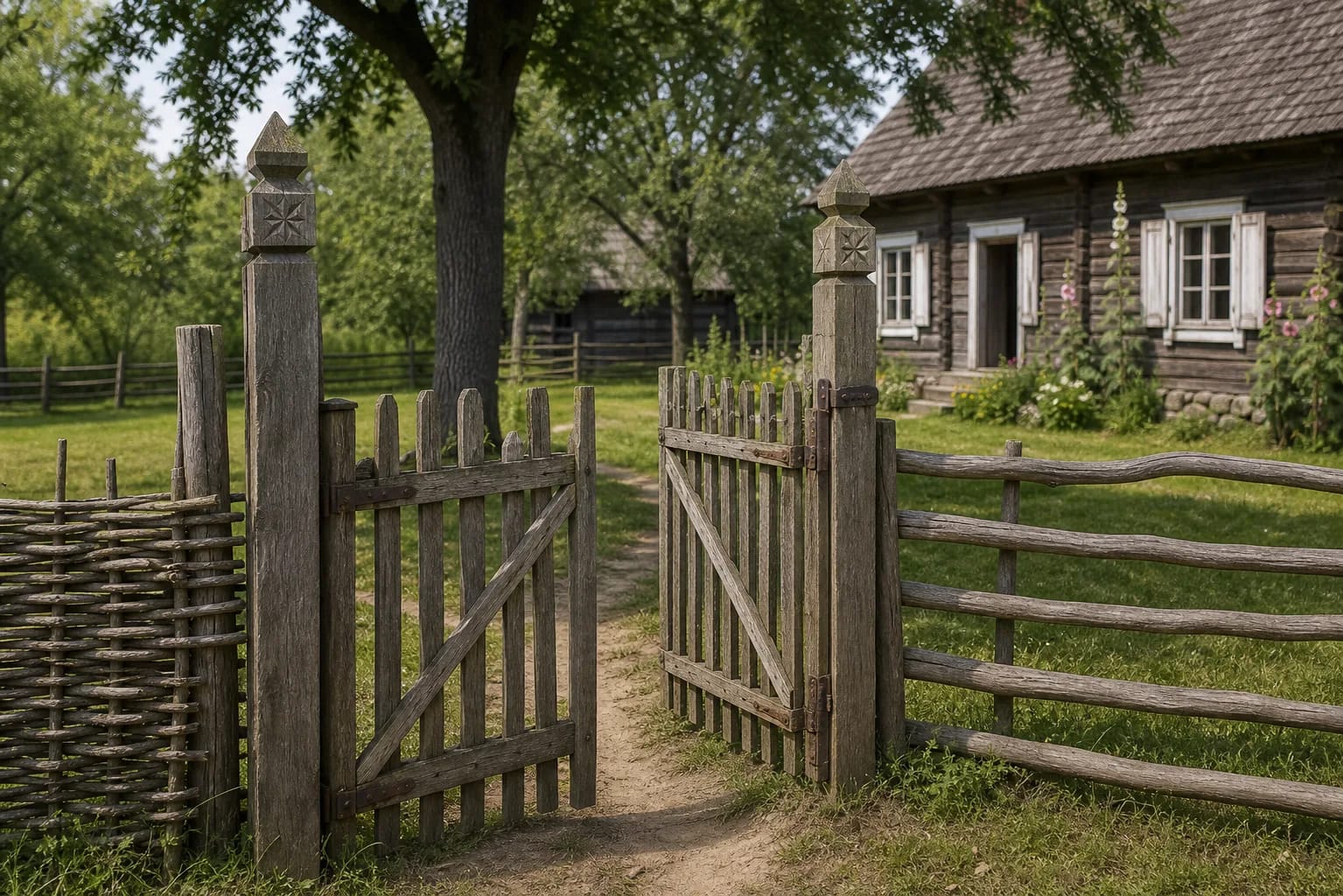
Older gates could have antvartės, wicket gates, climbing passes, or other local solutions.
Heritage care
When restoring a homestead, one should not use the same modern fence everywhere. In a traditional homestead, fence types differed by function.
Fences and gates help restore not only appearance but also the logic of movement through the homestead.