- Category
- Building Methods and Structures
- Type
- Clay wall and infill construction
- Context
- Clay building, rammed clay, thrown clay, unburned bricks, clay and straw mixture, earthen floor, farm buildings
- Source status
- well attested
Clay buildings, Rammed clay, Thrown clay, Unburned bricks
Clay Building and Rammed-Clay Buildings: types and elements
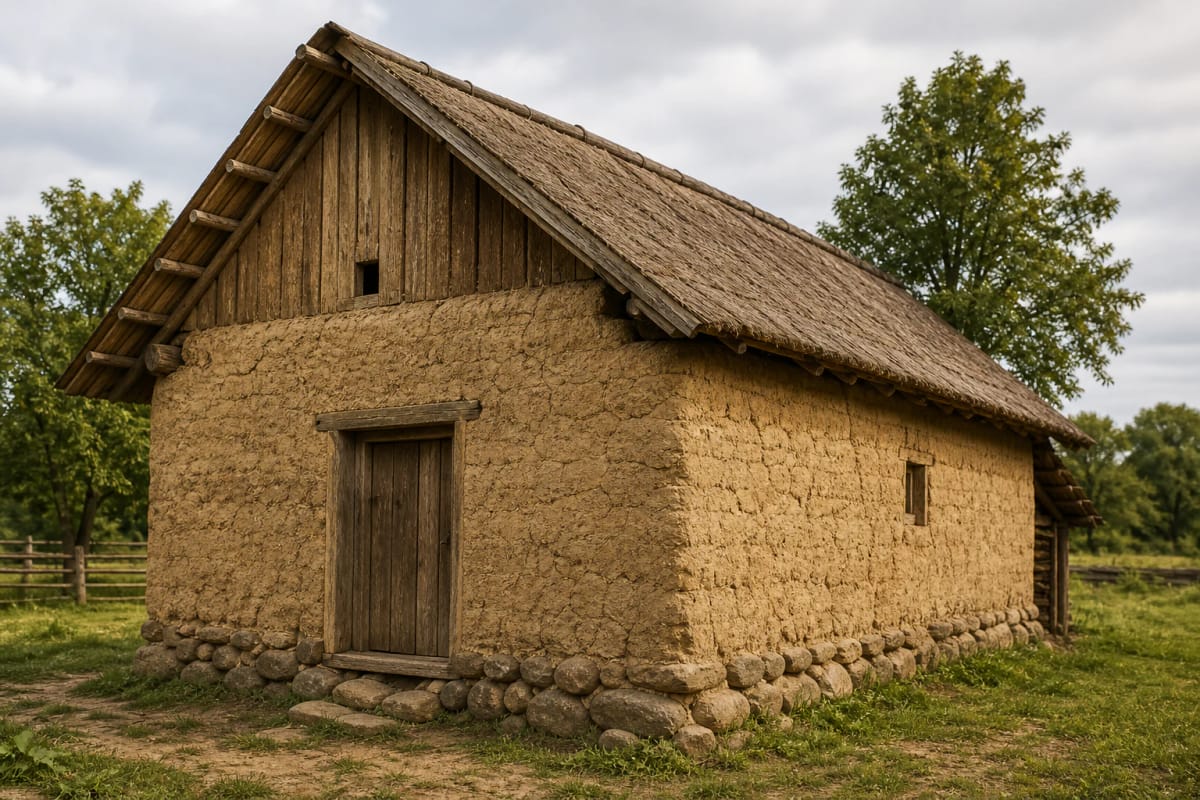
Rammed-clay wall: A wall formed by compacting a clay mixture in layers.
Thrown-clay building: A building where clay is placed or thrown into the wall form, often with straw.
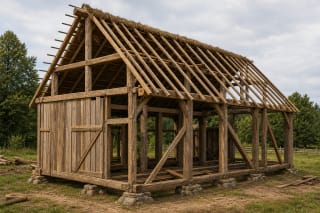
Frame with clay infill: Spaces in a timber frame are filled with clay or a clay-and-straw mixture.
What is clay building?
Clay building includes forming walls, earthen floors, stoves, chimneys, and infill from clay or clay mixtures. In Lithuanian rural architecture it was the second important building direction after wooden construction.
Clay was especially important where timber was scarce or suitable clay raw material was available nearby.
Techniques
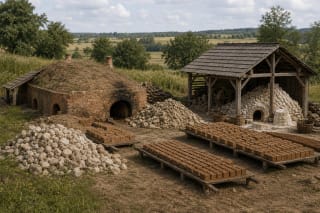
Builders used rammed clay, thrown or daubed clay, unburned bricks, and clay-and-straw mixtures. Openings or corners were sometimes strengthened with brick. According to VLE, masonry uses not only ceramic or silicate bricks but also unburned clay bricks and blocks, while the oldest masonry method is dry, or stacked, masonry without mortar, with gaps filled by small stones or gravel.
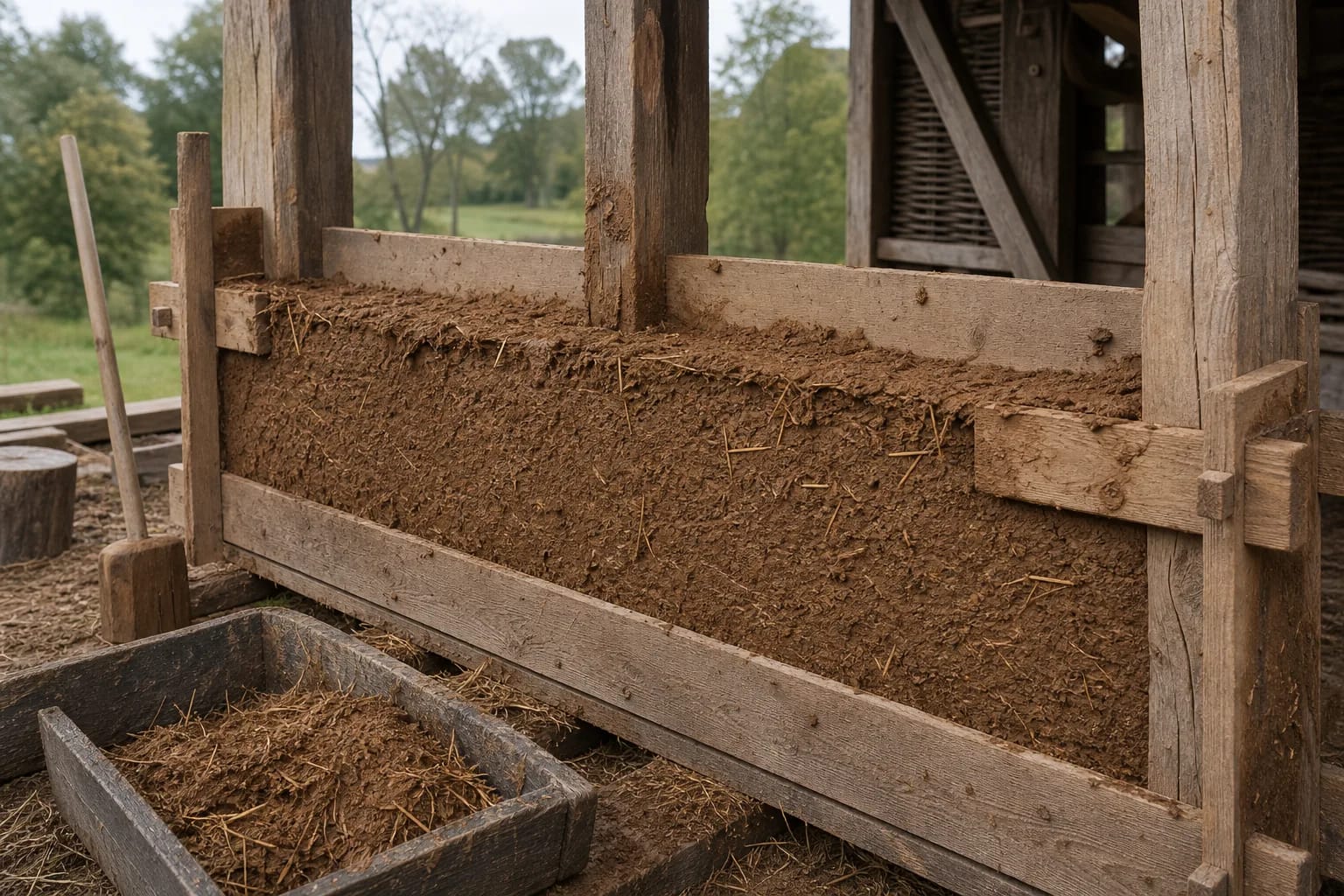
In frame construction, clay could serve as infill between timber elements, giving the wall mass and warmth.
Where it was used
Clay building spread in western, northern, and central Lithuania, especially in farm buildings. It was used for cowsheds, barns, auxiliary buildings, stoves, and earthen floors.
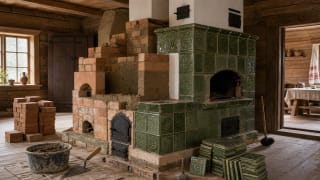
In dwelling houses, clay often did not make the whole house but served as material for the stove, floor, chimney, or wall infill.
Heritage care
Clay buildings are vulnerable to moisture and inappropriate cement repair. They need a roof, dry foundations, breathable surfaces, and an understanding that clay behaves differently from masonry.
Surviving clay buildings are valuable as examples of local materials and low-energy construction.