- Category
- Farm Buildings
- Type
- Building for storing hay and fodder
- Context
- Daržinė, hay, fodder, skūnė, shed, roofed shelter, cowshed, Lithuania Minor, farm economy
- Source status
- well attested
Fodder daržinė, Skūnė, Roofed shelter, Shed
Daržinė: types and elements
Separate daržinė: An independent fodder building placed in the farm zone.
Daržinė by the livestock building: A fodder store connected with or standing near the building for animals.
Skūnė: The Lithuania Minor name for a daržinė, connected with greater fodder needs.
What is a daržinė?
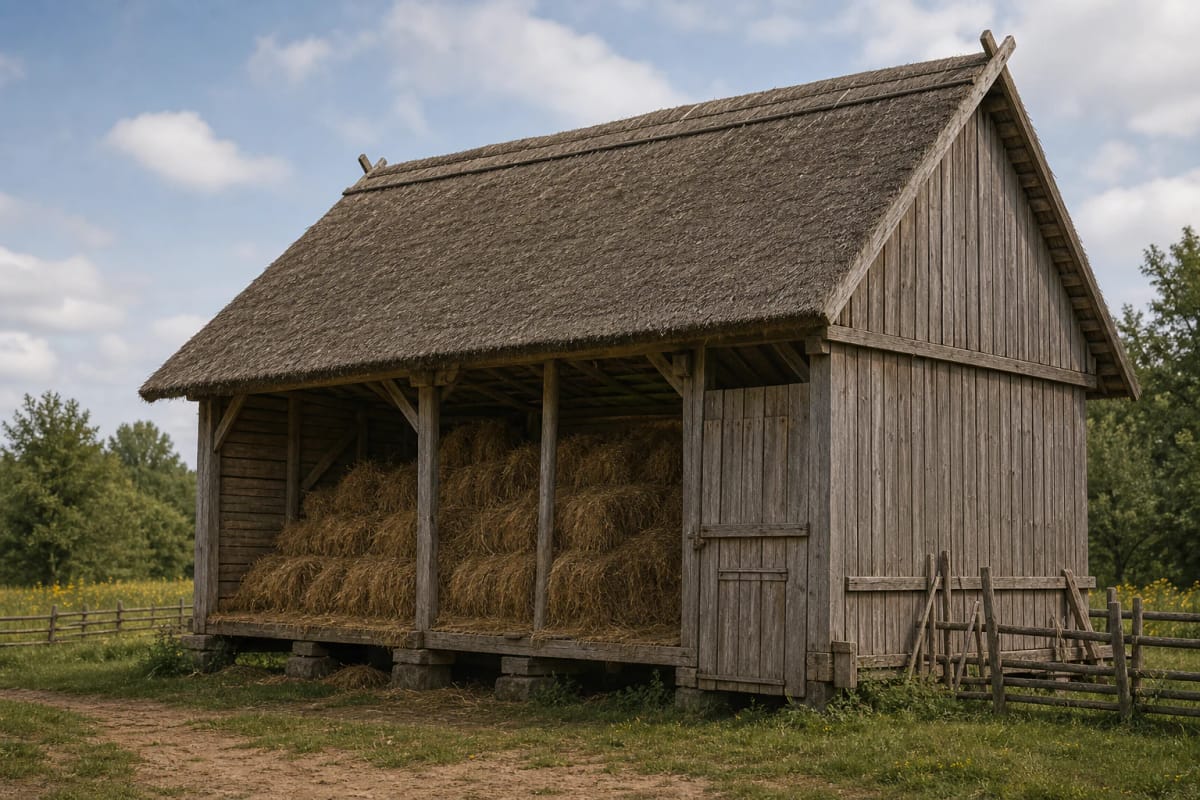
A daržinė is a building for storing hay, fodder, and bulky farm supplies. Unlike a klėtis, which protected grain and more valuable objects, a daržinė was large-volume, ventilated, and practically simple.
Its main task was to keep fodder dry. The roof, ventilation, open or half-open wall construction, and convenient access were therefore essential.
Connection with livestock farming
The daržinė was directly connected with the tvartas. If the tvartas housed animals, the daržinė held their winter food. These buildings therefore often stood near each other or were even joined.
The amount of fodder showed the size of the farm. On large farms daržinės could be massive, while smaller farms stored fodder beside the kluonas, under roofed shelters, or in combined buildings.
Regional names
In Lithuania Minor a daržinė was called a skūnė. There, more intensive farming and hay from flood meadows could lead to larger fodder stores.
Elsewhere the daržinė function was sometimes performed by roofed shelters, sheds, or the eaves of a kluonas. This shows that form depended on the needs of the particular farm.
Architectural features
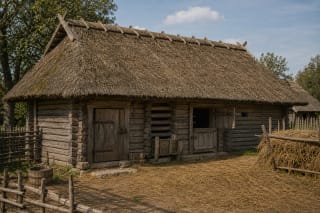
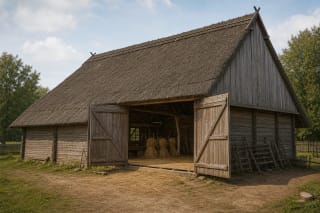
A daržinė was often board-built, frame-built, or a simple wooden structure. Walls could have gaps for ventilation. The roof had to be broad and reliable. According to VLE, the daržinė is mentioned in Lithuanian inventories already in the sixteenth century; separate daržinės were built about 6 by 12 m, often with large doors on both sides so carts could pass straight through, and many were demolished when isolated farmsteads were eliminated.
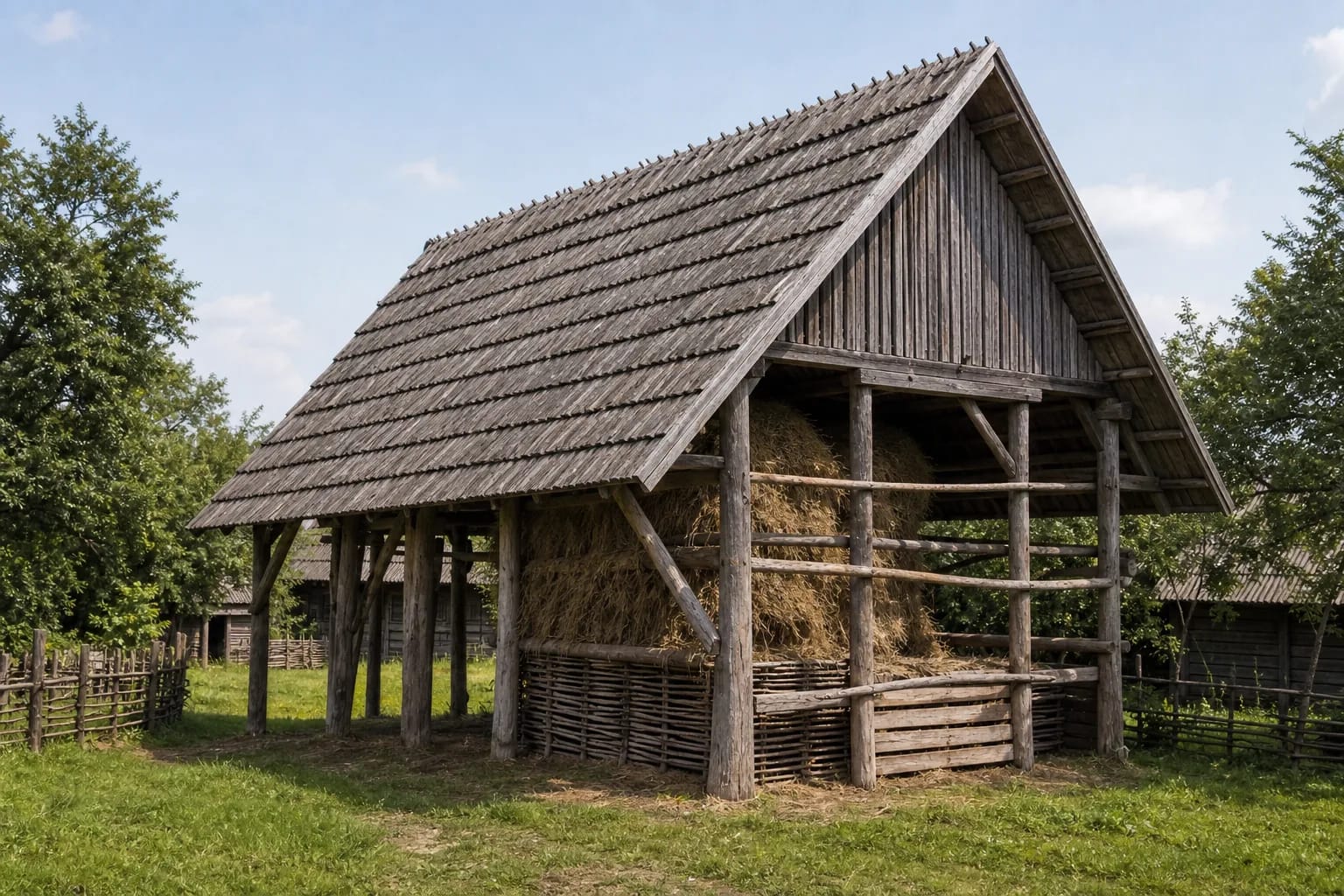
Decoration was not typical of a daržinė. Its beauty lies in proportion, a calm roof, and a clearly readable function.