
Lithuanian traditional foods
Grucė
Grucė can refer to processed grain and to food cooked from it. A Nalšia Museum description and a Vaitimėnai family account published by Tauragė Museum show why locality and preparation method matter.
Food and heritage context
- Category
- Grain and groat dishes
- Type
- a processed grain product and dishes made from it
- Heritage status
- museum interpretation and a named family testimony
- Context
- barley, mortar, mill, Nalšia Museum, Vaitimėnai, Ona Laurinaitienė-Kuizinaitė
Names and variants
Gruciki in the Vaitimėnai testimony
From grain to ingredient
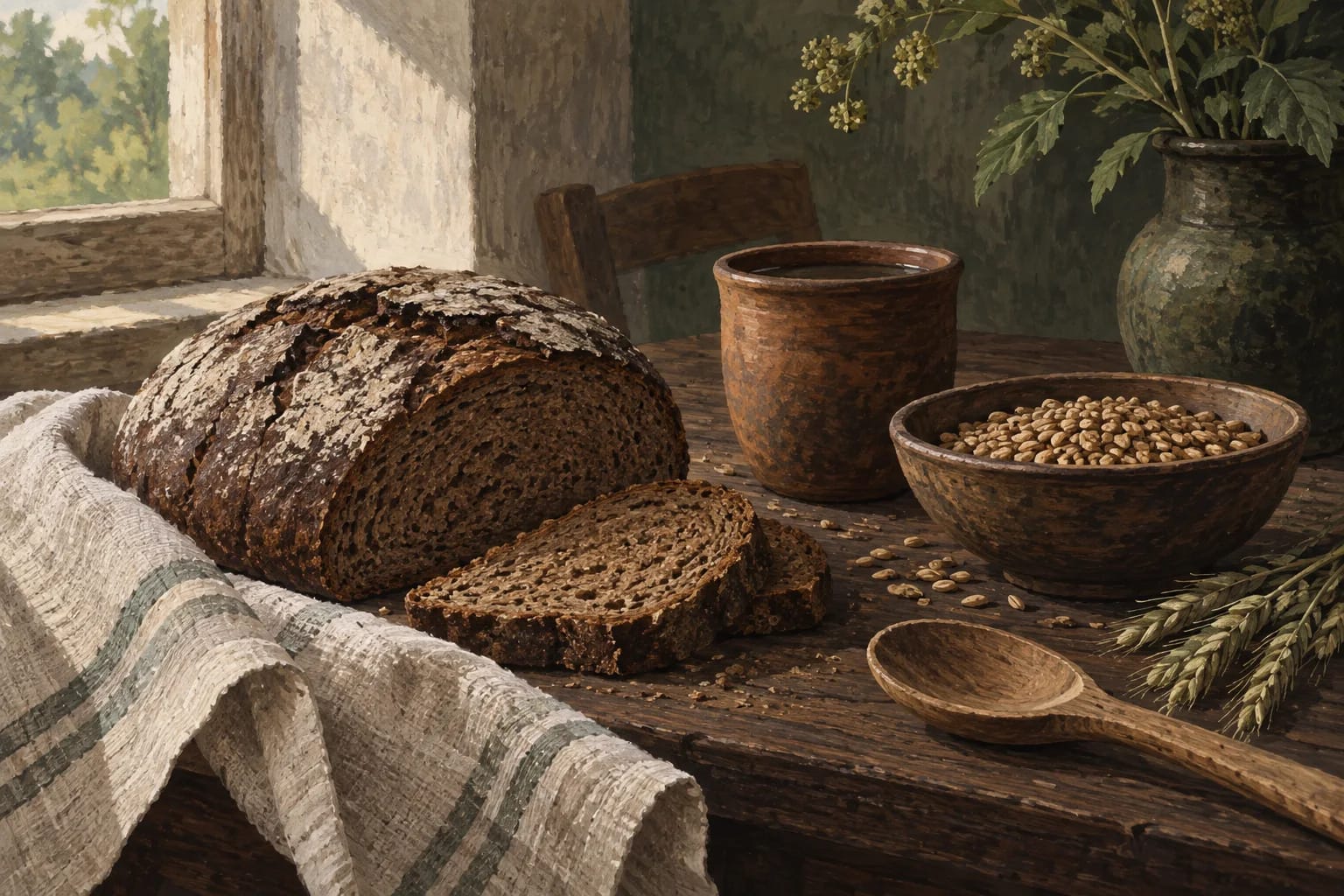
Nalšia Museum’s ethnographic exhibition description records barley being pounded into grucė in mortars until the First World War. This connects a food word to a household tool and a particular operation. It does not supply a recipe for every part of Lithuania.
Compare a mortar and millstones by their task: one account may describe pounding, another milling or a different grain treatment. The resulting ingredient is not yet the complete cooked dish.
A Vaitimėnai family memory
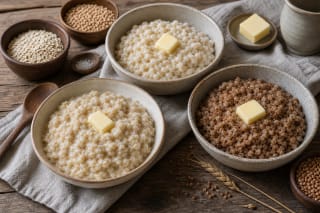
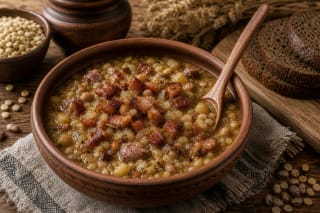
Tauragė Region Museum published testimony by Ona Laurinaitienė-Kuizinaitė, born in Vaitimėnai in 1922. Her account links barley grucė with a mill and describes dishes involving meat, beans, potatoes and milk-based versions. These details belong to her family’s experience.
The difference between the sources is useful. It prevents us from declaring the mortar the only possible tool, or one soup combination the meaning of the word everywhere.
Questions for a family interview
Ask what the uncooked grain looked like, where it was processed and how thick the finished food was. Preserve local pronunciation alongside the standard spelling. Those details help connect an inherited memory with a museum object and with products available today, while keeping the differences visible.
Preparation overview
Identifying a grucė version
First establish whether the speaker means the grain product or a cooked dish. This comparison guide does not prescribe one universal cooking ratio.
Ingredients
Method
- Record the grain and its processing: a mortar, a mill and a modern shop product are not automatically equivalent.
- Separate milk-based preparations from meat versions and attribute other additions to the relevant account.
- For present-day cooking, choose a named grain product and its preparation instructions, marking the substitution.
Notes
A historical term cannot automatically be equated with one manufacturer’s pearl barley.
Grucė: frequently asked questions
Is grucė a soup or a grain product?
The contexts connect the word with both processed grain and food cooked from it.
Must grucė be made in a mortar?
Nalšia Museum mentions a mortar; the Vaitimėnai account mentions a mill. Neither establishes a universal rule.
Is grucė always made with milk?
No. The Tauragė Museum family testimony records different preparations.