- Place
- Alytus District Municipality
- Region
- Alytus District
- Type
- biosphere reserve, wetland, and birdwatching area
- Address
- Kampelių g. 10, Aleknonys village, Simnas eldership, Alytus district
- Coordinates
- 54.45700, 23.64100
Žuvintas Reserve, Žuvinto biosferos rezervatas
Lithuania's oldest protected area
Žuvintas Biosphere Reserve is one of the key symbols of nature protection in Lithuania. VLE states that Žuvintas Reserve, the first protected area in Lithuania, was established in 1937 on the initiative of naturalist Tadas Ivanauskas; at first it was called Žuvintas State Reserve.
In 2002 Žuvintas became a biosphere reserve. Saugoma.lt says it was formed on the basis of Žuvintas State Nature Reserve, Žaltytis Botanical-Zoological Reserve, and Amalvas Botanical-Zoological Reserve. VLE gives the reserve area as 18,490 ha, while Saugoma.lt gives 18,573 ha.
UNESCO, Ramsar, and local protection
Žuvintas is Lithuania's first and only UNESCO Man and the Biosphere (MAB) site; it was added to the World Network of Biosphere Reserves in 2011. VLE also lists other international protection dates: Žuvintas wetland has been protected under the Ramsar Convention since 1993, and since 2004 the reserve has belonged to the EU Natura 2000 network. UNESCO links Žuvintas with a mosaic of lakes, wetlands, quaking mires, peatlands, and pine forests important for waterbird migration and wetland carbon storage.
It is important not to merge the area figures too quickly. Saugoma.lt gives 18,573 ha for the Lithuanian biosphere reserve, the Ramsar listing covers a 7,500 ha wetland, and UNESCO MAB uses a broader biosphere-reserve concept. Visitors should understand Žuvintas as a system of several protection levels, not as a single lake boundary.
Lake, reedbeds, and wetlands
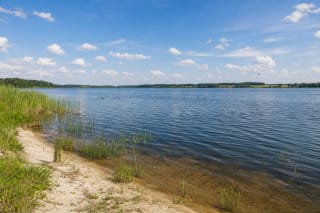
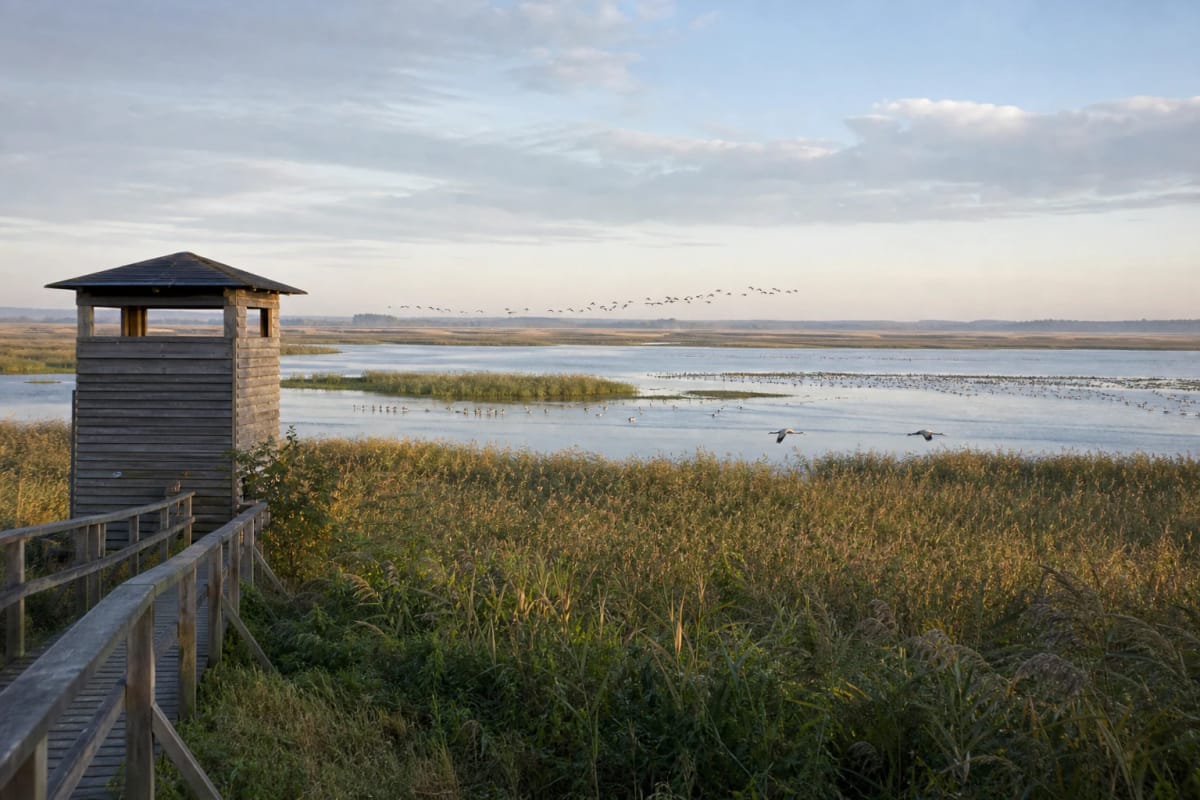
The core of Žuvintas is a shallow lake with broad reedbeds and surrounding wetlands. From trails or viewing points, the main impression is not high relief but a flat space of water, reeds, meadows, and sky.
The reserve landscape includes a shallow eutrophic lake, reedbeds, fens, raised bogs, transitional mires, flooded meadows, and parts of Buktos Forest. This mosaic supports very different species, from birds nesting in reeds to meadow and forest species.
A place of bird migration
Žuvintas is best known for birds. VLE and Saugoma.lt list 234 bird species, 987 plant species and 292 fungi species. Their protected-bird figures need qualification: VLE mentions 14 protected species without naming a protection list or survey date, while Saugoma.lt distinguishes 42 species protected by the European Community and 58 listed in the Lithuanian Red Data Book. These differently defined groups must not be added together or treated as interchangeable counts. The source figures were compared on 8 September 2026; this is not the date of a new bird survey. The rare aquatic warbler breeds in wet meadows, alongside cranes, mute swans and marsh harriers.
In spring and autumn, look for cranes, geese, ducks, and reedbed species. VLE notes that migrating goose concentrations are regularly observed on Lake Žuvintas; on March 15, 2023, a record 38,540 geese were counted. If you come specifically for birdwatching, choose early morning, bring binoculars, and do not expect birds to come close to the trail.
Visitor centre and nature trails
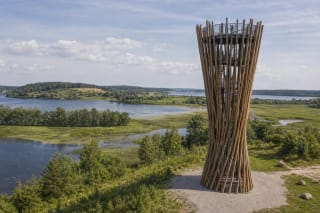
The most practical first stop is the Žuvintas Biosphere Reserve Visitor Centre in Aleknonys, on Kampelių Street. From there it is easier to understand where visitors may go independently and where restrictions apply because of the reserve regime.
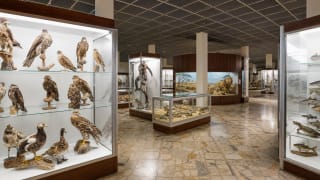
VLE states that the visitor centre in Aleknonys has a nature exhibition and an observation platform at the top of the building. Nature trails are arranged at Lake Žuvintas (400 m), Buktos Forest (2 km), and Amalvas wetland (120 m), along with five observation platforms. This is not a territory for wandering wherever you wish: VLE emphasizes that the strict Žuvintas Reserve itself may be entered only with a permit, so the best visit uses marked visitor areas.
How to visit Žuvintas responsibly
At Žuvintas the main rules are to stay on marked trails, avoid core reserve zones, avoid disturbing birds, and not use drones without permits. Even a quiet step away from a trail can mean entering a sensitive bird or wetland habitat.
If you want more than one stop, combine the Žuvintas visitor centre with the lakes of Meteliai Regional Park, the Buktos trail, or other Dzūkija wetlands, but plan by season: spring thaw, summer mosquitoes, and autumn migration create very different experiences.