- Place
- Tauragė and Jurbarkas District Municipalities
- Region
- Lithuania Minor
- Type
- state nature reserve in Karšuva Forest
- Address
- Visitor centre: Eičiai village, Tauragė District
- Coordinates
- 55.10150, 22.37600
Viešvilė Reserve
Viešvilė Reserve: strictly protected old forest and bogs
Viešvilė State Nature Reserve is one of the most strictly protected nature territories in Lithuania, and the youngest of the country's four nature reserves. It was established in 1991 to protect the natural ecosystem of the Viešvilė basin with the Artoji and Gličis bogs and Karšuva Forest, as well as rare flora and fauna. VLE gives the reserve area as 3216 ha, while protected-area service data give 3452 ha; another about 2459 ha forms the buffer zone. The reserve is administered by the Lithuania Minor Protected Areas Directorate.
As in other nature reserves, the protection level is essential to understand: this is not a free-roaming recreation area, but a territory where access is restricted and organized through an educational trail and visitor centre. That regime is what allows natural processes to continue.
Landscape: forests, raised bogs, and Lake Buveiniai
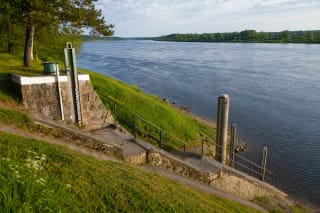
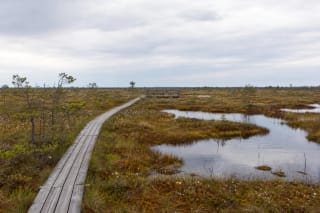
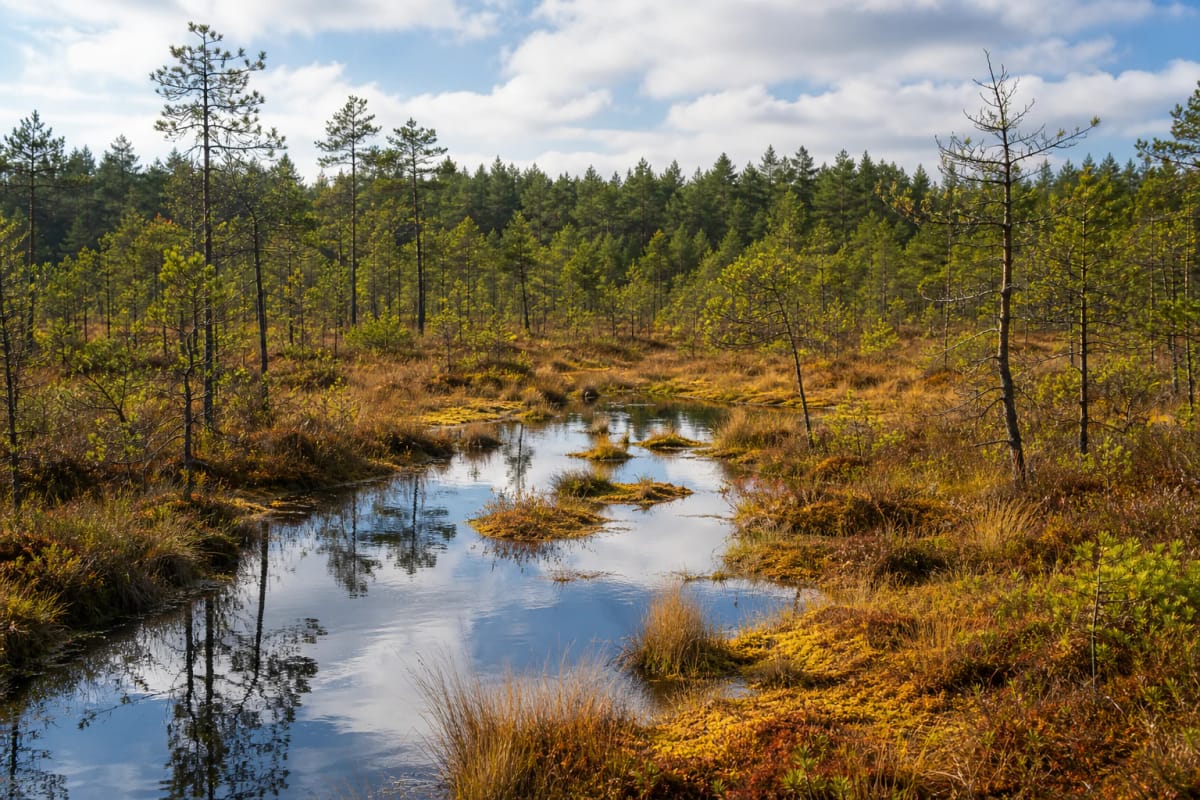
Most of the reserve is forest, about 68 percent, mainly pinewoods, with spruce stands in the western part. Depending on the calculation, bogs make up from about 30 to 60 percent of the territory. The largest bog is Artoji, also called Didžioji plynė, about 1072 ha, with peat up to 9.8 m deep. In the northern part, the 21.4 km Viešvilė River begins from the 6 ha Lake Buveiniai; 15 km of the river flows through the reserve, and it is one of Lithuania's most natural streams.
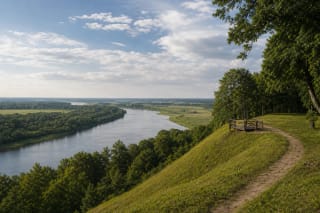
The combination of raised bogs, old forest, and natural waters makes Viešvilė Reserve an important example of what a minimally disturbed lower-Nemunas landscape can look like.
Rare flora and fauna
About 1016 plant species and 1236 fungal species are found in the reserve, including rare plants listed in Lithuania's Red Data Book. Fauna diversity is also high: 42 mammal species occur here, including wolves, otters, and protected lynx, and about 148 bird species.
Among birds, rare species are protected; cranes breed here, and black grouse and Eurasian curlew are encountered. This diversity shows that the reserve functions as an important refuge for species needing quiet and natural habitats.
International importance: Ramsar and Natura 2000
Viešvilė Reserve is a Natura 2000 site of European importance, and since 20 August 1993 it has been a wetland of international importance under the Ramsar Convention, Ramsar site No. 627. This means its bog ecosystems are valued not only nationally, but internationally. A capercaillie breeding centre also operates by the former reserve directorate, helping restore a population that disappeared from Karšuva Forest in the mid-twentieth century.
This status explains the strict access rules: the reserve protects habitats important for biodiversity across the continent.
How to visit Viešvilė Reserve
Visit the reserve responsibly and only in permitted places. The visitor centre is in Eičiai village. Two trails are installed: the Artoji Bog educational trail, visited only with a guide, and the Viešvilė walking trail. Independent visits to educational trails are allowed from 1 August to 1 March, during daylight.
Before travelling, contact the visitor centre or check protected-area information about current visiting rules. With the trail and centre, allow 2-4 hours.
What to notice on site
On the educational trail, notice the raised-bog vegetation, the boundary between pine forest and bog, water bodies, and quiet. In nature reserves, the calm of natural processes is itself a core value.
Spring and early summer are best for hearing and watching birds. Remember that here it is more important not to disturb nature than to 'see everything'.