- Place
- Jurbarkas District Municipality
- Region
- Lithuania Minor
- Type
- Lithuania's oldest water gauging station and Nemunas port complex
- Address
- Smalininkai, Jurbarkas District (Nemunas riverfront)
- Coordinates
- 55.06190, 22.57720
Smalininkai water level gauging station, Smalininkai port
Smalininkai Water Gauging Station: the oldest in Lithuania
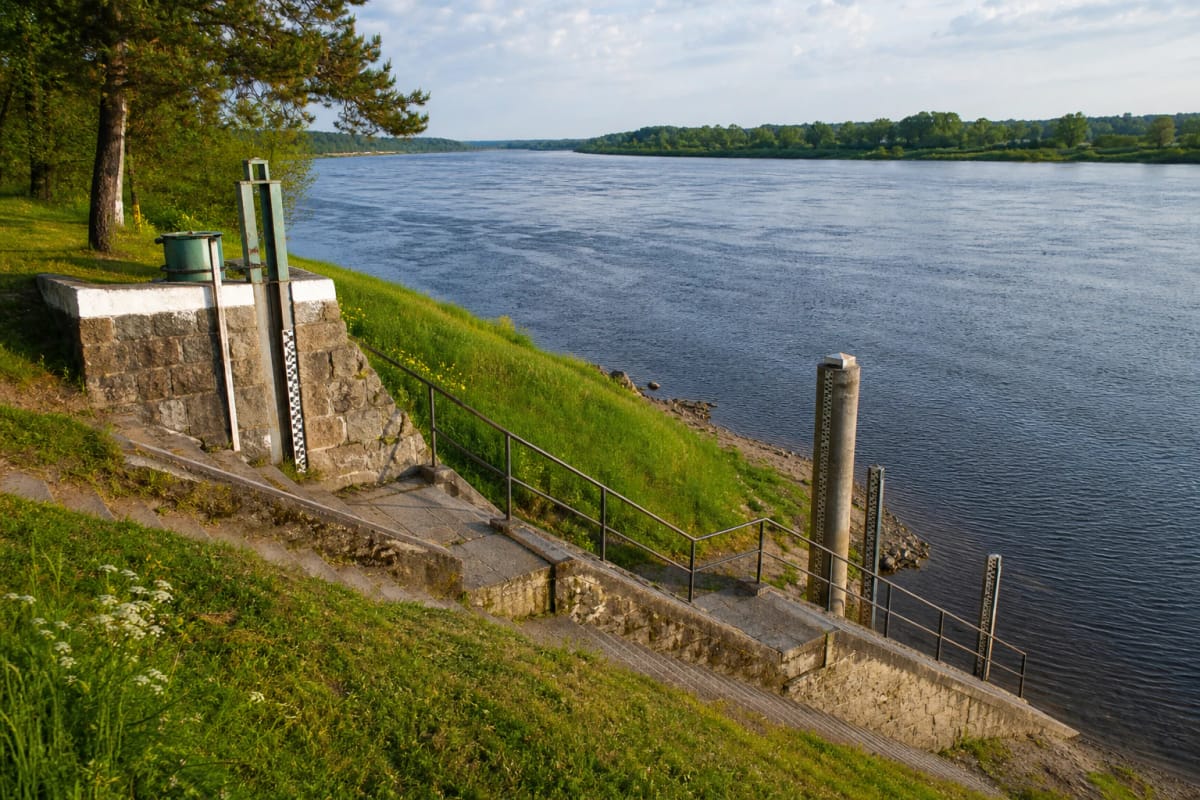
Smalininkai Water Gauging Station on the Nemunas is the oldest hydrological station of its type in Lithuania. Observations began here on 1 November 1811, when the first entry was made by customs controller Butrimas. This is a place where Lithuanian river history is measured literally, through changes in water level. VLE states that the station was installed in 1811 and rebuilt in 1888 and 1926; the masonry stairs stood until 1979, when they collapsed, and were fully rebuilt in 2004.
The station consists of 18 steps descending to the Nemunas bank, with side walls and gauges. It is the only old station in Lithuania whose authentic observation data have survived to the present: early data, up to about 1830, are kept in Berlin archives, and later data in Lithuania. The station still operates: a limnigraph was installed in 1961, and an automatic water-level recording station in 1997.
Importance for European hydrology
Smalininkai observations were valued for their systematic and reliable character. By the start date of observations, this is the third-oldest such station in Europe, after Sweden's Vänern (1807) and the Rhine (1809). Lithuanian hydrology pioneer Professor Steponas Kolupaila gathered early data preserved in the Berlin and Tilsit archives and in 1932 published an analysis of 121 years of Nemunas runoff at Smalininkai, from 1811.
Such a long and continuous data series is rare on a European scale. About 71.5 percent of Lithuania's territorial waters pass Smalininkai, and the average Nemunas discharge here is about 540 m³/s, so the station is important not only as local heritage but also as an object of scientific history.
Smalininkai port and navigation history
The water gauging station is part of the wider historic Smalininkai port building complex, Cultural Heritage Register code 31027, entered in 2006. The complex has four parts: the port embankment, railway embankment, water gauging station, and a stone-paved street section. The station itself was granted national significance by a government resolution in 2008. The river winter port survives; it was installed in 1837 and reconstructed in 1886-1888, with an embankment about 400 m long, piers, and a paved road from the railway station to the gauging station.
In the nineteenth century Smalininkai was one of the most important inland navigation ports on the Nemunas and a centre of river-vessel building. Timber was floated here from the upper Nemunas toward East Prussia. This explains why such important hydrological and port infrastructure appeared in a small town on the Nemunas.
Smalininkai: a border town in Lithuania Minor
Smalininkai stands on the right bank of the Nemunas, close to the border with Kaliningrad Oblast. It is thought to have emerged in the late fifteenth century as an important crossing point on the border established by the 1422 Treaty of Melno between the State of the Teutonic Order, later Prussia, and the Grand Duchy of Lithuania.
For five centuries Smalininkai was a border place, and in 1923, together with the Klaipėda Region, it was joined to Lithuania. The town therefore belongs to the cultural layer of Lithuania Minor and retains traces of German and Lietuvininkai history.
Museum of Ancient Technology
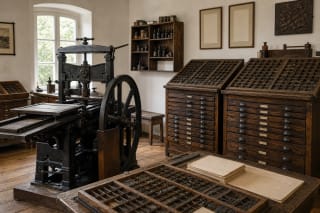
Smalininkai has a Museum of Ancient Technology, founded in 2004, displaying old agricultural and other machinery. It complements the port and gauging-station theme well and can turn the visit into a longer route.
The museum setting also presents the importance of Smalininkai Water Gauging Station in a European context, emphasizing the long surviving series of observation data.
How to visit
The water gauging station and port remains are visited as an open Nemunas riverfront site, so dry daylight conditions are best. Allow 30-60 minutes for the station and port remains, and more time if you add the Museum of Ancient Technology.
Check museum opening hours officially before travelling. Smalininkai combines well with other lower-Nemunas and Lithuania Minor sites, including Viešvilė Reserve, Rambynas, and the Panemunė route.