- Place
- Lazdijai District Municipality
- Region
- Dzūkija
- Type
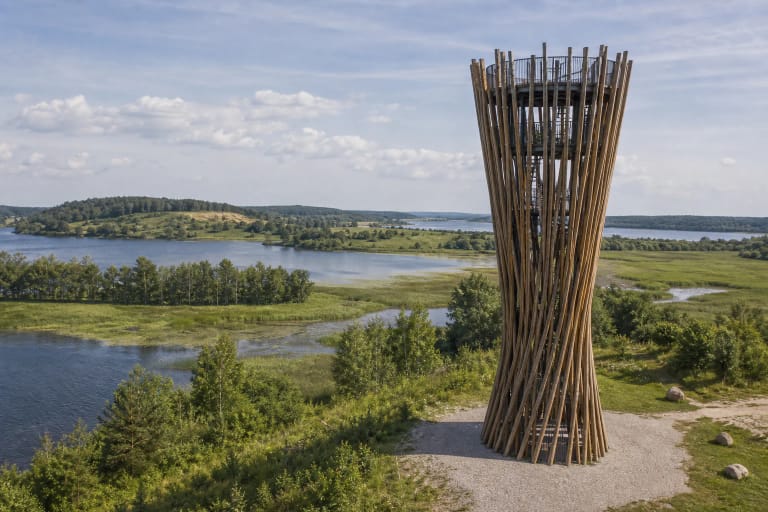
- 15 m metal observation tower with an open spiral staircase beside Lake Snaigynas
- Address
- Snaigyno g. 1, Kailiniai village, Veisiejai eldership, Lazdijai District
- Coordinates
- 54.10134, 23.72211
- Visit duration
- 20-40 minutes for the tower; 1-2 hours with the Lake Snaigynas shore or Veisiejai visitor centre
- Best time
- a clear spring or autumn morning for the panorama; do not climb during thunderstorms, strong wind, or icy conditions
Snaigynas Observation Tower, Snaigynas-Veisiejai Observation Tower, Lake Snaigynas Observation Tower, Veisiejai Regional Park Observation Tower
Different maps say Kailiniai or Radvilonys, but they lead to the same tower
Lithuania's official protected-areas catalogue calls this Veisiejai Observation Tower. The names Snaigynas Observation Tower, Snaigynas-Veisiejai Observation Tower, and Veisiejai Regional Park Observation Tower all refer to the same structure. It stands on the north-western shore of Lake Snaigynas, about 2 km east of central Veisiejai. The exact public Google pin is 54.1013404, 23.7221113.
The address discrepancy does not indicate two separate attractions. Municipal property records use Snaigyno g. 1 in Kailiniai village, while the municipality's 2022 participatory-budget project places the same site in Radvilonys village. The Google listing also combines the two place names. Searching for the tower and using its Google place ID is therefore more reliable than navigating by village name alone.
The openwork structure is visible from regional road 134 between Veisiejai and Leipalingis. A turn from the road reaches the parking area, followed by a short paved approach to the base. The officially listed rest spot has tables, benches, and bins, with a portable toilet mentioned for summer; check the seasonal facilities afresh when you arrive.
The goblet silhouette is made by 32 inclined structural columns, not decorative cladding
The tower was designed in 2012 and completed in 2014 for Lithuania's State Service for Protected Areas. The design team at Rekreacinė statyba is associated with architects Alvydas Mituzas and Andrius Dirsė, and Raseinių statyba was the contractor. It was conceived as a recognisable sign for Veisiejai Regional Park rather than a neutral set of industrial stairs.
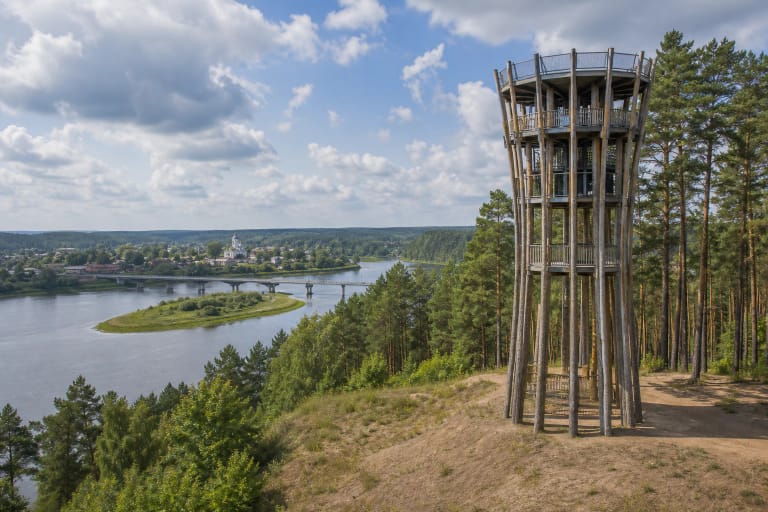
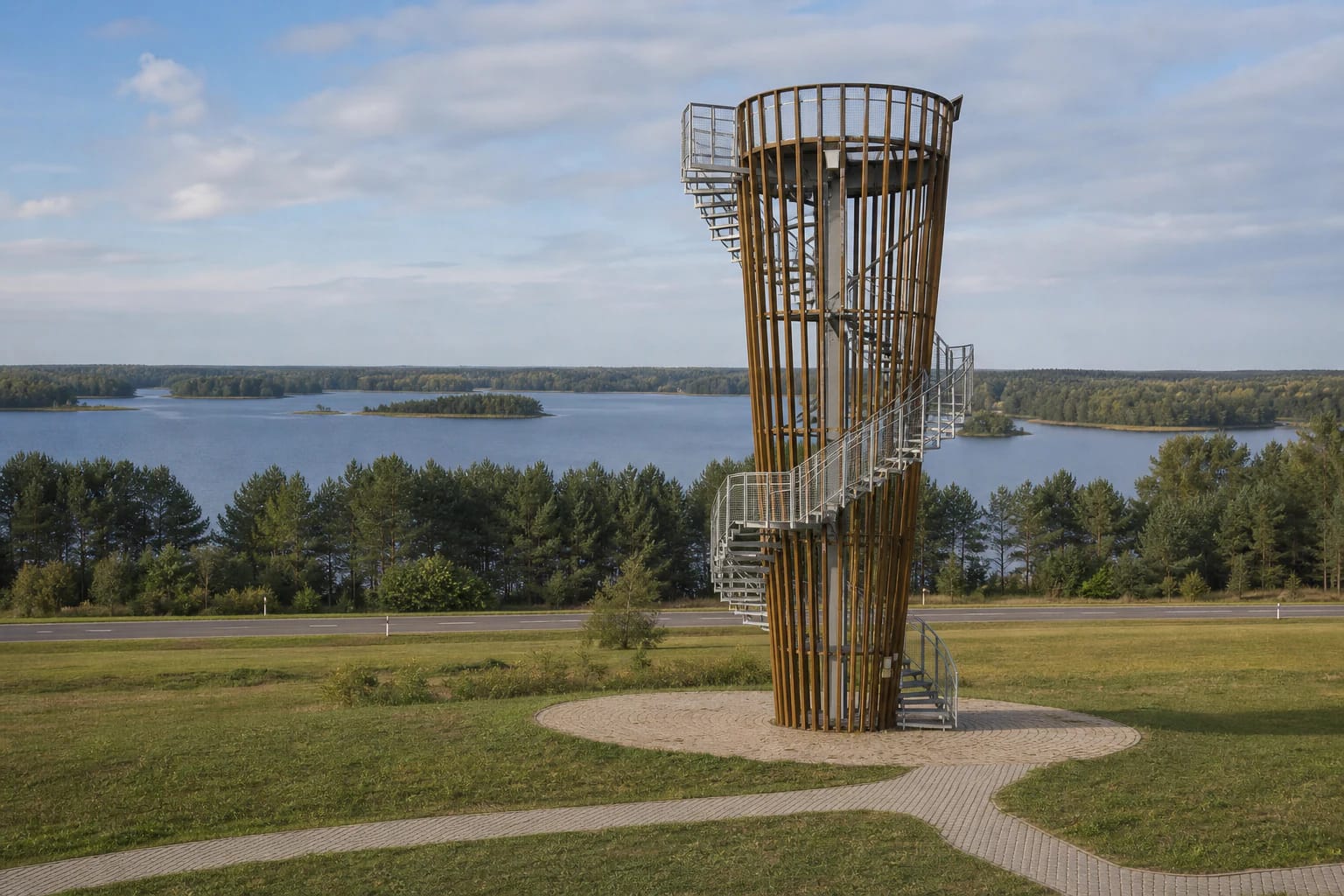
A central column and a ring of 32 thinner columns inclined by about five degrees support the viewing platform. They bunch together at ground level and flare towards the top, making the structure resemble a goblet from one angle and a frozen wind vortex from another. Brown-gold vertical ribs surround the galvanised stairs without enclosing them.
The staircase spirals around the central axis to a circular platform 15 m above the ground, pausing at several open landings. The ground remains visible through the grated steps and mesh railings, so the subjective sense of height can be stronger than the modest figure suggests. Interpretation panels at the base and on the platform connect the architecture to the regional park landscape.
Find the three islands first, then read the whole glacial channel of Snaigynas
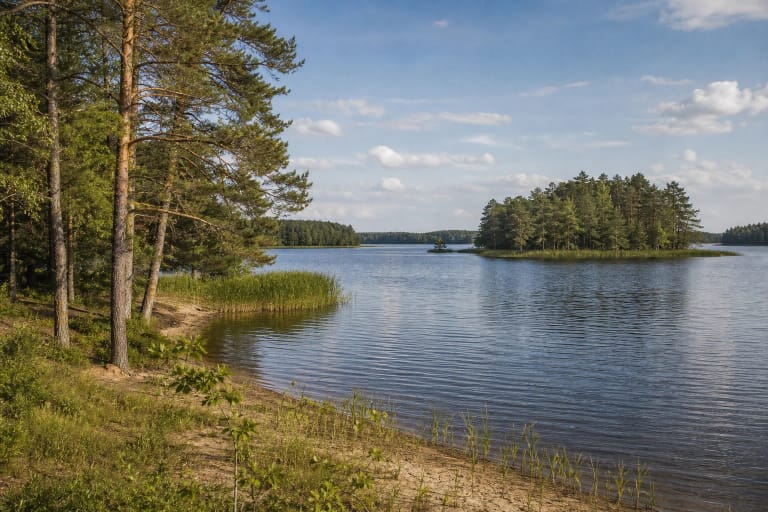
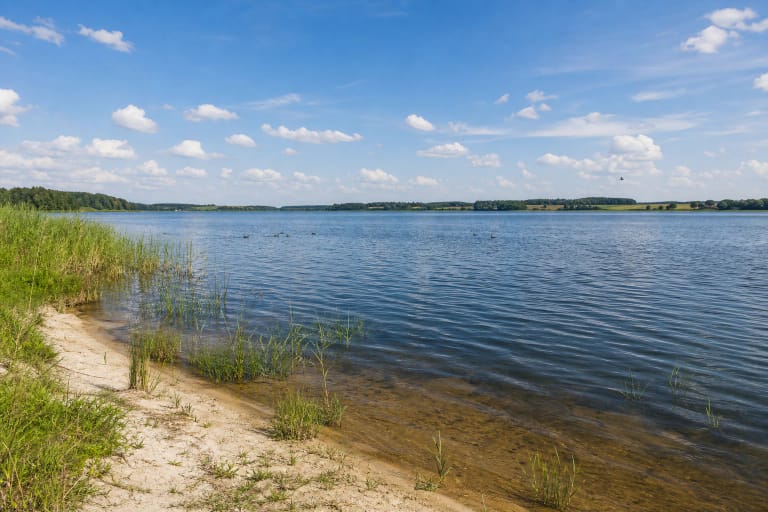
The strongest view faces the lake. Snaigynas occupies a subglacial tunnel valley cut by meltwater, which explains its long, narrow outline, deeply indented shore, peninsulas, and bays. From above, those features form a legible map. The lake covers 207.5 ha, stretches for 3.6 km, and has an 11.6 km shoreline.
Three wooded islands lie in the northern part of the lake and cover about 1.5 ha in total. They are the easiest visual landmarks to identify. Snaigynas also reaches its maximum depth of 24.9 m in the north-western part near the tower, although that depth cannot be seen from the platform; it is a scientific fact rather than a visible feature.
Turn away from the water to see the road towards Veisiejai, open grassland, bands of pine forest, and glimpses of town roofs between the trees. This is not a very tall, unobstructed 360-degree viewpoint, and nearby foliage screens some directions. A clear day best reveals the lake's geometry, while binoculars help with the more distant Veisiejai skyline.
Sixteen LED lamps turned the tower into a night-time Veisiejai landmark in 2022
Coloured lighting was not part of the original 2014 build. In the municipality's 2022 participatory budget, local residents gave the lighting proposal 1,229 votes, the highest total among that year's district projects. The municipality allocated EUR 20,000, and the current Saugoma.lt listing confirms that sixteen LED lamps were installed.
The lamps sit around the central part of the structure and wash the inclined ribs and spiral in changing colours. Programmes can be adjusted for special occasions, so neither a particular colour nor a fixed switch-on time is guaranteed. If an evening light display is the main purpose of your trip, check the protected-areas directorate's channels that day and treat illumination as possible rather than certain.
The site remained active after the lighting project. The Lazdijai Tourism Information Centre's 2025 activity report recorded 14,535 visits to the Veisiejai Regional Park observation tower, 1.6 per cent more than in 2024. That level of use explains why the small circular platform can require a short wait on a sunny summer weekend.
The official catalogue lists an active visitor site, but the open stairs demand an honest weather check
On 15 July 2026, Saugoma.lt included the tower in its current list of observation towers and displayed no closure notice. Its object page gives neither a separate ticket price nor opening hours, while the public Google listing marks access as 24 hours. Conditions can change, so check the official page before a long journey and obey any barriers or warnings posted on site.
There is no ticket office at the structure, and public visitor information describes entry as free. On 15 July 2026, the Google Maps listing pinned precisely to the tower averaged 4.7 out of 5 from 944 reviews; this is a changing public score, not an editorial award. Night lighting does not make darkness the best time to climb: in daylight it is easier to spot wet steps, judge the wind, and pass other people safely on the exposed spiral.
Saugoma.lt explicitly marks the tower as unsuitable for visitors with mobility impairments. There is no lift or ramp to the upper platform, and wheelchairs and pushchairs must remain below. Do not enter an exposed metal tower during a thunderstorm, very strong wind, sleet, or visible icing. Keep small children beside you and do not let them run on the stairs or climb the railings.
Extend the short climb along Snaigynas and into Veisiejai
Twenty to forty minutes is usually enough to climb, study the lake, and descend without rushing. The official rest spot beside the tower suits a short pause, but Saugoma.lt distinguishes it from a private recreation area and beach about 200 m farther on. Do not assume that public access rules at the tower apply to private shoreline, and follow local signs.
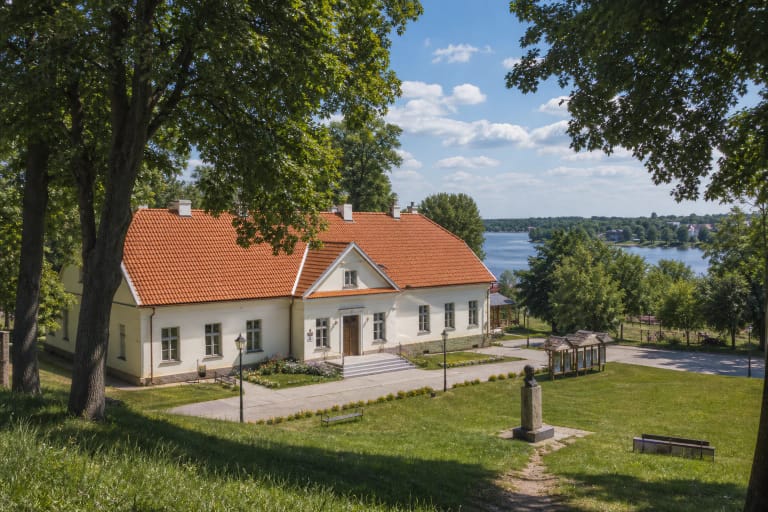
With one or two hours, continue into Veisiejai. The surviving manor wing houses the regional park visitor centre, while the manor park and the town's position on a peninsula in Lake Ančia reveal another part of the lake district. The tower's interpretation boards make more sense after seeing the exhibition about life among waters.
For a wider Lazdijai viewpoint route, pair this stop with Meteliai Observation Tower by Lakes Metelys and Dusia; a longer day of Dzūkija panoramas can include Merkinė Tower above the Nemunas and Merkys. Veisiejai Tower's strength is not a height record but the intimate, readable relationship between one lake, three islands, and a small town.