- Place
- Varėna District Municipality
- Region
- Varėna District
- Type
- confined spring and hydrogeological natural monument
- Address
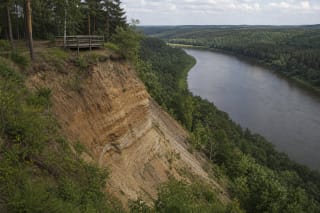
- terrace of the left bank of the Ūla, near Mančiagirė, Marcinkonys eldership, Varėna District
- Coordinates
- 54.14169, 24.44005
A spring that looks alive
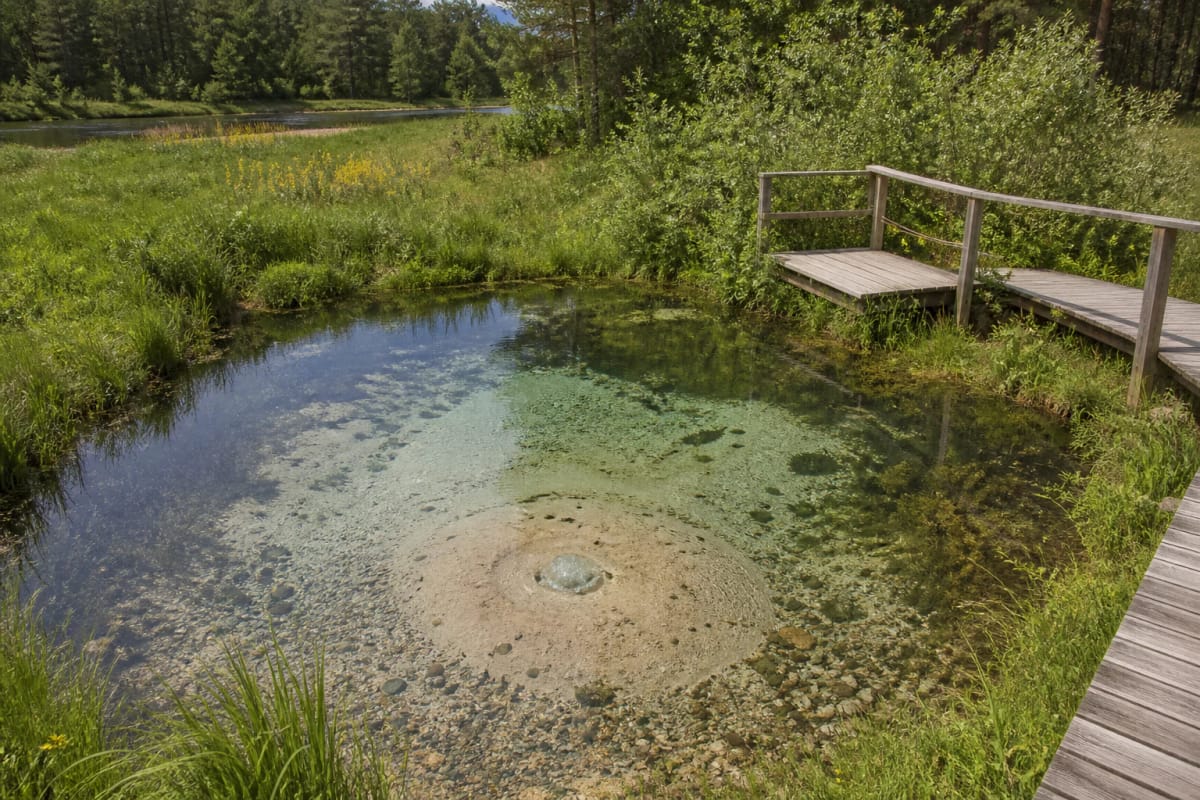
Ūla Eye is a small but memorable object in Dzūkija National Park. It is not a broad pond or decorative park fountain: water rises from depth and constantly stirs sand in the spring hollow, making the place look alive.
VLE states that the spring is in Varėna District, Marcinkonys eldership, about 1.5 km northwest of Mančiagirė, on the left bank of the Ūla. Coordinates are refined from public cartographic data, so on site always follow national park signs.
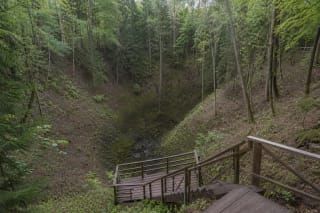
Suffosion hollow
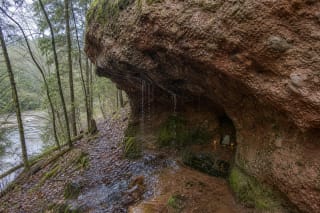
Ūla Eye is a confined spring in an oval suffosion hollow on the left bank of the Ūla, about 8 m from the riverbank. VLE gives its dimensions: about 4.4 m long and 3.4 m wide, with a depth of about 1.2 m. Discharge is about 2 l/s; according to State Service for Protected Areas data, about 137.2 m3 of water per day flows into the Ūla.
The sense of pressure is very clear here. Water rises from deep intermorainic aquifers and pushes sand upward, so the bottom seems to boil constantly. This view explains the name: the eye is small, clear, and always moving.
Water properties
Sources describe the water as fresh, soft, odourless, but with a slight iron taste. VLE mentions a temperature of about 8.7 C and notes that the spring does not freeze.
Hydrogeological descriptions mention calcium-magnesium bicarbonate water, about 120 mg/l of dissolved minerals, and iron and manganese levels elevated compared with drinking-water standards. Treat the spring as a hydrogeological object; whether to drink should be decided only according to on-site signs and common caution.
A short channel to the Ūla
Water from Ūla Eye flows into the Ūla through a small channel. According to State Service for Protected Areas data, it is about 67 m long, winding a little beside the Ūla before turning into the river.
This helps explain that the spring is not an isolated puddle. It is part of the Ūla valley hydrological system, connected with the river terrace, groundwater layers, and sandy Dzūkija relief.
Protection status
VLE states that Ūla Eye has been protected since 1980 and since 2000 has been a hydrogeological natural heritage object and natural monument. For such a small object, this status is especially important, because even one careless step into the hollow can alter the sensitive spring edge.
Use the built platform, do not step into the water, do not disturb the bottom, and do not try to scoop sand. What is protected here is not only the water but the bubbling mechanism itself.
Stories and healing-water tradition
Local tradition attributes healing powers to Ūla Eye. The State Service for Protected Areas description says older residents believe the spring water can help with various illnesses, especially if one goes to it just after sunset.
Present this as cultural tradition, not medical advice. The spring matters both for living story and hydrogeology, but health claims should not be turned into promises.
How to visit Ūla Eye
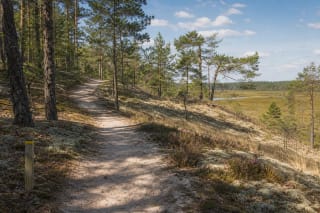
Ūla Eye is best visited slowly: approach by the platform, watch the moving sand, then notice how water flows toward the Ūla. It is a small object, so its quality lies not in duration but in observation.
After rain, the meadow and approaches can be wet, so wear suitable footwear. If you combine the spring with the Ūla River route or Mančiagirė surroundings, plan more time, because in Dzūkija National Park it is important not to rush and to respect trails and reserve rules.