- Place
- Vilnius District Municipality
- Region
- Vilnius District
- Type
- conglomerate rock, cave-like niche, and spring site
- Address
- Near Liucionys village, Nemenčinė eldership, Vilnius district, Skališkiai forest quarter 76
- Coordinates
- 54.87572, 25.57861
Skališkiai Cave, Holy Cave, Skališkiai (Liucionys) Rock, Liucionys Cave, Weeping Cave, Skala
A Rock Often Called a Cave
The most reliable protected-object name is Skališkiai Rock. In tourism and geology texts it is also called Skališkiai Cave, Holy Cave, Liucionys Cave, Weeping Cave, or Skala.
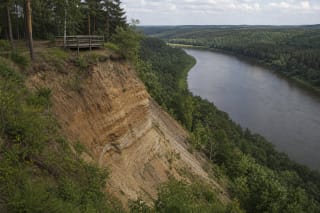
The site is in Vilnius district, Nemenčinė eldership, about 600 m northeast of Liucionys village, in a ravine on the right slope of the Neris valley. Source notes give LKS-94 coordinates 601309; 6083320, roughly 54.875719, 25.578607 in WGS84.
A Rare Conglomerate Object
In a 2024 article on conglomerate, the Lithuanian Geological Survey notes that conglomerate rocks exposed at the surface are rare in Lithuania, and the Holy, or Skališkiai, Cave near Vilnius is among the natural-heritage examples.
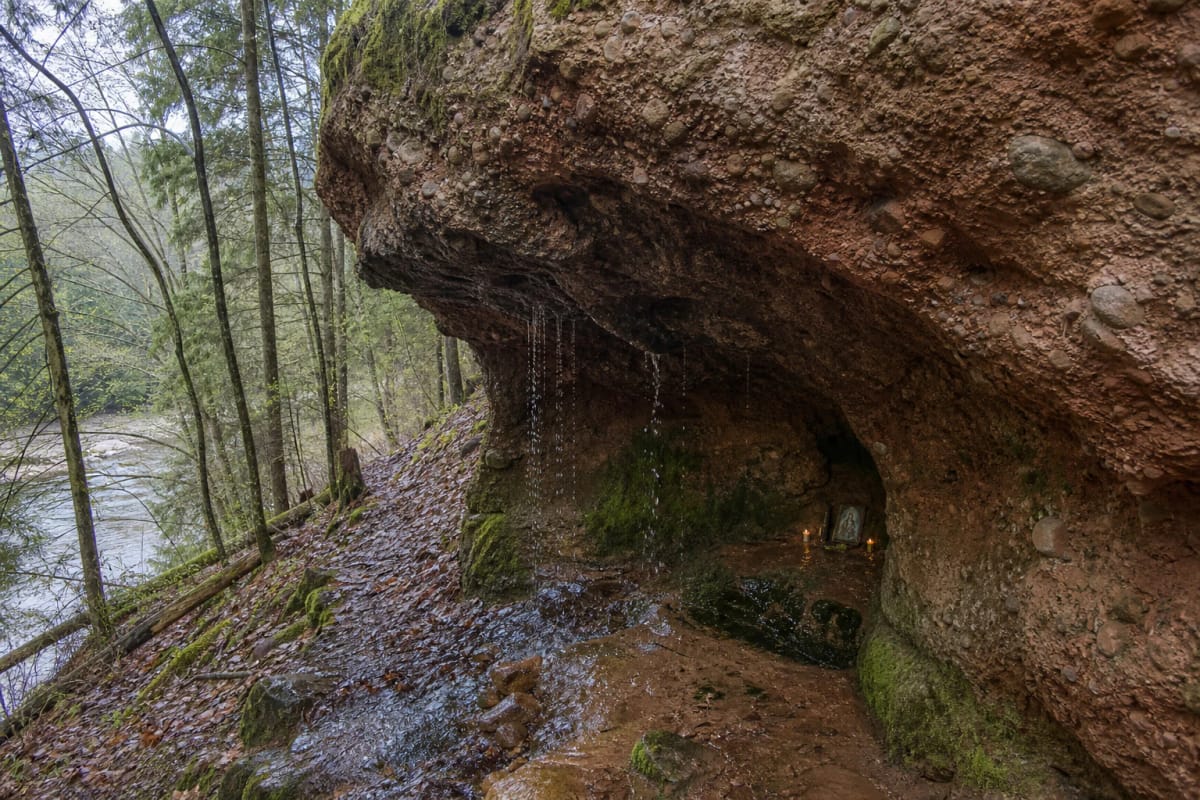
The object is a cave-like niche formed under a protruding conglomerate block, roughly about 12 m wide and 2 m thick, not a classic cave system. VLE gives the outcrop as about 5.7 m high and 20 m long, and the base of the conglomerate block sits about 10 m above the Neris water level; the cave opening reaches 2.3 m high, 8 m wide, and 3-4 m deep horizontally. The conglomerate is gravel with pebbles and sand, laid down by glacial meltwater and cemented by carbonate cement, so the niche slowly enlarges as its walls and vault crumble.
Cave Tears
Lithuanian Geological Survey material says water drips from the cave vaults from about 3 m height. This dripping water is called the tears of Skališkiai Cave, which explains the name Weeping Cave.
The spring water is described as fresh, calcium-magnesium bicarbonate type, cold, and slightly alkaline. Measurements given include 3.2-5.6 °C and pH 7.21-8.17.
The Lower Spring
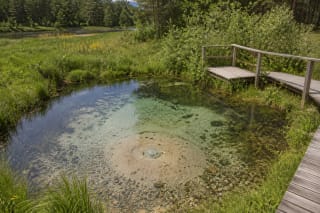
Lower down, in the Neris floodplain, another Skališkiai spring flows from beneath a reddish granite stone. The site is therefore connected with a spring system by the Neris bank, not only a single rock niche.
Because of springs and moisture, the area can be slippery. Even though the niche is small, the slope, ravine, and riverbank require more caution than a standard forest path.
Sacred Place and Beliefs
Local tradition called the place Holy, and healing properties were attributed to the dripping carbonate water, especially for eye ailments. Geological Survey material mentions prayers, a cross, offerings of money and plants, and modern niches with images of the Virgin Mary and candles.
K. Tiškevičius visited and described the place as attracting people because of its aura of holiness and water believed to heal. Present this as sacred tradition, not as medical advice.
Protection Status
Saugoma.lt export data lists Skališkiai Rock as a geological natural-heritage object, while Geological Survey material calls it a state-protected object and natural monument. VLE gives dates: protected since 1984, declared geological natural-heritage object and natural monument in 2000, and registered as a mythological object and cultural property since 1997.
VLE also records research history: Count K. B. S. Tiškevičius first described and drew the rock during his Neris expedition, published in 1871, and geologist A. Linčius measured and described it in 1989-1990. In the nineteenth century a cross stood above the rock, placed by order of the then owners of Raudondvaris manor.
Protection matters because conglomerate and springs are fragile. Do not climb on the rock, break material, leave additional candles or objects, or disturb spring flow.
How to Visit
Reliable information about parking, marked route, or accessibility for disabled visitors was not found. Plan Skališkiai Rock as a sensitive forest and river-slope object, not a convenient mass-tourism stop.
Use clear paths, avoid slippery slopes after rain, and respect sacred-place signs. If you do not know the approach, use up-to-date local maps rather than shortcutting across steep banks.