- Place
- Šventoji, Palanga City Municipality
- Region
- Palanga
- Type
- port, river mouth, and seaside infrastructure area
- Address
- Prieplaukos St., Šventoji, Palanga City Municipality
- Coordinates
- 56.02604, 21.08183
Šventoji Port, Šventoji Seaport, Šventoji River mouth
Where river and sea meet
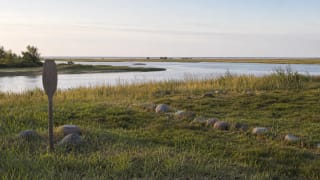
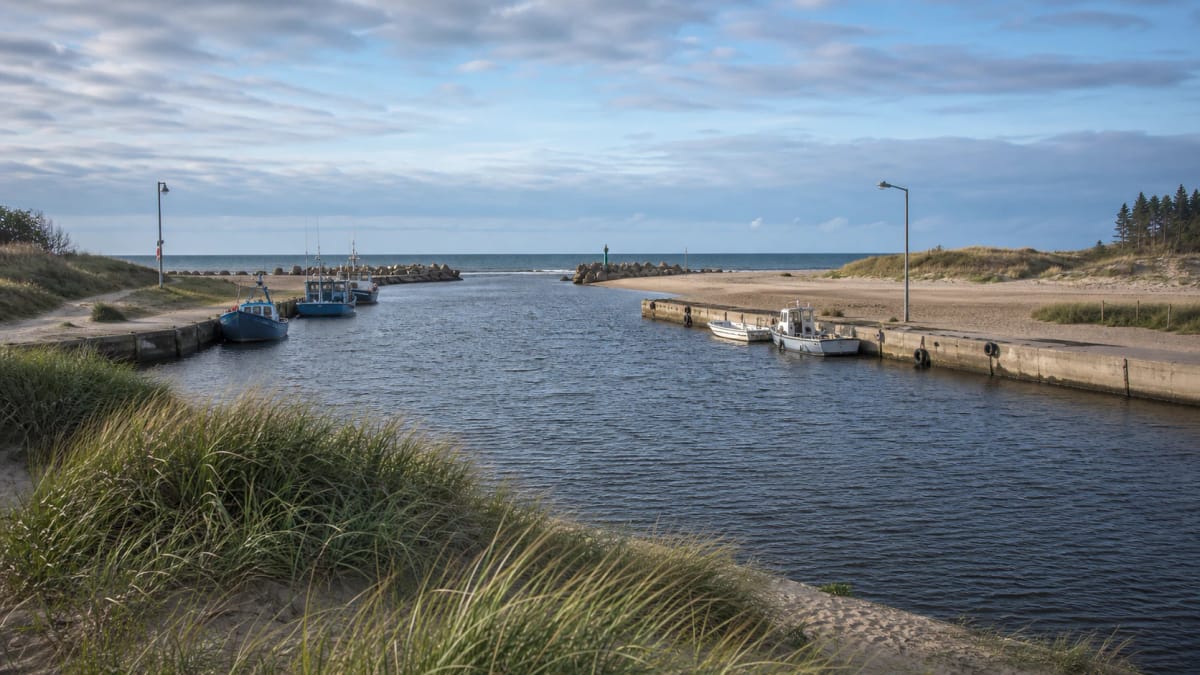
Šventoji Port and the river mouth are where the town turns most clearly toward the water. Here the Šventoji River - a Baltic and Latvian-border river about 83 km long, of which 31.8 km runs along the Lithuania-Latvia frontier - ends its course and flows into the Baltic Sea. Breakwaters, quays, and port infrastructure remind visitors that the resort has not only beach life, but also a maritime history layer.
A walk by the river mouth works best slowly: watch the river flow, sea waves, boat berths, breakwater lines, and how the wind changes the whole mood of the place. Since 2011 a Šventoji River water-gauging station has also operated in Palanga, 7.8 km from the mouth.
An old ambition for a Šventoji port
Šventoji Port has been known for more than 300 years, when it competed with the ports of Klaipėda, Königsberg, Liepāja, and Riga. Goods were shipped from here to East Prussia, Gdańsk, England, and other ports, so for a time this small coastal harbour took part in the Baltic trade network.
It is believed that, because of this rivalry and at the instigation of neighbouring port rulers, the harbour was destroyed during the Great Northern War in the early eighteenth century. The early Šventoji port ambition was thus interrupted for almost two centuries.
The interwar port, 1921-1932
In 1921 there was a resolve to rebuild Šventoji Port decisively, because it was independent Lithuania's only trade outlet to the sea. The port was to be developed in three stages, from fishing to trade harbour; plans included breakwaters up to 930 m long, a railway spur from Darbėnai, and a basin up to 8 m deep. The government even envisioned growing Šventoji into a port-town of up to 15,000 people, although Palanga then had only about 3,000 residents.
In 1924, when hopes rose of regaining the port of Klaipėda, the ambitions were scaled back: in 1925 only about 380 m of wooden breakwaters were built, and in 1932 a reinforced-concrete quay of about 500 m, which has survived well to this day. Modern masonry buildings and a school, still in use, rose at the same time.
From navy vessels to a fishing collective
Before the Second World War, Šventoji Port received vessels up to 60 m long: yachts, fishing boats, and even Lithuanian navy ships that withdrew from the annexed port of Klaipėda in 1939. Fishing artels operated here, catching about 300,000 kg of fish a year, together with a small shipyard and repair workshops.
In the Soviet era the interwar infrastructure was used by the Šventoji fishing collective, which had several dozen fishing boats and a fish smokehouse. Because the breakwaters were too short, there was a constant, fierce battle here with sand carried in by the sea.
The 2018 revival and the port's future
A new development stage began in 2018, when, under the Šventoji Seaport Law, the port was transferred to the Šventoji Seaport Directorate, an enterprise set up by Palanga City Municipality. Reconstruction work soon followed: a slipway, a boat hangar, administrative premises, and improved port approaches.
Design has begun on a 650 m southern breakwater and a 450 m breakwater, along with new quays - the port is expected to be able to receive about 450 vessels up to 30 m long and 6 m draught. Today Šventoji Port is therefore not only a memory site, but also real coastal infrastructure whose future depends on funding, dredging, and the needs of small vessels.
Visiting by the breakwaters
The port and river mouth area is a public outdoor space, but it is also working infrastructure. Follow the signs, do not climb onto dangerous structures, and keep a safe distance from the breakwaters after storms or when the sea is rough.
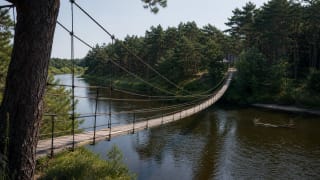
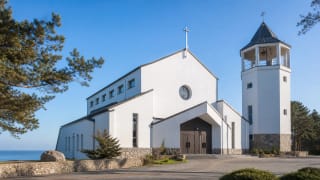
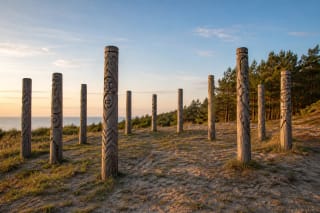
The best route combines this place with the Monkey Bridge, the tower of the Star of the Sea Church, Žemaičių Alkas, and the prehistoric settlement. Together they show Šventoji as a place of river, sea, religion, and resort memory.