- Place
- Šeteniai, Kėdainiai District Municipality
- Region
- Kėdainiai District
- Type
- Birthplace and cultural center of Nobel Prize laureate Czesław Miłosz
- Coordinates
- 55.39470, 24.03280
Šeteniai Manor, Birthplace of Czesław Miłosz, Czesław Miłosz Cultural Center, Baltasis svirnas
Šeteniai: Birthplace of Nobel Laureate Czesław Miłosz
Šeteniai is a small village in Kėdainiai district, on the left bank of the Nevėžis, about 13 km northeast of Kėdainiai. VLE states that the poet, essayist, and novelist Czesław Miłosz (Czeslaw Milosz), winner of the 1980 Nobel Prize in Literature, was born here in 1911. Šeteniai is therefore important not as an architectural monument but as the place where the path of one of the great twentieth-century Central European writers began.
The village is also interesting for its landscape: it lies in the Šventybrastis Landscape Reserve, surrounded by the calm Nevėžis valley. This valley is often associated with Miłosz's childhood memories, so the place works as both literary and natural memory.
Czesław Miłosz and His Link with Lithuania
VLE states that Czesław Miłosz was a Polish writer who traced himself to the last generation of nobles of the Grand Duchy of Lithuania. In 1929-1934 he studied law at Vilnius University, belonged to the avant-garde Żagary group, and Lithuanian nature, people, and the Grand Duchy tradition occupy an important place in his work.
Miłosz became internationally famous and was closely connected with restored Lithuania: in 1992 he received Lithuanian honorary citizenship and an honorary doctorate from Vytautas Magnus University, and UNESCO declared 2011 the Year of Czesław Miłosz. Šeteniai is therefore not only a local birthplace but a point of international cultural memory.
The Lost Manor and Baltasis Svirnas
VLE states that Šeteniai Manor is believed to have been founded in the first half of the nineteenth century and belonged to the Siručiai family; Czesław Miłosz was born there in 1911, but the manor buildings were demolished in the 1950s. Visitors will not find the old manor itself - the place is important through memory rather than surviving palace buildings.
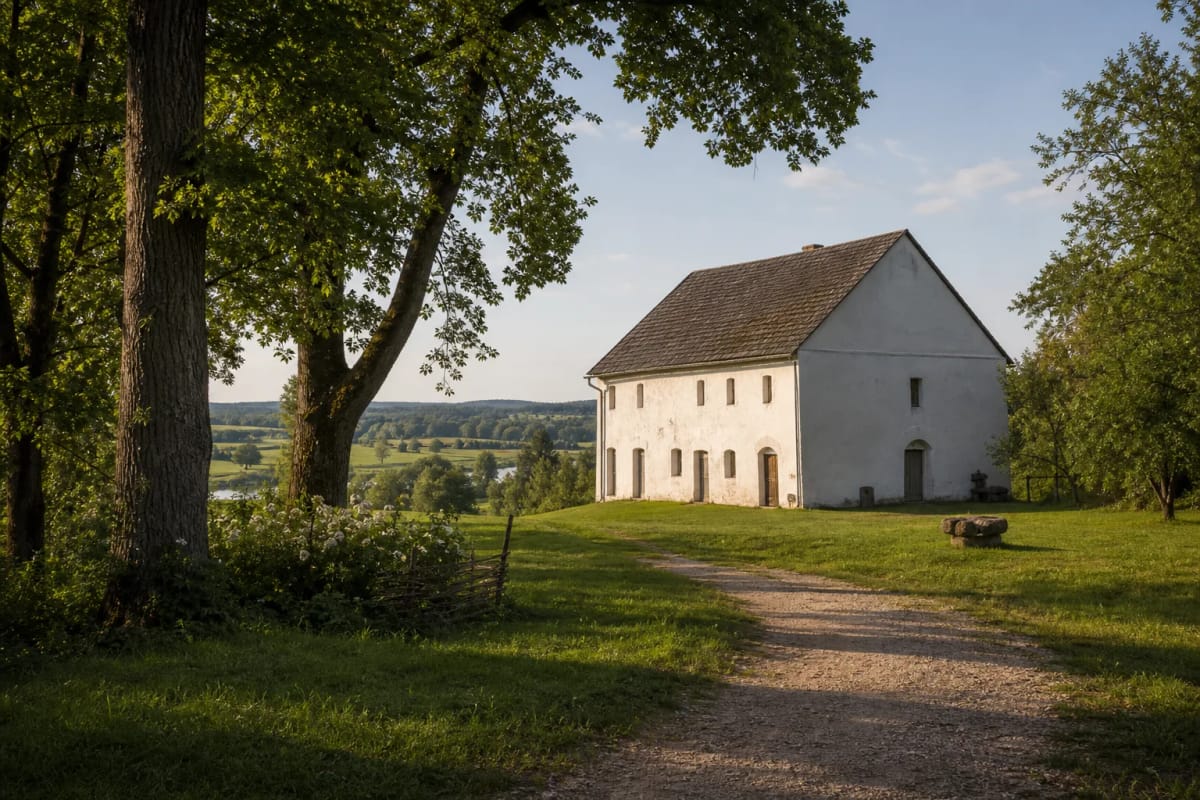
The former manor granary houses the Czesław Miłosz Cultural Center, often called Baltasis svirnas, the White Granary; it was rebuilt and opened in 1999 as a cultural and conference space. Another notable detail: Jonas Urbšys, the last foreign minister of interwar Lithuania, was also born in Šeteniai in 1896, so the village connects several important twentieth-century biographies.
Miłosz Memory: Festival and Literature
The memory of Czesław Miłosz is actively maintained in Šeteniai and the Kėdainiai region. Since 2014 Kėdainiai Regional Museum has organized the Czesław Miłosz Festival, held every two years. If you want living literary life rather than only a place, plan the visit around the program.
When reading about Šeteniai, distinguish documented facts from literature. Miłosz's works, such as The Issa Valley and Native Realm, are often linked with the Nevėžis-region childhood landscape, but this is artistic memory, not exact local history. Šeteniai is best read in two ways: as a real birthplace and as a landscape of the writer's imagination.
Visiting: Access and What to See
The main visiting accent in Šeteniai is Baltasis svirnas and the surrounding Nevėžis valley landscape. The center functions as a cultural and conference space, so visits and tours should be arranged in advance; check current opening times and events on the Kėdainiai Regional Museum page.
A visit usually takes 1-2 hours, including a walk around the surroundings and a look at the Nevėžis valley. Šeteniai combines well with Kėdainiai Old Town and other memory sites in the region, forming a literary and historical route.