Plungė District Municipality
Samogitia
former Soviet underground ballistic missile base
Šilinės g. 4, Plokščiai village, Plungė District
56.03990, 21.89870
1-1.5 hours; visited through the Cold War Museum exhibition
May-September for a Žemaitija National Park trip; check museum hours officially
Soviet Plokštinė Missile Base, Plokštinė underground missile base, Plokštinė rocket base
Plokštinė Missile Base: what was really here
Plokštinė Missile Base was not an ordinary military unit but an underground silo launch complex for ballistic missiles. VLE states that the Cold War Museum is set up in the former Soviet Plokštinė missile base, in Plokštinė Forest near Plokščiai village.
Today the name of the base often overlaps with the museum, but historically this was a wider closed military territory with silos, control rooms, corridors, fences, and a military settlement. For visitors the distinction matters: the museum is the current way to visit, while Plokštinė Base was the real Cold War infrastructure on which that museum is built.
Construction in 1960-1962 and the missile system
VLE writes that Plokštinė Missile Base was built from September 1960 to 31 December 1962; about 10,000 soldiers took part, mostly Estonians. It was one of the first underground missile bases in the Soviet Union, chosen for its remote forest location and secrecy: the surrounding Plokštinė Forest in Samogitia hid the complex from eyes and aerial observation.
The base held four 23 m long medium-range ballistic missiles R-12 Dvina, known in NATO classification as SS-4 Sandal. VLE states that they carried 1-2.3 Mt thermonuclear warheads, had a range of up to about 2,080 km, and were aimed at Western European cities; targets changed every 3-4 years depending on the political situation. The missiles' service life was 5-15 years, and at the base they were replaced once.
Silos, control, and secrecy
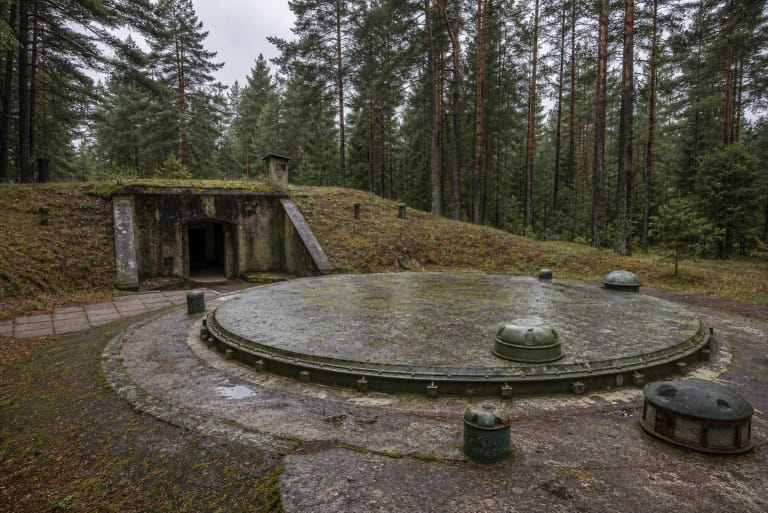
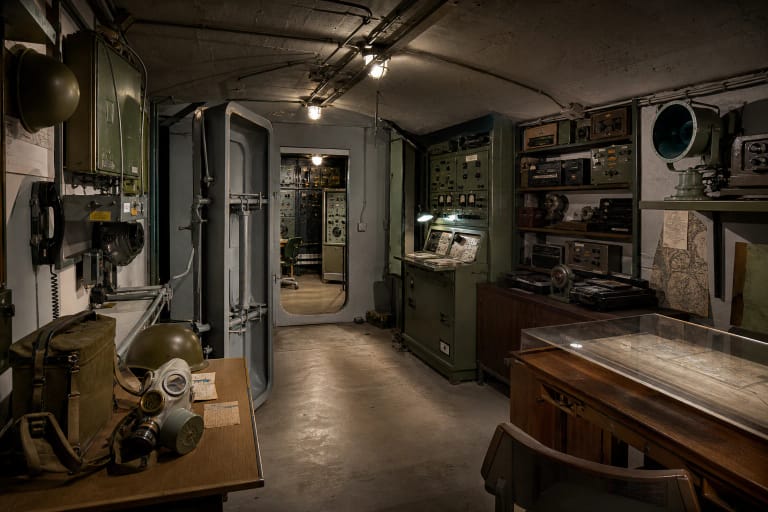
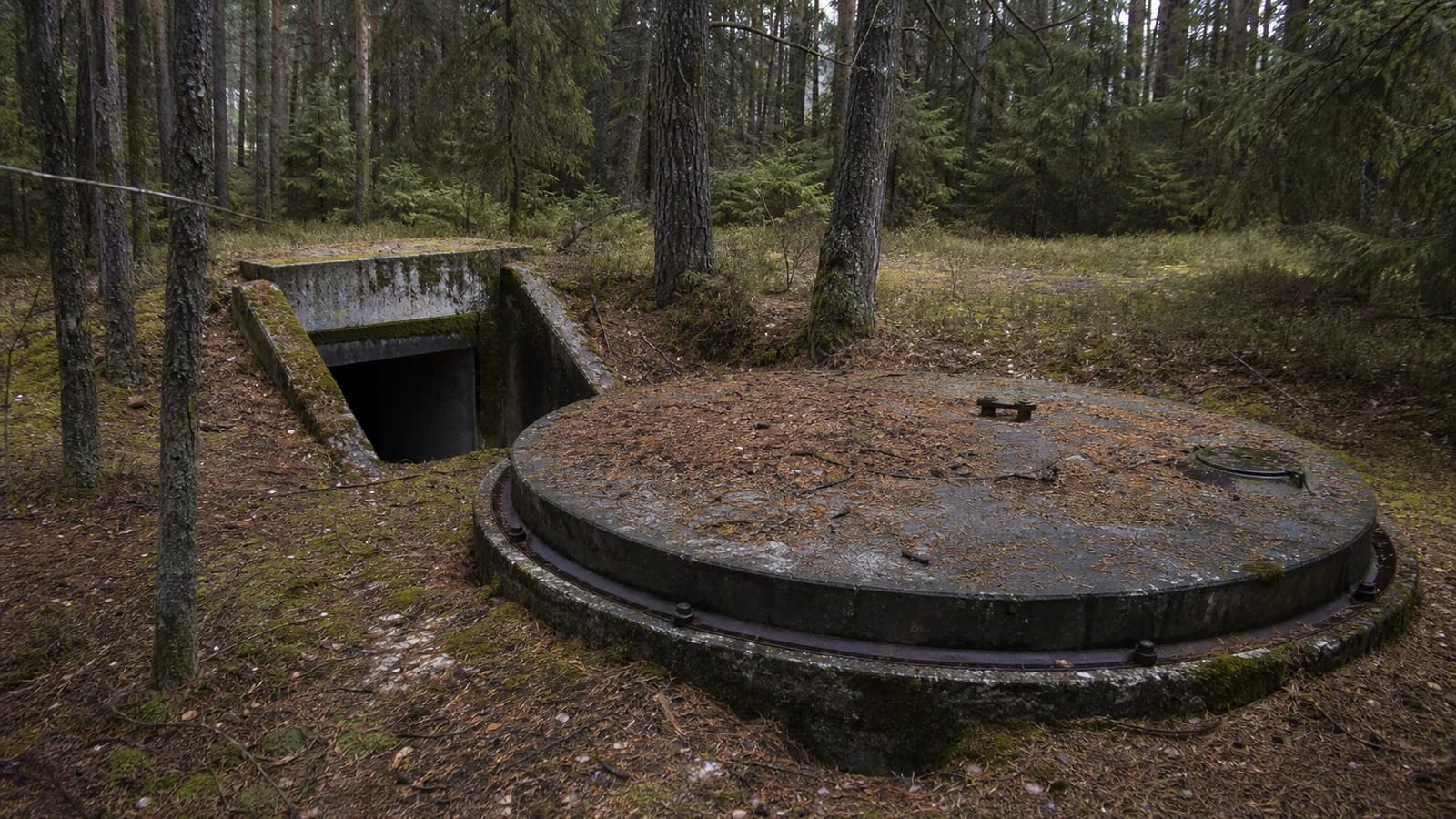
VLE states that the underground silos at Plokštinė were 27-34 m deep and about 5 m in diameter. Their covers were designed to withstand an atomic-bomb blast and could be moved aside on special rails in 30 minutes so a missile could launch. The underground central control equipment room contained missile-control points, and one silo held a missile for almost twenty years.
VLE describes an underground corridor network connecting different rooms, the launch area with several rows of barbed-wire fence, and the military settlement built at Plokštinė, with about 20 buildings including barracks, officer headquarters, dining halls, garages, and warehouses. This shows that the base operated as a self-contained secret system, not just four silos in a forest.
Closure in 1978 and decline of the base
VLE gives a precise end sequence: after United States intelligence identified the base location, it was closed on 18 June 1978; the main equipment was dismantled in 1981, and the missile division that served the complex was finally redeployed in 1984. From first arming to final withdrawal, the base functioned as a combat object for only about a decade and a half.
After Soviet troops left, the abandoned and unmaintained base was badly damaged by metal thieves; for a time, a pioneer camp operated in the barracks buildings at Plokštinė. VLE says the territory passed to Žemaitija National Park in 1992, and in 1996 the base was minimally adapted for visitors with a small Militarism exhibition. As visitor numbers grew, about 16,000 in 2008, a modern museum was created; the present Cold War Museum officially opened at the end of 2012.
Plokštinė Base and the Cold War Museum: the difference
This page tells the story of the base itself: its military history, missiles, underground structures, and secrecy. Practical visiting information, such as opening hours, tickets, exhibitions, and guide services, belongs on the separate Cold War Museum in Plokštinė page because the museum is the current safe way to enter the former base underground.
It is important to understand the difference in scale. One silo and part of the underground rooms have been adapted for museum visitors, while the other three, heavily damaged, were conserved. What you see in the exhibition is only part of a once much wider closed military territory with a settlement, corridors, and fences. Plokštinė Missile Base is not a freely walkable abandoned site, so do not plan an independent trip through unadapted spaces.