- Place
- Palanga City Municipality
- Region
- Palanga
- Type
- old Jewish cemetery and memorial site
- Address
- Vanagupė, Palanga (about 300 m east of Naglis Hill)
- Coordinates
- 55.93355, 21.06720
Palanga Jewish Old Cemetery, Palanga Jewish Cemetery
A quiet Litvak heritage site near Naglis Hill
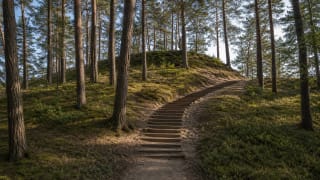
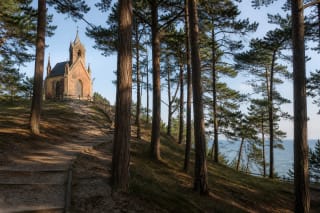
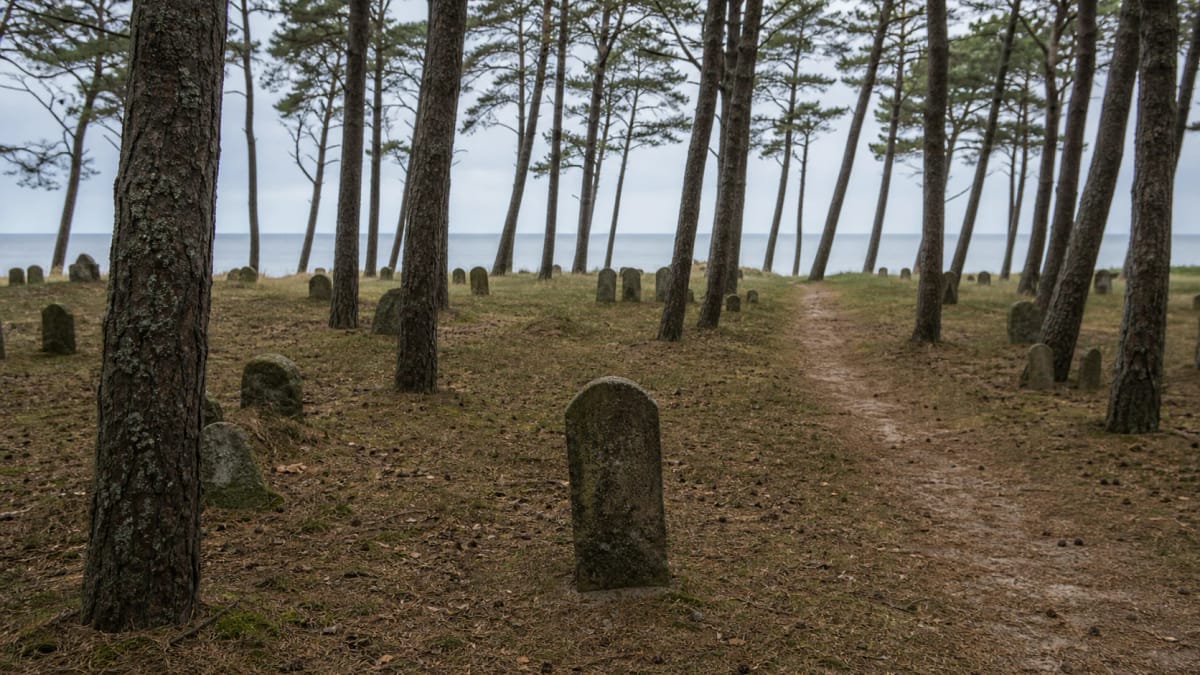
Palanga Old Jewish Cemetery is a quiet place that requires respectful visiting, set on a wooded dune about 300 m east of Naglis Hill. It helps show that Palanga was not only a Tiškevičiai resort or seaside holiday town, but also a multicultural settlement with a deep history of the Litvak - Lithuanian Jewish - community.
In the Register of Cultural Property this is a local-significance object - Palanga Old Jewish Cemetery (code 32235), entered in the Register in 2008. The forest and dune relief give the cemetery calm, but most of the territory is neglected and the heritage markers here are fragile and easily damaged. A boundary revision in 2024 puts the cemetery's area at about 7,670 sq m (76.7 ares).
Matzevot and Hebrew gravestones
According to Register data, ten granite and concrete gravestones of various sizes - matzevot - survive here, with inscriptions carved in Hebrew characters. Their condition is uneven: the tops of three are broken off, one is shattered with its fragments lying on the ground, and some inscriptions are hard to read.
The number is small, but every surviving stone testifies to the presence of the community. Jewish burials at this site were registered from 1831, and the Hebrew epitaphs and record data let the cemetery be tied to specific town families and to layers of trade, crafts, and religious life.
The 1991 memorial and marking of the cemetery
In 1991 a black-granite memorial (by architect Irena Likšienė) was erected on the cemetery grounds, marking the place as an old Jewish cemetery. Its inscription in Lithuanian, Hebrew, and Yiddish reads: "Old Jewish cemetery. May the memory of the dead be holy."
Such marking matters, because without gravestones often only the relief and trees remain and the place can go unnoticed. The memorial makes the cemetery a visible part of the town's memory and reminds visitors that this is a place of burial, not of leisure.
Distinguish it from the Second Jewish Cemetery
In Palanga the Register also records the Second Old Jewish Cemetery (code 48576) on Vytauto Street, within the territory of the Palanga Manor estate; there no gravestones or burial marks survive. The town's Jewish community also had a cemetery in the area of today's Birutė Park as early as 1487-1892, so when speaking of this heritage it is important to name precisely which site is meant.
That precision is not merely formal. Each cemetery site has its own territory, survival condition, and markers of memory, so visitors should respect the specific place they are in and not merge all Jewish heritage points into one.
Visiting respectfully
The cemetery is visited without a ticket, but only in daylight and respectfully. In keeping with Jewish tradition, one should not step on gravestones, move stones, clean inscriptions on one's own, or leave objects inappropriate for a memorial site.
It is best to combine this place with Naglis Hill and Palanga's history museums. Such a route helps read the resort as a landscape of memory, not only as leisure infrastructure, and returns the Litvak community to Palanga's story.