- Place
- Mažeikiai District Municipality
- Region
- Samogitia
- Type
- Museum of Mažeikiai region history, archaeology, ethnography, folk art, and art
- Address
- V. Burbos g. 9, Mažeikiai
- Coordinates
- 56.31570, 22.33290
Mažeikiai Regional Museum, Mažeikių muziejus
Mažeikiai Museum: centre of regional history
Mažeikiai Museum is the main place to begin understanding the Mažeikiai region. The district has manors, a pharmacy museum, small towns, and an industrial layer, and the museum helps connect them into one story. It is one of the older regional-history museums in Samogitia.
It is a regional museum in the best sense. According to VLE, in 2020 its collections held more than 79,200 objects: archaeology, ethnography, numismatics, old photographs, publications, documents, and art. Because the museum manages four branches, Mažeikiai region can be explored through several different sites.
1928 and Stasys Ličkūnas
Mažeikiai Museum was founded in 1928 on the initiative of local-history researcher and teacher Stasys Ličkūnas. He had gathered many archaeological, ethnographic, and folk-art objects in his own home, transferred them to the museum, and led the institution until 1944. The fact marks an early interwar effort to collect and protect local heritage.
The museum's name changed over time: in 1931-1948 it was called the Mažeikiai Alka Museum, and in 1948-1990 the Regional Studies Museum. Ličkūnas' name is a reminder that regional museums often begin with one person's decision to value local objects, documents, and stories.
War and fire losses
The museum's history was not smooth. VLE notes that it suffered during the Second World War: in 1944, while exhibits were being moved into municipal cellars, many valuable objects disappeared. It reopened in 1945 with about 12,000 objects.
In 1955-1958 the museum did not operate because a 1955 fire destroyed almost all exhibits. From 1965 to 1988 Mažeikiai Museum functioned as a branch of the Telšiai Alka Regional Museum, regaining independence later. This history explains why part of the earliest collections did not survive.
Archaeology, ethnography, folk art, and art
Archaeology is an important part of the museum's collections, revealing the region's deeper history before urban modernisation and industry. These finds add a long chronological layer that can otherwise disappear behind the twentieth-century appearance of Mažeikiai.
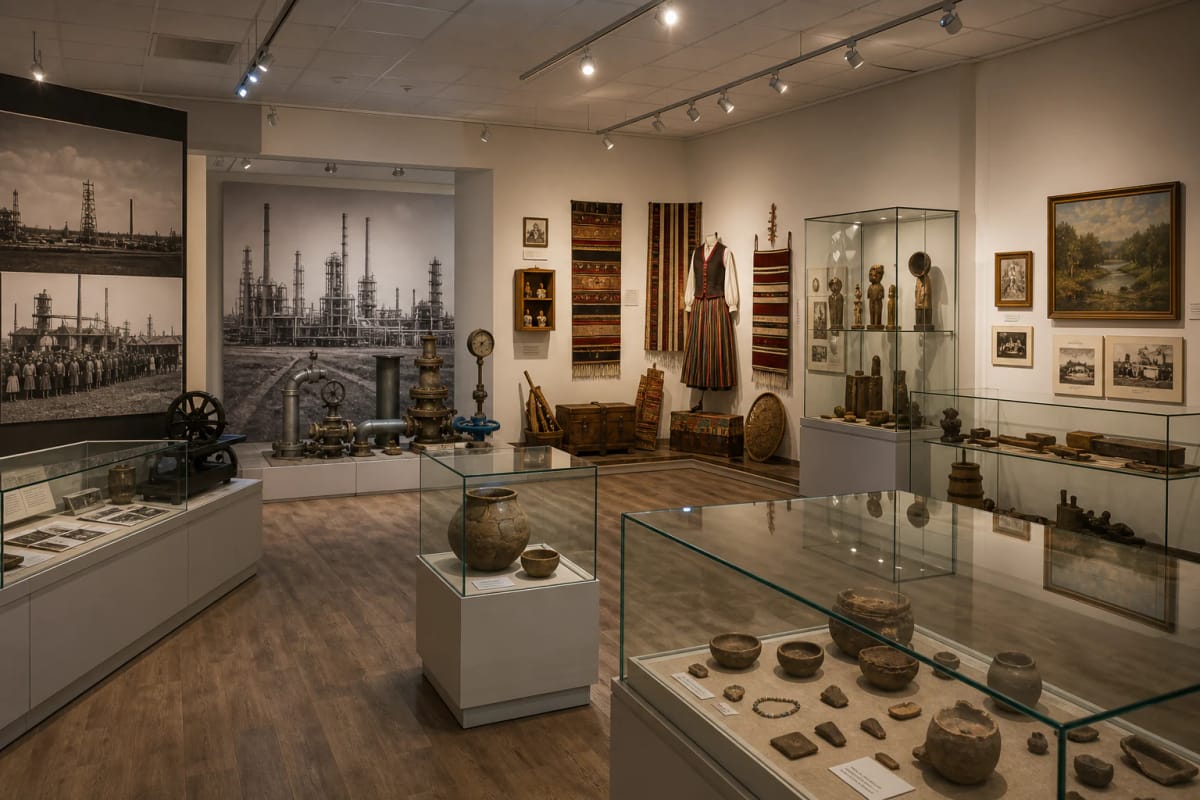
The ethnography, folk-art, and art collections show everyday and creative life: textiles, clothing, household objects, work by folk artisans, and local artists. Regional history is not only wars and dates; it also lives in everyday objects, crafts, and celebrations.
Branches: Viekšniai Pharmacy, Šatrijos Ragana, and others
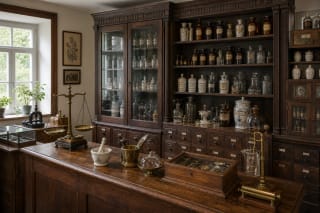
Mažeikiai Museum manages four branches: Viekšniai First Pharmacy Museum, founded in 1960 and the only rural-type pharmacy museum in Lithuania; the Aleksandras Griškevičius aviation-pioneer museum in Viekšniai, founded in 1981; the Šatrijos Ragana Memorial Museum in Židikai, founded in 1987; and the memorial exhibition of the brothers Mykolas, Vaclovas, and Viktoras Biržiška in Viekšniai.
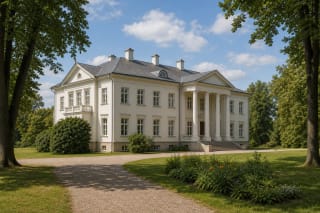
From 1996 to 2014, Renavas Manor park and palace with a manor-culture exhibition also belonged to the museum. Because of this branch network, the Mažeikiai Museum story naturally spreads across the district, making the main museum a good starting point.
Mažeikiai and oil-industry history
Many people associate Mažeikiai with oil refining. In 2024 the museum opened a permanent exhibition on oil extraction and refining, helping visitors understand how industry changed the scale of the town, working culture, and the region's image.
That distinguishes Mažeikiai from many smaller Samogitian towns: here older regional heritage meets modern industrial history. The museum is a good place to see that contrast without reducing the town to a stereotype.
How to visit Mažeikiai Museum
The museum is at V. Burbos g. 9. After reconstruction it reopened to visitors on October 2, 2015. A typical visit takes 45-90 minutes; allow more time if there is a temporary exhibition or an education programme.
Check the official schedule and programme before travelling. Mažeikiai Museum combines well with Viekšniai Pharmacy Museum, Renavas Manor, or a short Mažeikiai town route.