- Place
- Mažeikiai District Municipality
- Region
- Samogitia
- Type
- Authentic rural pharmacy and pharmaceutical-heritage museum
- Address
- Tilto g. 3, Viekšniai
- Coordinates
- 56.23550, 22.51630
Viekšniai First Pharmacy Museum, Viekšnių pirmosios vaistinės muziejus
Viekšniai Pharmacy Museum: the only one of its kind in Lithuania
Viekšniai Pharmacy Museum is one of the most distinctive small museum experiences in Samogitia because it is Lithuania's only rural-type pharmacy museum. The subject matters, but so does the authentic setting: visitors enter the spaces of an old pharmacy where pharmaceutical work was still tied to wooden cabinets, vessels, scales, prescriptions, and medicinal herbs.
What makes the place especially strong is that the pharmacist's family living rooms survive together with a handwritten history of the pharmacy written by the pharmacist himself. Mažeikiai Museum presents the site as Viekšniai First Pharmacy Museum: not a decorated display, but a real place where everyday pharmacy practice became heritage.
An old house and a pharmacy history from 1860
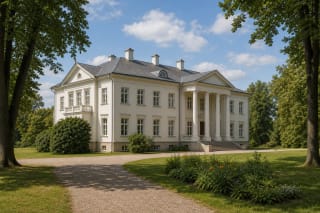
The pharmacy was founded in 1860, a date also given by VLE, and the museum has operated there since 1995. It occupies a house on Tilto Street built in the second half of the eighteenth century; the building had earlier belonged to descendants of a religious leader of the Viekšniai Jewish community, so it also speaks to the town's multicultural past.
In a small town, a pharmacy was not merely a shop. It was a place of health, knowledge, trust, and everyday exchange. Because both the pharmaceutical rooms and the family apartment survive, the museum shows how the pharmacist's work and home life happened under one roof.
The prescription room Oficina, tools, and vessels
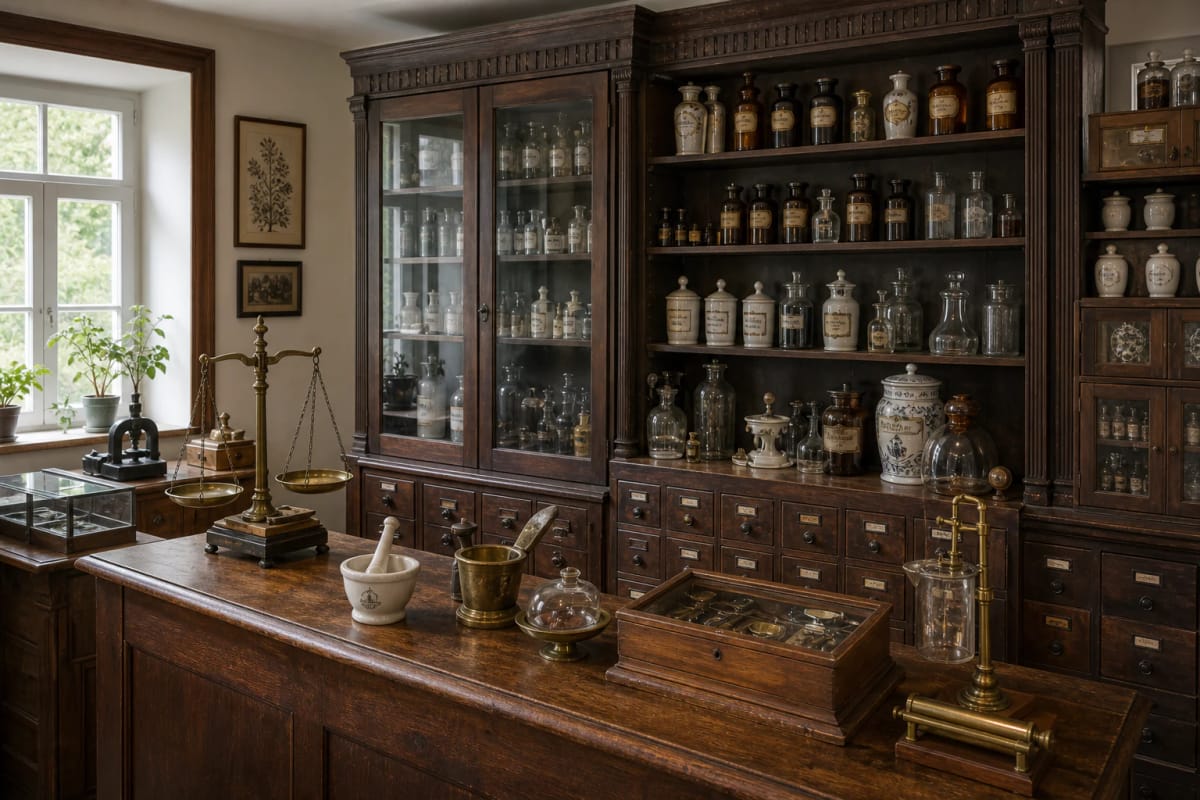
The pharmaceutical exhibition is arranged in the main prescription room, Oficina, two family rooms, and the chimney-smokehouse. It displays furniture made specifically for the pharmacy, instruments for preparing medicines, tools, vessels, medicinal preparations and raw materials, nineteenth-century doctors' prescriptions, and later accounting books.
The exhibits include not only plant but also organic materials that reveal the character of older pharmacy: crayfish gastroliths, Siberian beaver castoreum, and other rarer substances. Details are worth close attention: glass bottle shapes, porcelain vessels, scales, mortars, and labelling systems all show that pharmacy long depended on precise measurement and professional trust.
Intelligentsia household and early twentieth-century life
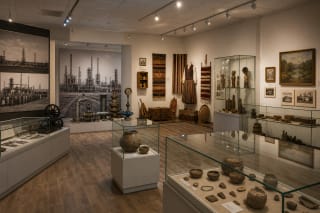
Beyond the pharmaceutical part, the museum has an exhibition on the life of the intelligentsia in the first half of the twentieth century, arranged in four former rooms of the pharmacist's family and in the kitchen with entrance hall. It displays family furniture, relics, personal and household objects, and photographs.
This exhibition shows how Lithuanian educated families of the period lived, what customs, traditions, and values they maintained. The pharmacy thus becomes not only a witness to medical history but also to a way of life.
Medicinal herbs and the restored pharmacist's garden
An integral part of the museum is the restored pharmacist's medicinal-herb garden, where medicinal and culinary herbs are grown. Practical educational activities take place there, such as introductions to the herb garden and lessons following herbs from garden to cup.
The herbs connect professional medical history with folk knowledge. In Viekšniai, visitors can understand how a town pharmacy and traditional herb practices long existed side by side, as a plant moved from a garden bed to the prescription room.
How to visit Viekšniai Pharmacy Museum
Allow 45-90 minutes for the museum. It is a small place, but it is best visited without rushing, listening to the story and looking at how the objects were used; a guided visit lasts about 40-90 minutes. With a guide or education programme, the exhibition becomes much clearer because the meaning of the objects lies in their function.
Before travelling, check Mažeikiai Museum information for opening hours, tickets, and educational programmes. During facade works, entrance may be from the courtyard side. The museum combines well with Renavas Manor, Mažeikiai Museum, or other Mažeikiai District sites.