- Place
- Šilutė District Municipality
- Region
- Pamarys
- Type
- Second World War and Soviet repression camp memory site
- Address
- Vilties g. 2, Macikų k., Šilutės r.
- Coordinates
- 55.36030, 21.45140
Macikai camps, Macikai camp punishment-cell museum, Stalag Luft VI Heydekrug
Macikai: a difficult history site near Šilutė
Macikai Camp Complex is one of the most complicated memory sites in Šilutė District, in Macikai village about 2 km east of Šilutė. It is not suited to superficial tourism or a quick stop between more scenic Pamarys views; it requires time, silence, and historical attention.
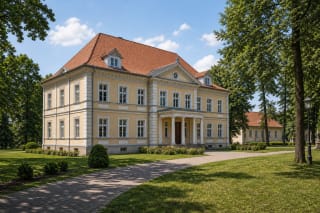
Macikai is especially important because layers of repression by several occupying regimes accumulated in one place: in 1939-1944, a Nazi prisoner-of-war camp; later, a Soviet POW camp and a GULAG system camp that operated until 1955. Macikai Manor, on whose estate the events took place, had been founded already in the seventeenth century and was known for its brewery.
Nazi POW camp Stalag Luft VI
According to the Šilutė Hugo Scheu Museum, the camp was first called Stalag 331, later Stalag 1C Heydekrug, and finally Stalag Luft VI Heydekrug. It was one of the northernmost Nazi POW camps, where according to US military intelligence at least 10,000 people could be imprisoned at one time.
Polish, Soviet, American, British, Canadian, French, Belgian, Australian, and New Zealand soldiers were held here, mostly air-force prisoners. This was not a symbolic object but a real place of detention, suffering, and death. Human remains were found here in 2011, and during archaeological research in 2020 more than 1,000 remains were exhumed.
The Soviet layer: camp no. 184 and a GULAG camp
After the USSR occupied the region in 1944, Soviet POW camp no. 184 operated in Macikai from 1945 to 1948, holding German, Romanian, Hungarian, Austrian, Czech, Dutch, Danish, and Lithuanian prisoners. In 1946 it was reorganized as a medical institution; according to the museum, about 500 people died there.
VLE states that in 1948-1955 the Šilutė (Macikai) GULAG branch no. 3 operated here, one of the largest camps in Lithuania, with about 3,000 prisoners at one time, roughly one third of them Lithuanians. Among those who died was museum worker and poet Pranas Genys. According to the museum, about 450 people died in the camp in 1948-1955.
What survives in the Macikai complex
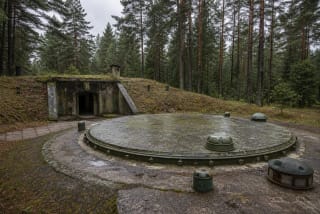
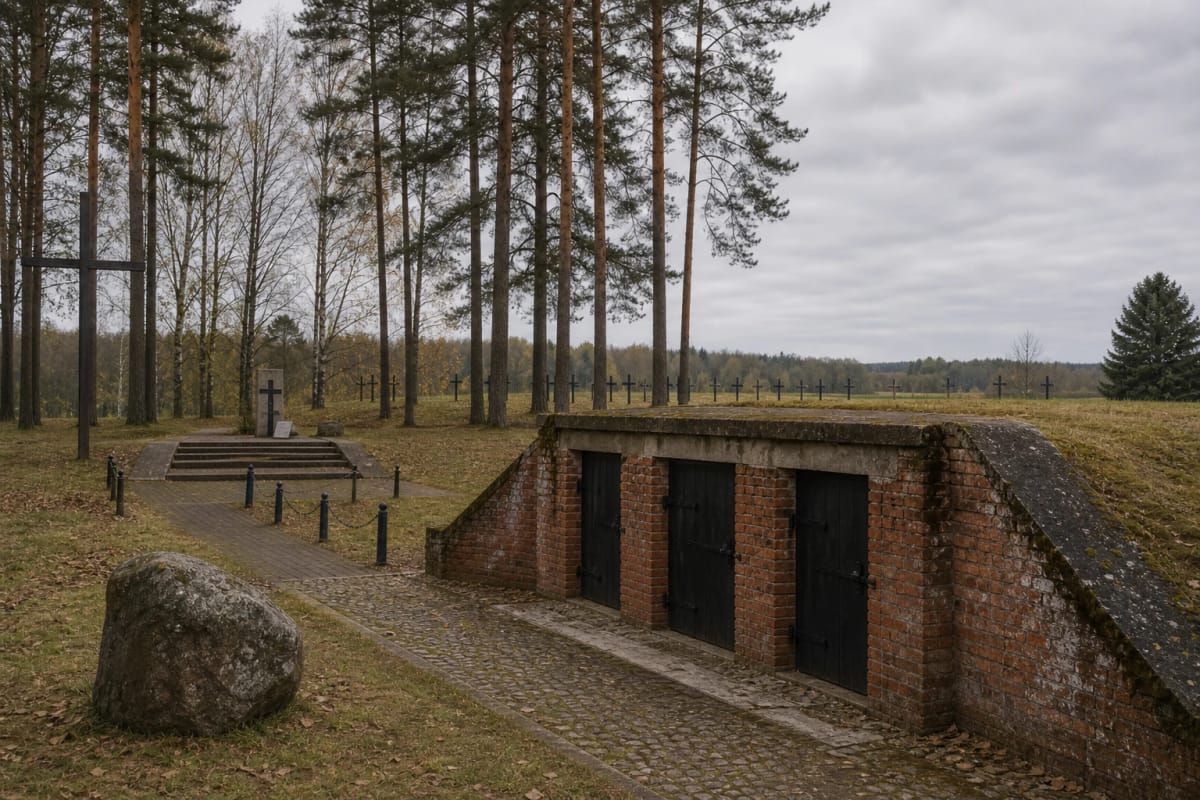
Šilutė museum information mentions surviving and marked elements of the complex: the former punishment cell, the camp prisoners' cemetery, a bathhouse, and possible traces of barracks. For visitors this means the site must be read through fragments, because the full camp infrastructure has not survived as it functioned.
The punishment cell and cemetery territory are the most important material witnesses; in 1996 a monument to the dead was erected in the cemetery. They keep the history from becoming only text: here the landscape of imprisonment and memory is concrete.
Punishment-cell museum: how the memory site emerged
Macikai's memory did not appear automatically. According to the Šilutė museum, in 1993 the Macikai camp punishment-cell museum was set up in the former punishment-cell building at the initiative of the Šilutė branch of the Union of Deportees and Political Prisoners; since 1995 it has operated as a branch of the Šilutė Hugo Scheu Museum.
This means the site survived above all through the efforts of victims of repression and their relatives. Today the museum helps visitors understand not the abstract word 'camp' but specific conditions: isolation, coercion, hunger, disease, death, and people reduced to an administrative number.
How to visit Macikai Camp Complex
Allow at least 45-90 minutes for Macikai. It is best visited in daylight, calmly reading the information and walking the memorial territory. With a guide or museum context, the place opens much more clearly, because only fragments survive and the history is complex and layered.
This is not a place for noisy behaviour, a picnic, or only a photograph. With children and teenagers, choose an age-appropriate explanation in advance, because the themes are difficult: war, prisoners, repression, and death. The Macikai complex can be combined with Šilutė Hugo Scheu Manor, but they require different tones: the manor tells the story of Lithuania Minor culture, while Macikai speaks of twentieth-century systems of violence.