- Place
- Vilnius City Municipality
- Region
- Vilnius
- Type
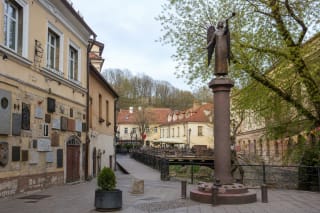
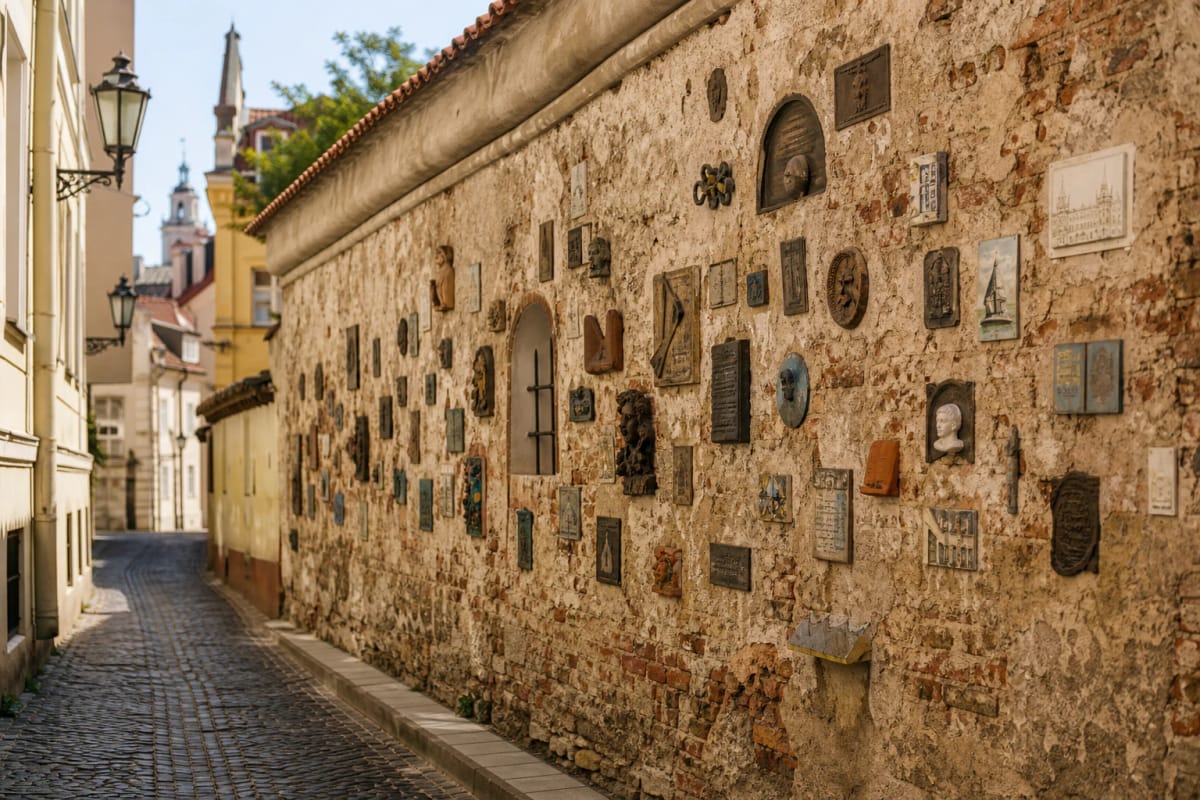
- Vilnius Old Town street with a literary art wall
- Address
- Literatų g., Vilnius
- Coordinates
- 54.68231, 25.29021
Literatų Wall, Literatų Street Project
Literatų Street: a small street not to rush through
Literatų Street is one of the short connections in Vilnius Old Town, but its value is not length or architectural scale. The key object here is the set of small dedications fixed to the wall for writers, poets, translators, literary scholars, and guardians of language.
The place works best when you stop. At first glance the wall looks like a dense collection of small objects, but up close each plaque, relief, ceramic fragment, or metal miniature appears as an individual artist's response to a particular literary figure.
How the Literatų Street project began
Official Literatų Street project material connects the idea with graphic artist Eglė Vertelkaitė and a search for an unusual form of public memory. The work was brought together by the Modern Art Centre, and artists took part voluntarily. Instead of one monument to one figure, the street gained a growing wall where many artists converse with many literary figures. The first works began to be installed around 2008.
The project presentation notes that the first works had been embedded in the wall earlier, and that dozens of new small works dedicated to literary figures were unveiled during the presentation stage. The important point is that the wall was not imagined as a finished monument. It was meant to be able to grow and change.
What the wall dedications mean
The project presentation text states that the wall had almost one hundred works dedicated to the activity and personalities of writers, poets, translators, and people who supported Lithuanian language and literature. The works vary widely: miniature painting, ceramics, metal plaques, engraved images, lines of text, quotations, and three-dimensional details.
That is why Literatų Street is not a traditional memorial where a passer-by receives one clear text. Each visit can reveal a different connection: one work recalls a famous text, another draws on an author's biography, a third works as a visual joke or a reader's personal thanks.
Why Vilnius matters here
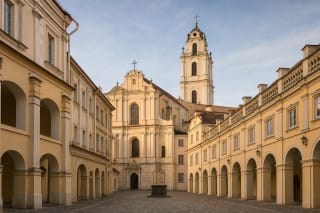
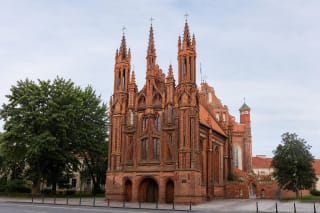
The street name itself became the pretext for a meeting of literature and visual art. Literatų Street lies in the old town between the Pilies, Rusų, and Bernardinai areas, so it is easy to include in a route between Vilnius University, St Michael's and the Bernardine ensemble, Užupis, and Pilies Street.
The literary name is thought to have taken hold in the nineteenth century and is connected with Adam Mickiewicz, who lived near the beginning of the street. VLE reminds readers of the wider Vilnius context: Mickiewicz studied at Vilnius University in 1815-1819, and in 1823-1824, after Russian authorities uncovered the Philomaths, he was imprisoned in the converted Vilnius Basilian monastery and later exiled to Russia. This literary memory helps explain why a twenty-first-century art wall for writers appeared here.
The dedications are not simply a list of Lithuanian authors. Project material also mentions authors writing in other languages and connected with Vilnius, Lithuania, or wider literary memory. That matches Vilnius Old Town itself: a layered city where Lithuanian, Polish, Jewish, Russian, Belarusian, and other cultural traces often share the same quarter.
The 2012 addition and deliberate expansion
The description of the 2012 closing stage explains that in the early phase artists chose literary figures freely, which meant that some older-generation, non-Lithuanian, or simply important Lithuanian authors remained unrepresented. A recommended list of literary figures was therefore announced around the Modern Art Centre.
Artists selected additional dedications from this list, and around 50 new small works appeared in the project. The Vilnius Old Town Rotary Club supported restoration of the wall, installation of the works, and information boards. That shows the wall was cared for as a city culture project, not just a spontaneous decoration.
How to visit Literatų Street
It is best to come in daylight, when the materials and textures are visible. Give it at least 15 minutes: walk slowly, read the names, look for authors you know, but do not avoid unfamiliar ones. That is when the street can become a small reading list.
Literatų Street is a public space, so no ticket is needed. It is especially convenient for a short route: Pilies Street, Literatų Street, St Anne's and the Bernardine ensemble, then Užupis or Bernardine Garden.