- Place
- Druskininkai Municipality
- Region
- Druskininkai
- Type
- Classical Dzūkija manor estate, park, and cultural space
- Address
- Alėjos g. 28 and 30, Leipalingis
- Coordinates
- 54.08780, 23.86260
Leipalingis manor estate, Leipalingis manor palace
Leipalingis Manor in the town centre
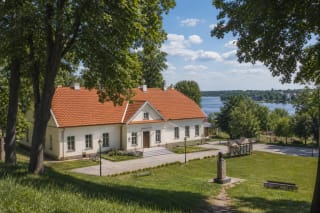
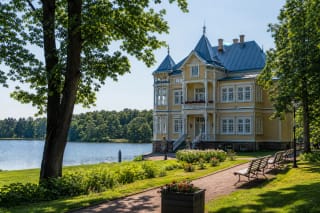
Leipalingis Manor is one of those places where manor history cannot be separated from the town. The Cultural Heritage Register object, code 265, covers the complex at Alėjos g. 28 and 30: palace, service building, labourers' house, farm building, former distillery site, and park fragments. The palace, park, and surrounding urban structure show that the manor functioned as a local administrative, economic, and cultural centre.
Leipalingis is in Druskininkai Municipality, 11 km north-west of Druskininkai, by the Seira stream. According to VLE, the manor was first mentioned in 1503 and the town in 1567. In the centre of this radial-plan town, the space between church and manor estate forms an important heritage setting.
Classical palace and architect M. Knakfusas
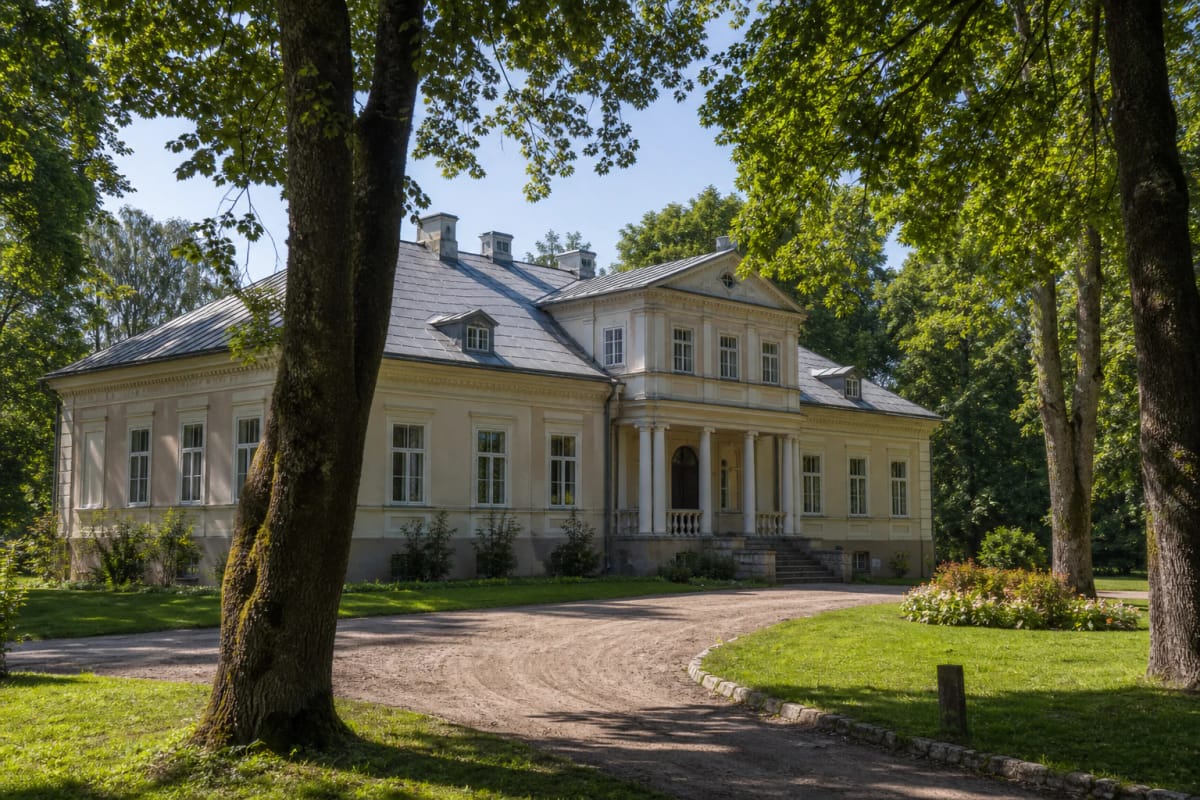
The present Classical palace of Leipalingis Manor dates to the late eighteenth or early nineteenth century. VLE states that architect Martynas Knakfusas, one of the leading creators of Lithuanian Classicism, is believed to have contributed to the palace design. First look at the facade, the park structure, and the way the manor sits inside the town of Leipalingis.
The scale is not as monumental as Lithuania's largest manors, and that is precisely why it shows the function of a smaller regional centre well. Nearby stands the Classical Church of the Assumption of the Blessed Virgin Mary, built in 1821, with an 1889 bell tower, so the town centre reads as a coherent heritage ensemble.
Sapiehas, Masalskis, Kruševskis: manor owners
The name Leipalingis is associated with the Yotvingians, and until the second half of the thirteenth century the place may have had defensive significance; two hillforts stand nearby. According to the encyclopedia, from the sixteenth century to the mid-eighteenth century Leipalingis belonged to the Sapieha family, later to the Masalskis family, and from the late eighteenth century to the Kruševskis family. The Cultural Heritage Register also links the manor history with Balinskis.
An iron foundry operated by the manor, and by the late nineteenth century Leipalingis had become an important junction of roads connecting Sejny with Seirijai and Merkinė. Manors are best understood when architecture is connected with specific people, families, and town memory.
Leipalingis on a Dzūkija route
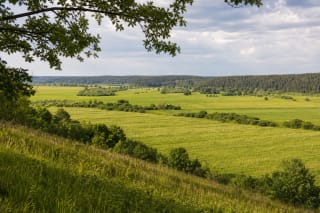
Leipalingis is convenient to combine with Druskininkai, Veisiejai, Kapčiamiestis, and natural sites of southern Dzūkija. Such a route shows more than the resort or the forests: it also reveals the history of manors and small towns. If you travel by bicycle or car, Leipalingis Manor can be a short but meaningful stop between larger sites.
Before going, check the official manor page, because opening hours, exhibitions, guided tours, and events can change. A shorter stop is often enough for the outdoor setting, but an interior visit depends on the schedule. Plan 45 minutes to 1.5 hours for the main visit.