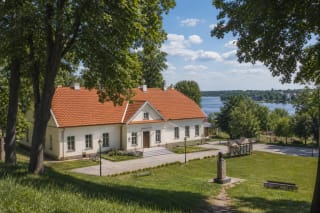
- Place
- Lazdijai District Municipality
- Region
- Lazdijai District
- Type
- 1831 uprising and Lazdijai-region history museum
- Address
- Taikos g. 11, Kapčiamiestis
- Coordinates
- 54.00690, 23.65470
Emilija Pliaterytė Museum
A place of Emilija Pliaterytė's memory
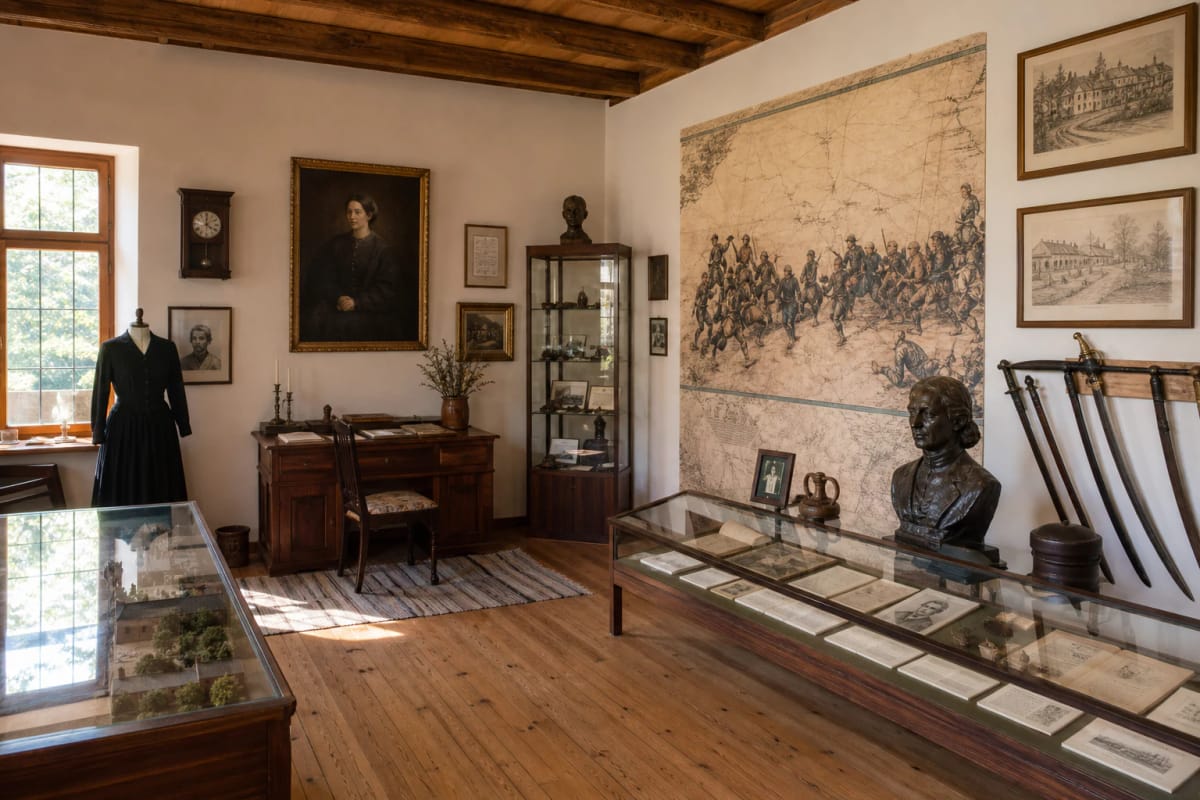
The main axis of the Kapčiamiestis museum is Emilija Pliaterytė (1806-1831), a figure of the 1830-1831 uprising whose name became a symbol of courage, patriotism, and romantic resistance in Lithuanian and Polish memory. VLE says she came from the Plater count family and was a captain in an insurgent regiment, often called the Lithuanian Joan of Arc.
Kapčiamiestis is central to that memory: VLE states that Emilija Pliaterytė died on December 23, 1831, nearby at Justinavas manor near Kapčiamiestis, and was buried in Kapčiamiestis. The museum therefore stands where her road ended.
From Dusetos to Kapčiamiestis
Lazdijai Region Museum states that the largest part of the Kapčiamiestis exhibition is dedicated to Emilija Pliaterytė. This allows biography, the uprising's course, and local memory to be linked in one place.
According to VLE, with her cousin Cezary Plater she organised around 200 mounted riflemen, 60 cavalrymen, and several hundred armed infantry in the Dusetos area, marched toward Daugavpils, was appointed commander and captain of the 25th Infantry Regiment, called the first Lithuanian regiment, and fought near Maišiagala, Kaunas, and Šiaulėnai. When the insurgent army retreated toward Prussia, she tried to break through to the Kingdom of Poland but fell ill and died.
Museum history and Lazdijai-region themes
The museum began in a school in 1984 and has operated as a branch of Lazdijai Region Museum since 2006. This origin matters because many small museums grew from the work of teachers, communities, and local-history enthusiasts.
Besides the Emilija Pliaterytė theme, the museum presents ethnography and other regional figures; the official museum mentions Česlovas Sasnauskas, Veronika Povilionienė, Genovaitė Bigelytė-Bulavienė, and Antanas Sadeckas. Kapčiamiestis is therefore not reduced to one heroic biography.
How to visit Kapčiamiestis and the schedule
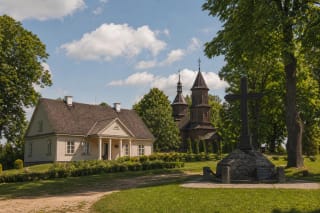
The museum works best with the town's memory sites. If you have time, look into visiting Emilija Pliaterytė's grave, the church, or other local signs. It is well suited to school groups because the uprising becomes concrete: not just a textbook date but a person, town, and region.
During research, Lazdijai Region Museum listed seasonal hours: September-May Monday-Thursday 9:00-17:00, Friday 9:00-15:45; June-August Tuesday-Friday 9:00-17:00, Saturday 9:00-15:45. Check the official page before travelling. Allow about an hour, or more with a guided tour and local memory route.