- Place
- Lazdijai, Lazdijai District Municipality
- Region
- Dzūkija
- Type
- museum of Lazdijai history, education, and ethnography in the former Žiburys gymnasium building
- Address
- 29 Seinų Street, Lazdijai
- Coordinates
- 54.23001, 23.51276
- Visit duration
- 1-1.5 hours; longer with a booked education session or separate visits to the museum's branches
- Best time
- a Tuesday-Friday morning, avoiding the 12:00-12:45 lunch break and the final day of the month, when the museum closes for sanitation
Lazdijų krašto muziejus, Lazdijai Museum, Lazdijai Local History Museum, Lazdijai Region Museum
29 Seinų Street is the main museum; five branches are elsewhere
Lazdijai Regional Museum is both the name of a municipal museum institution and its main building. This guide covers the wooden museum at 29 Seinų Street, with a verified site point at 54.230013, 23.512761. The Museum of Freedom Struggles, Motiejus Gustaitis Memorial House, Veisiejai Regional Museum, Emilia Plater Museum in Kapčiamiestis, and the Pranas Dzūkas Ethnographic Homestead are separate branches with their own addresses and visitor arrangements.
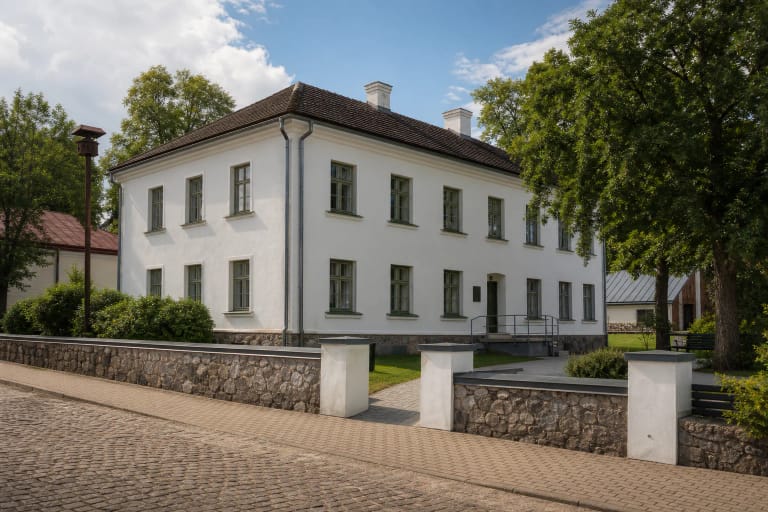
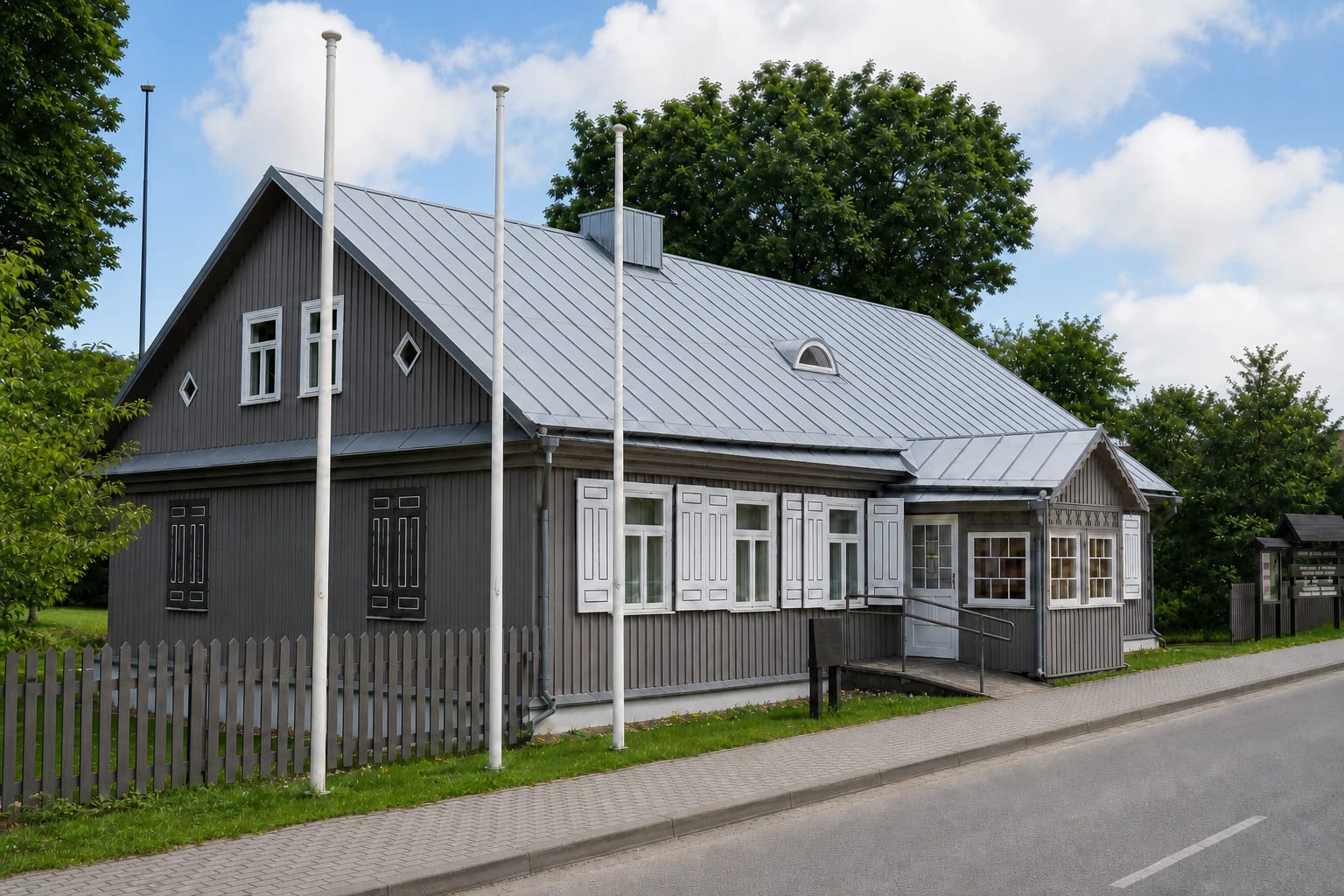
From Seinų Street, look for a long single-storey building clad in vertical grey boards. White window surrounds and elaborate shutters contrast with its tall, steep silver-coloured metal roof. An enclosed wooden porch with a small gable projects from the street facade, while upper rectangular windows and small diamond windows punctuate the end gable.
Allow 1-1.5 hours for the main exhibition. If you want an education session, Motiejus Gustaitis Memorial House, or the Museum of Freedom Struggles, arrange time and tickets separately. Although all belong to one institution, the official information does not advertise a single combined ticket covering every location.
Motiejus Gustaitis created Lazdijai's first museum in the gymnasium in 1924
The museum identifies the building as the former Seinai Žiburys gymnasium and one of the oldest buildings in Lazdijai. VLE records that the Lithuanian gymnasium founded in Seinai in 1918 moved to Lazdijai in 1921. Its headmaster, the priest, poet, and educator Motiejus Gustaitis, encouraged pupils to collect folklore, place names, ethnographic objects, folk art, and archaeological finds.
Gustaitis founded the first Lazdijai museum inside the school in 1924 and added books, manuscripts, and paintings from his own collection. One of its most important documents was the privilege issued to Lazdijai by King Sigismund III Vasa on 17 May 1597. The present display contains a copy; VLE identifies Alytus Regional Museum as the keeper of the original once held here.
The first museum declined after the gymnasium was nationalised in 1936. A Salomėja Nėris memorial display opened in the same building in 1974, the restored rooms became the Lazdijai Museum of History, Culture and Education in 1995, and the current Lazdijai Regional Museum was established in 2004. The building is therefore more than a container for objects: it is evidence of interwar Lithuanian schooling and the beginnings of regional study in Lazdijai.
The historic classroom and interwar street turn documentary history into a lived setting
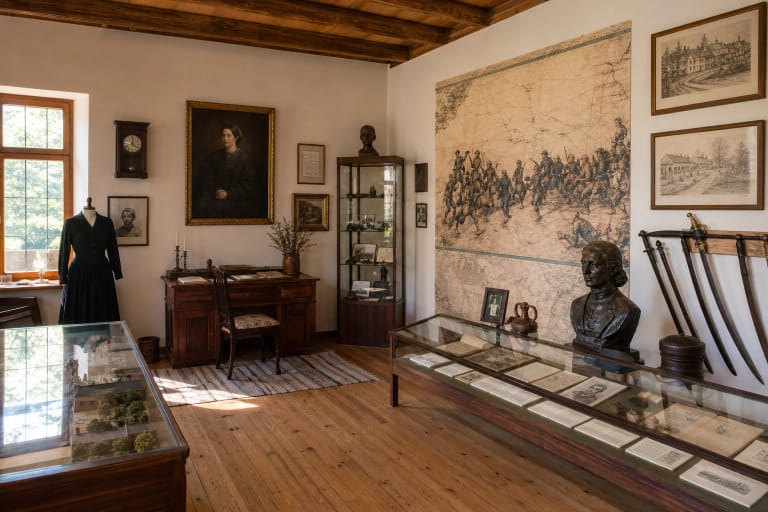
The opening displays move from archaeological finds, old photographs, and maps to documents concerning Lazdijai's urban rights. A reconstruction of the interwar main street evokes its shops and townspeople, while copies of historic maps help visitors follow when and how the name Lazdijai began appearing in cartography.
One of the most unusual objects is dental equipment used in interwar Lazdijai by doctor Elena Petrauskaitė and described by LIMIS as still operational. Beside historic documents and the copy of the 1597 privilege, it shifts the story from an abstract chronology to the professions and everyday life of a particular town.
Old desks, textbooks, teaching programmes, and classroom aids reconstruct the world of the former gymnasium. Education sessions may involve writing with a goose quill, searching for traces of old Lazdijai, or learning the principles of an archaeological excavation, but every session requires advance booking. VLE counted more than 43,000 objects across the institution in 2024; that total includes all five branches, not only the rooms at 29 Seinų Street.
The Salomėja Nėris room belongs to this building, not to a separate branch
The poet Salomėja Nėris taught German at the Žiburys gymnasium in Lazdijai from 1928 to 1931. Her memorial display occupies an upstairs room known as Karstas, the Lithuanian word for Coffin, because of the unusual shape of its ceiling. Documents, photographs, and other material introduce the years she worked in Lazdijai.
This room forms part of the main museum route and should not be confused with the separate Motiejus Gustaitis Memorial House. Gustaitis is connected with the gymnasium itself, the founding of the first museum, and pupils' regional-study work; his memorial branch is visited at another address under separate arrangements.
Visitors concentrating on educational history should follow a deliberate sequence: begin with the old classroom and the story of Gustaitis's collection, then continue upstairs to the Nėris room. The route reveals how one building holds the intertwined memory of a school, Lithuanian literature, and Lazdijai regional study.
Admission is €2 in 2026, and the final day of each month is a sanitation closure
On 15 July 2026, the official website listed the museum as open Tuesday-Friday 9 am-5 pm and Saturday 9 am-3:45 pm, with Sunday and Monday closed. The lunch break is 12:00-12:45. The museum also closes on the final day of every month for sanitation and on public holidays, and shuts one hour earlier on the day before a holiday. Recheck the official timetable before travelling.
Standard admission published on that date was €2. School pupils, students with valid identification, visitors of pension age under 80, and several other officially listed groups paid €1. Children under seven, visitors aged 80 or above, disabled visitors and their companions, and other listed groups entered free. Groups larger than ten must book a guided visit, and every education session requires advance booking.
Venue photographs show a ramp at the entrance, but the official visitor information does not confirm step-free access to every room or to the upstairs Nėris display. It likewise gives no guaranteed foreign-language tour service or general personal-photography policy; only a €50 commercial filming and photography fee is published. Contact the museum about these needs in advance. On 15 July 2026, the exact Google Maps entry was rated 4.7/5; that average will change.