- Place
- Gegrėnai, Plungė District Municipality
- Region
- Žemaitija National Park
- Type
- archaeological complex with two hillforts and a nature trail
- Address
- Gegrėnai village, Žemaičių Kalvarija Eldership, Plungė District
- Coordinates
- 56.09225, 21.92891
Gegrėnai I Hillfort (Pelekalnis), Gegrėnai II Hillfort, Gegrė Castle (Zegere)
Gegrėnai Hillforts: a castle-district centre
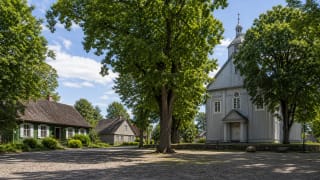
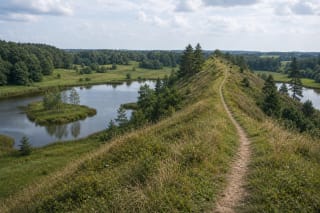
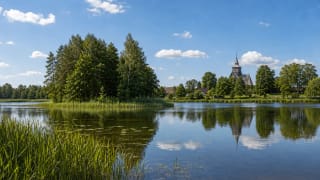
The Gegrėnai Hillforts lie in Plungė District, in Gegrėnai village, about 9 km northeast of Plateliai and only a few kilometres from Žemaičių Kalvarija, by the Varduva River. The southern edge of the village reaches the boundary of Žemaitija National Park, so the hillforts belong to one of the park's most attractive landscapes.
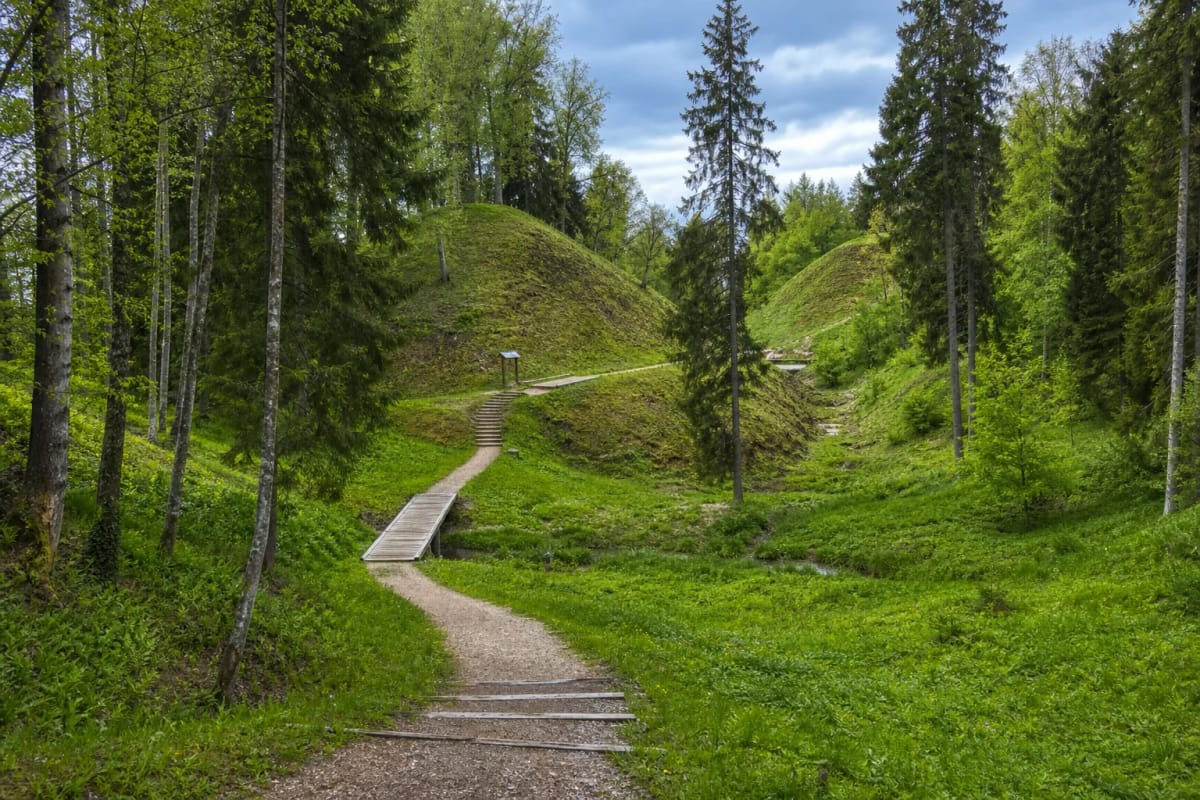
According to Žemaitija National Park, this is not a single isolated mound but a whole archaeological monument complex: two hillforts on opposite sides of an unnamed stream, two nearby cemeteries, an ancient settlement, and presumed barrows. VLE also calls the first hillfort Pelekalnis, while the second is listed as Gegrėnai II Hillfort.
The Curonian castle Gegrė and the year 1253
It is believed that the Gegrėnai Hillforts held the Curonian Ceklis land castle Gegrė, written in sources as Zegere and mentioned in historical documents in 1253. It was the main castle of a castle district and one of the most important centres in central Ceklis.
According to historian Vladas Žulkus' research, the Gegrėnai castle district included the three Pučkoriai hillforts and other surrounding mounds, while the wider surviving hillfort group suggests ten or eleven castle districts in Ceklis. That explains why Gegrėnai are considered an important medieval Samogitian site. The hillforts are dated from the first millennium to the 13th century.
Nature trail and landscape
A 1.6 km pedestrian nature trail was arranged by the Žemaitija National Park directorate, with a parking area by the Žemaičių Kalvarija-Gegrėnai road. The trail winds along the slopes and lower edges of both hillforts, past cemeteries and the ancient settlement.
In 2020 the archaeological complex was improved: paths were renewed, terraced sections were built, and information stands and heritage signs were installed. From the trail there are broad views over Žemaitija National Park, so Gegrėnai work both as a history stop and as a nature walk.
How to visit the Gegrėnai Hillforts
This is an open, freely visited site with no tickets or opening hours. Leave the car in the arranged parking area by the Žemaičių Kalvarija-Gegrėnai road and walk the 1.6 km trail. Most visitors need about one to one and a half hours for the whole complex.
After rain, the hillfort slopes and trail can be slippery, so comfortable footwear is useful. Gegrėnai are easy to combine with Žemaičių Kalvarija, Plateliai, and other Žemaitija National Park sites.