Karklė area, Klaipėda District
Seaside Regional Park
sea cliff and viewpoint
55.79800, 21.06700
30-60 minutes
sunset, a clear windy day, or a calmer morning
Olandų Kepurė cliff, Olando Kepurė, Dutchman's Cap
Olandų Kepurė: why stop here
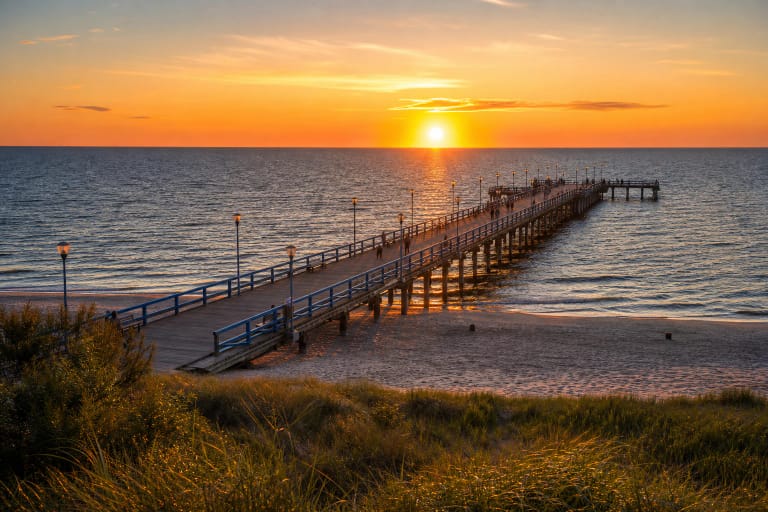
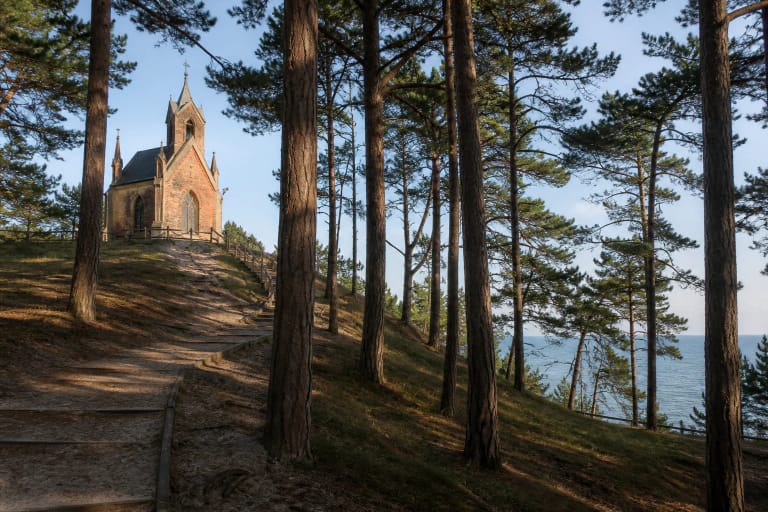
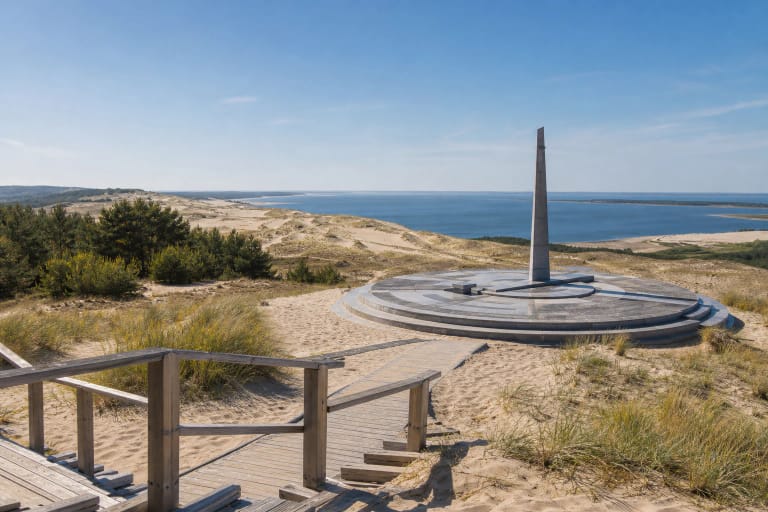
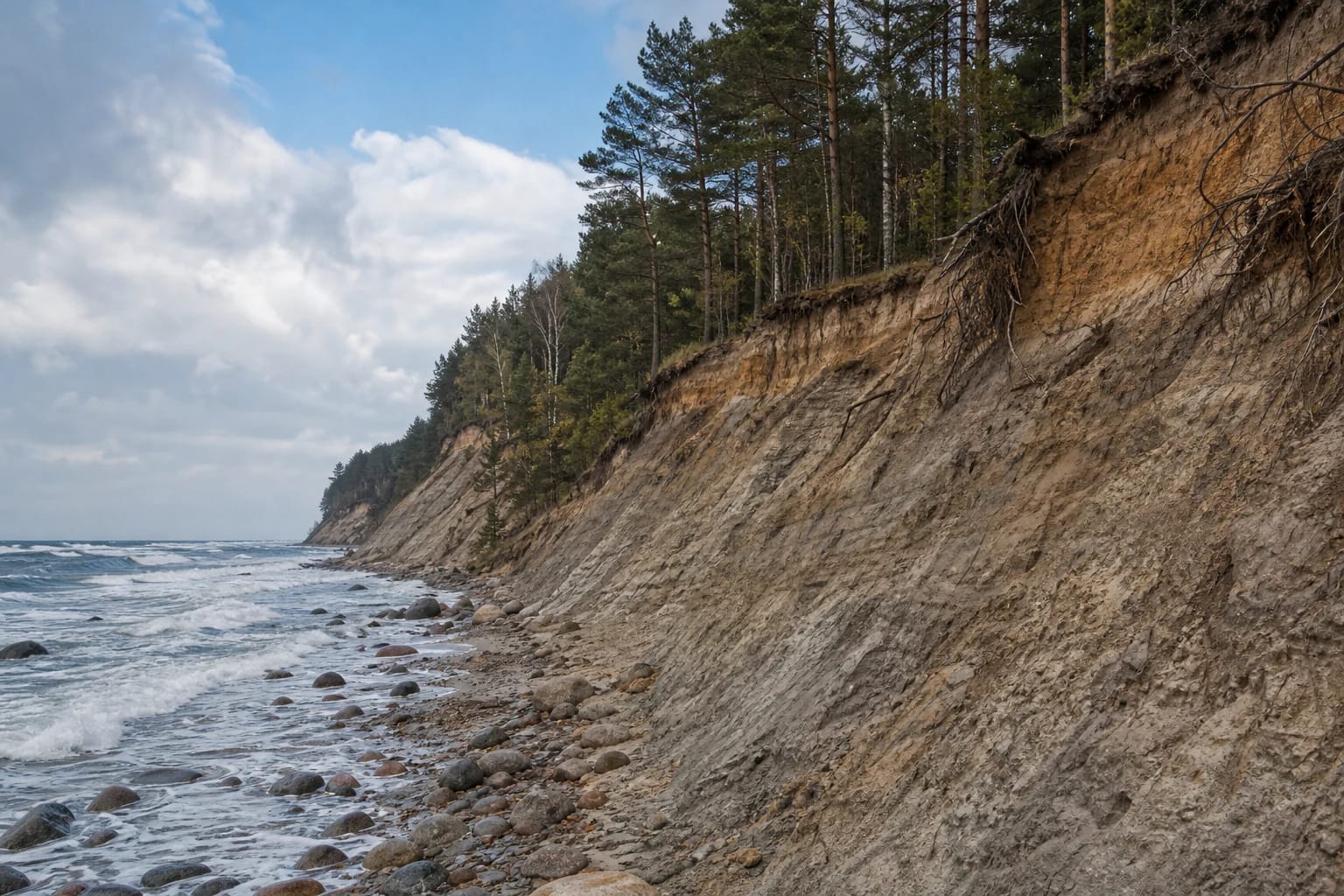
Olandų Kepurė near Karklė is one of the Lithuanian seaside places where the landscape changes suddenly: instead of a flat sandy beach, a high wave-eroded cliff opens, and from its top you see the Baltic Sea, a stony shore, and a pine-covered coastal ridge.
The official protected-area description states that this is a 24 m high moraine ridge. Lithuania has no other sea coast of this height and steepness, so Olandų Kepurė is not only a scenic viewpoint but a clear lesson in coastal geology.
Olandų Kepurė: a glacially formed sea cliff
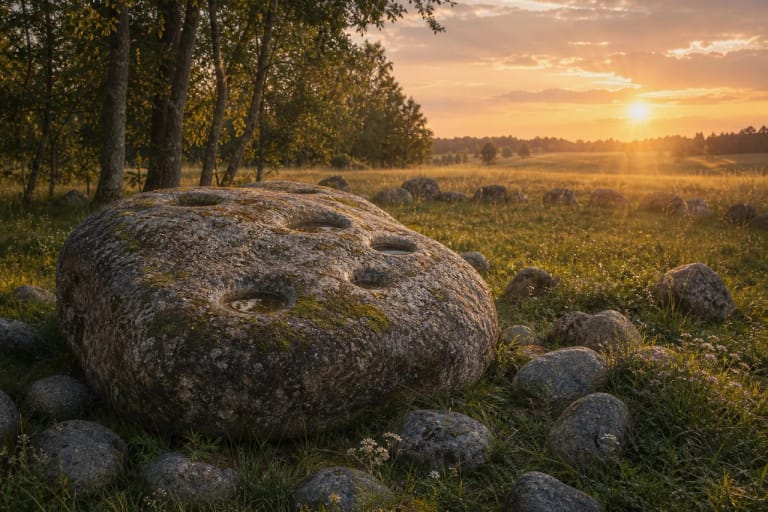
The story of the cliff begins in the Ice Age. The official Saugoma description links Olandų Kepurė with a moraine ridge formed on the Lithuanian coast by the retreating glacier 12-15 thousand years ago. Here you see not just sand, but a complex shore of clay, loam, boulders, and sand layers.
Waves erode this coast constantly. The State Service for Protected Areas states that the cliff descends toward the sea in a 16-18 m high slope and, under the impact of waves and groundwater, crumbles at a rate of about 50 cm per year. Visitors should understand that the most beautiful edges here are often also the most dangerous.
Olandų Kepurė, mammoth bones, and deep time
The cliff is interesting not only for its panorama. Saugoma.lt mentions three cases when people found mammoth bones about 23 thousand years old washed out from the cliff. Two such finds are kept in the Seaside Regional Park visitor centre.
This fact helps read the site more broadly: the cliff is not only a photogenic point by the sea. It is an actively opening shore where waves, water, and wind sometimes reveal traces of very old natural history.
How to visit safely
The main rule at Olandų Kepurė is not to approach the very edge and not to climb the steep slopes. The coast moves, crumbles, and can look more stable than it really is. Be especially careful after rain, thaw, storms, or strong wind.
The beach below can be stony, so practical shoes are better than open footwear. If visiting with children, agree in advance how close they may go, because the paths and pines on top can easily distract from the steep edge.
Route and Karklė context
Olandų Kepurė is in Seaside Regional Park, near Karklė. It is easiest to visit as a short stop between Klaipėda, Giruliai, Karklė, and Palanga, or as part of a longer seaside walk.
With more time, visit the Seaside Regional Park visitor centre in Karklė. The park description emphasizes that Olandų Kepurė cliff is one of the park's key identity objects, alongside Karklė village, Lake Plocis, and the undeveloped mainland-coast landscape.