- Place
- Burbiškis, Radviliškis District Municipality
- Region
- Šiauliai Region
- Type
- cultural-history museum-reserve with manor, village exposition, and archaeology
- Address
- Burbiškio k. 1, Pakalniškiai eldership, Radviliškis District
- Coordinates
- 55.78230, 23.89730
Daugyvenė Museum
Daugyvenė Museum-Reserve
The Daugyvenė Cultural History Museum-Reserve stretches through the Daugyvenė river valley in Radviliškis District. Founded in 1991, it is not one building but several heritage sites joined into a single museum-reserve, each telling a different layer of local history: village life, manor culture, town history, and ancient communities.
The museum has four main departments: Burbiškis Manor, Kleboniškiai Village Household Museum, the Šeduva local-history exposition, and the Raginėnai archaeological complex. Some are separate sites scattered through the Daugyvenė valley, so it is practical to discover the museum one department at a time.
Burbiškis Manor
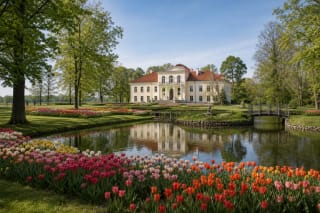
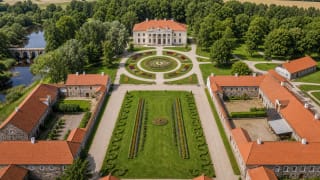
The best-known department is Burbiškis Manor, famous for its tulip collection and annual Tulip Bloom Festival. This is Burbiškis in Radviliškis District and should not be confused with the manor of the same name in Anykščiai District; from the nineteenth century until 1941 it was owned by the Baženskis family.
The manor has its own detailed page, so here it is best understood as one department of the museum-reserve and visited as an independent object with a park, ponds, and Neo-Gothic buildings.
Kleboniškiai Village Household Museum
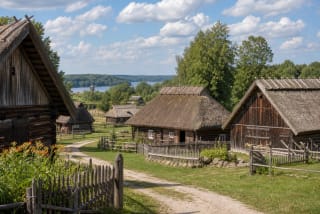
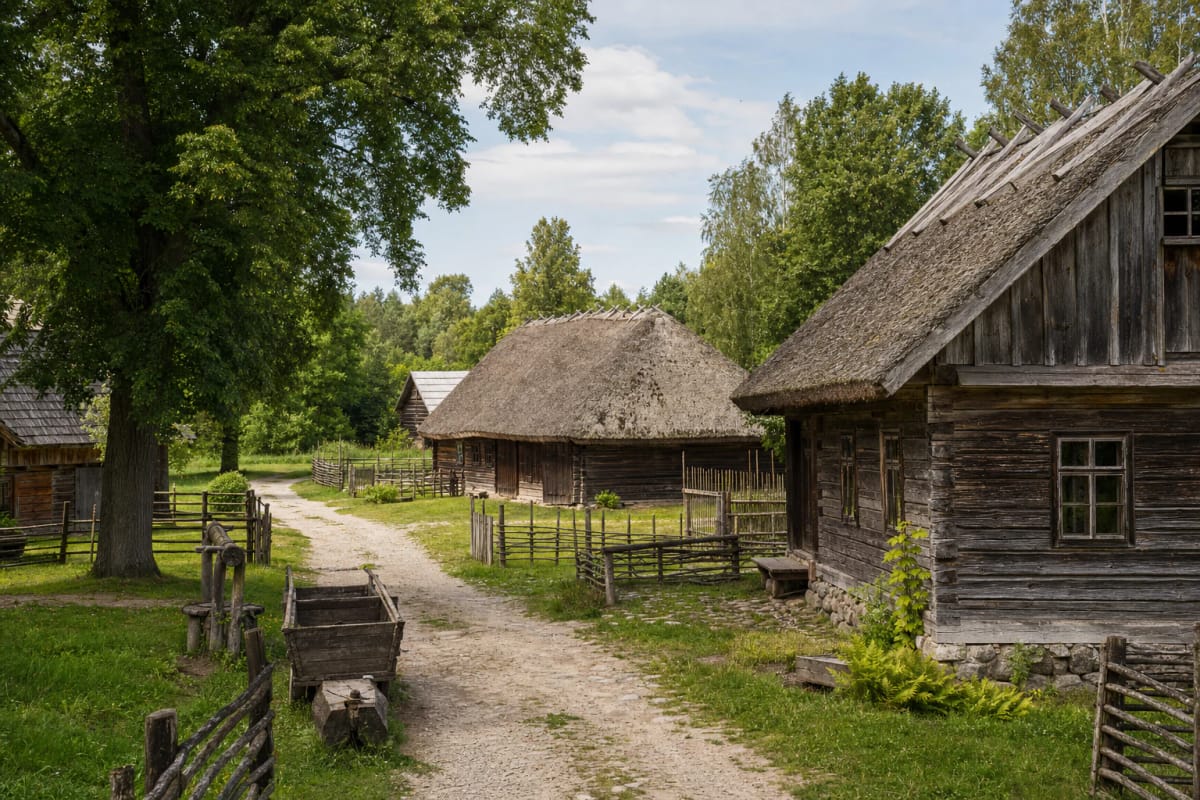
Kleboniškiai Village Household Museum is an open-air exposition on the site of the old Kleboniškiai village. It brings together nineteenth- and early twentieth-century homestead buildings: cottages, granaries, bathhouses, barns, and other farm structures, some arranged like a traditional street village.
The exposition shows how Aukštaitian peasants lived and worked, making it a vivid lesson in local everyday life and ethnic culture. It is one of the most interesting parts of the museum during the warm season.
Raginėnai and Šeduva
The Raginėnai archaeology department covers burial mounds and a hillfort, also called Raganų kalnas, on the heights of the left bank of the Daugyvenė. The burial mounds were investigated in the nineteenth and early twentieth centuries, with Jonas Basanavičius among the researchers, and the finds are dated to the middle of the first millennium; some are kept as far away as the Hermitage in Saint Petersburg.
The fourth department, the Šeduva local-history exposition, tells the history of the town of Šeduva. Together these departments provide a broad local timeline from the Stone Age to modern times.
How to visit the museum
Because the museum is spread out, decide in advance which departments you want to visit. One department usually takes 1.5-3 hours; a popular combination is Burbiškis Manor and Kleboniškiai village, for which several-hour guided tours are also offered.
Opening hours and ticket prices differ by department and season. Burbiškis and Kleboniškiai are open daily except Monday in summer, while the Šeduva department is visited by prior arrangement. Check the exact information on the official museum page before travelling, because it may change.