- Place
- Būtingė, Palanga City Municipality
- Region
- Palanga
- Type
- Evangelical Lutheran church
- Address
- Liepojos pl. 8E, Būtingė, Palanga
- Coordinates
- 56.04238, 21.11929
Būtingė Lutheran Church, Būtingė parish, Šventoji Lutheran Church
Būtingė Lutheran Church by the Lithuanian-Latvian border
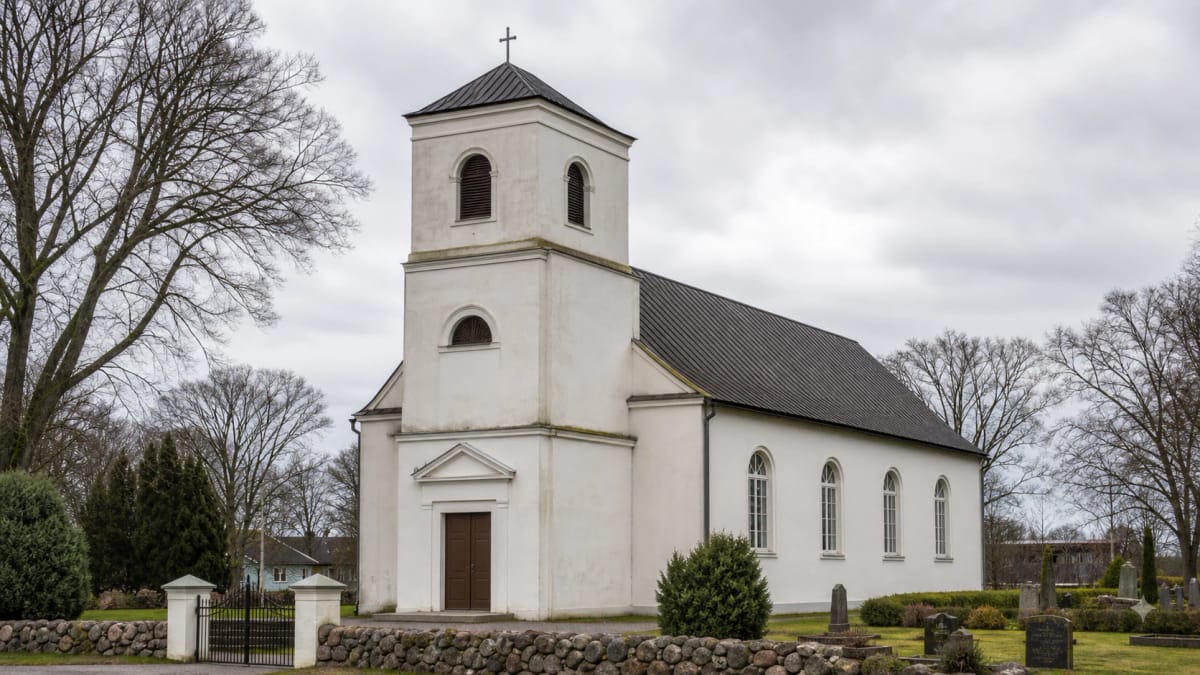
Būtingė Evangelical Lutheran Church stands on the coast of Šventoji and Būtingė, right by the Latvian border, along the Liepāja road. It is not a resort feature but an old Curonian and Latvian Lutheran community that historically belonged to the Courland church tradition and was long a branch (filial) of the neighbouring Rucava parish.
In the Cultural Heritage Register the church is listed as a state-protected object of regional significance (unique code 32574). For visitors, it is a rare chance to see on the coast not only Catholic or resort architecture, but also the Protestant history of this area, intertwined with Latvia.
Five Šventoji-Būtingė churches and a history of floods
The parish was first named after Šventoji and dates back at least to 1560, when a commission of the Brandenburg margrave Albrecht confirmed its activity and named its first pastor, Matthias Saccobelius. According to the parish, the present church is already the fifth in a row - the earlier ones were lost one after another to the sea and floods.
The first church stood right at the mouth of the Šventoji River and around 1638, during the Swedish occupation, was pushed out to sea by a flood. The second, wooden, was built in 1638-1640; the third rose in 1728 by order of Duke Ferdinand; the fourth, also wooden, was built by the estate owner Eberhard Christoph von Mirbach and, threatening to collapse, fell in 1809. Left without a house of worship, the parish was attached to Rucava for about 15 years, where its future was cared for by pastor Ferdinand Michael Baumbach.
Tsar Alexander I's support and the 1824 construction
Pastor Baumbach, taking advantage of Tsar Alexander I's visit to Courland, submitted a petition asking permission for Būtingė parish to build a new church. The Tsar viewed the request favourably and allotted 40,000 roubles from the state treasury. So in 1822 the construction of the present, fifth church began.
The church was consecrated on 14 December 1824; the date „1824“ is still visible above the main doors. It is built of fieldstones and brick to be strong and lasting, and has about 320 seats. By the parish's own reckoning, Būtingė is among the oldest parishes in Lithuania.
Neo-Classical masonry, three naves, and an 1866 tower
According to the Register, this is a rectangular-plan, masonry, single-tower church, its main facade facing west; it is about 20.35 m long, 12.05 m wide, and about 7.5 m high to the cornice. The facades are neo-Classical, and the main west facade is symmetrical, with a tower set into its centre.
The interior is compact, with three naves separated by five pairs of columns; an organ choir stands above the vestibule, and galleries run above the side naves. The central nave is extended by a presbytery of the same width and height, with a pulpit under a domed canopy. At first the church had no tower - it was added only in 1866, making it 42 years younger than the church itself; the tower holds a bell inscribed by the Liepāja foundry „Beker un Ko“ in 1926.
A Curonian parish and the twentieth century
The Būtingė-Rucava parish was mostly Latvian and Curonian: before the First World War, around 1911, the joint community had about 10,000 members, most of them Latvians. Until the war the parish belonged to the Courland consistory, and in 1920 it passed to the newly established Lithuanian consistory.
Būtingė remains a border community today: traditional cemetery feasts are held in its churchyard, attended by clergy and musicians from Latvia. It is a living Evangelical Lutheran parish whose service schedule is best checked through the church's information.
Planning a Būtingė church visit
No public tourist opening hours or ticket information were found during research. The exterior can be viewed freely, while for the interior it is worth arranging a visit with the parish in advance or checking the published service information.
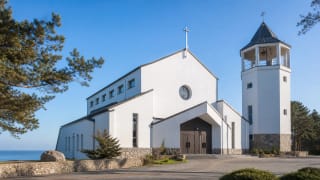
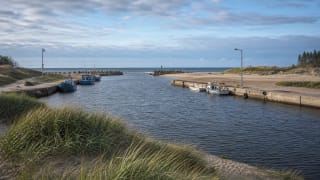
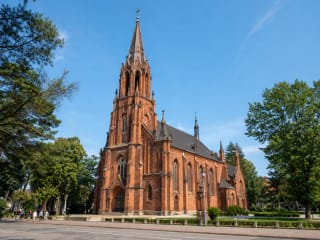
It is convenient to combine Būtingė church with Šventoji Star of the Sea Church, Šventoji harbour and river mouth, and the sights of Palanga. In one stretch of coast you can then see different religious, historical, and resort layers - from Curonian Lutheranism to neo-Gothic and resort architecture.