
Lithuanian traditional foods
Velykų stalo patiekalai
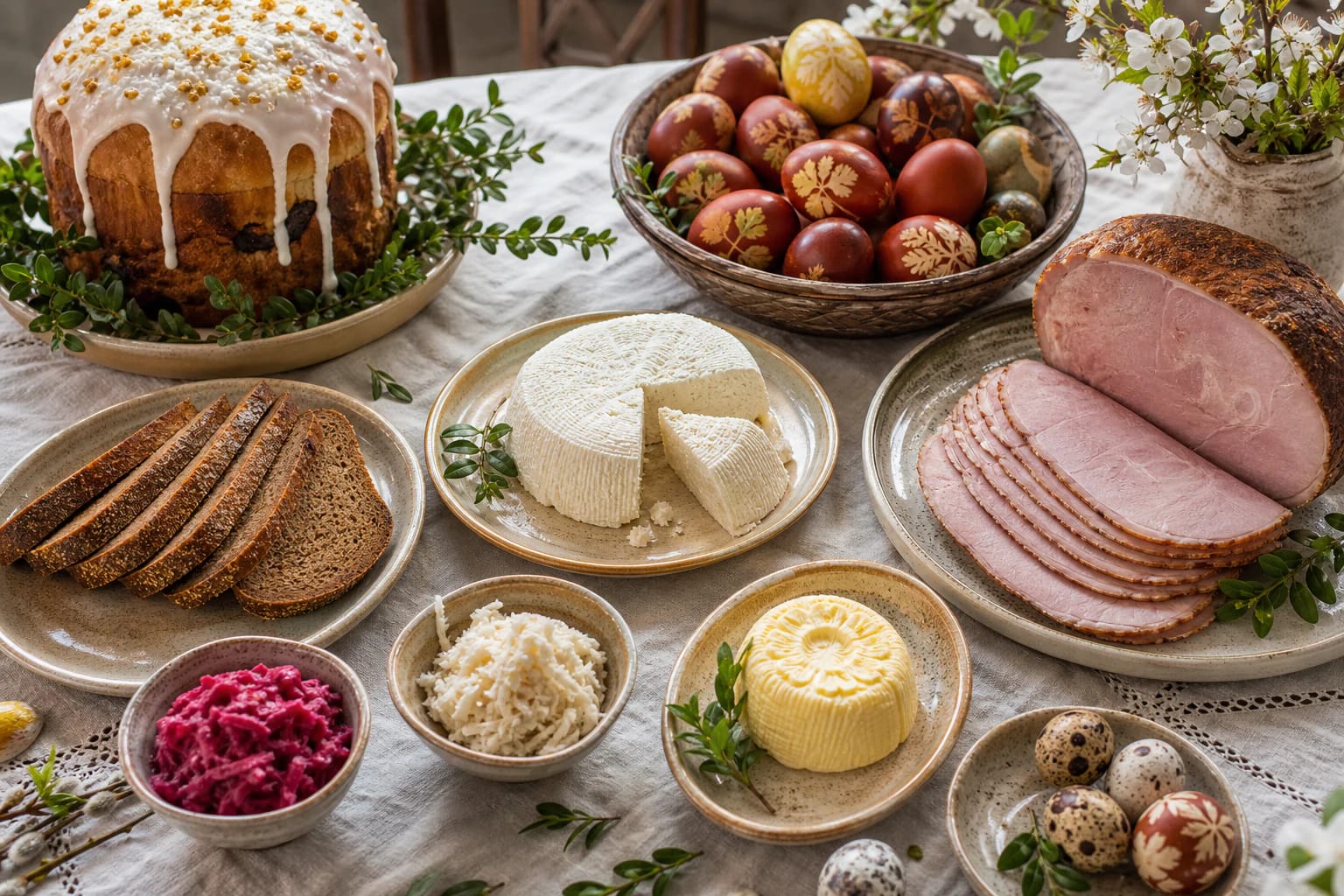
Velykų stalo patiekalai mark the end of Lent and the spring holiday: margučiai are eaten first, with šaltiena, ham, sausages, horseradish, salads, and sweet cake placed beside them.
Food and heritage context
- Category
- Easter dishes
- Type
- spring holiday breakfast and feast table
- Heritage status
- living calendar tradition
- Context
- Easter, margučiai, šaltiena, ham, sausages, horseradish, cake, spring table
Names and variants
Easter breakfast, Easter table
After Lent
The Easter table is traditionally more abundant than fasting periods. Eggs, meat, dairy products, and sweet bakes return to it.

In the context of Easter breakfast, the Universal Lithuanian Encyclopedia mentions margučiai, šaltiena, ham, sausage, and cake. According to the encyclopedia, sacred ritual holiday foods in Lithuania were made already from pre-Christian times, and the most important sign of the Easter table is margučiai.
Margučiai first
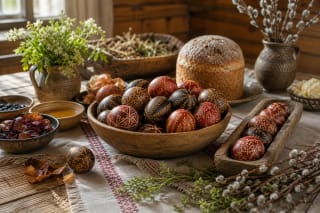
Margučiai are eaten, tapped, and given as gifts. They are not only decoration, but the beginning of Easter breakfast.
Horseradish, salt, butter, and bread fit beside them.
Meat and horseradish
Ham, sausages, šaltiena, and smoked meat dishes bring fullness back after Lent. Horseradish adds sharpness and freshness.
This combination clearly separates the Easter table from the restraint of Kūčios.
Cake and spring
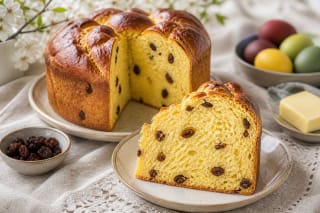
Sweet Easter cake or another bake gives the table a festive finish. It is often decorated with glaze, raisins, or powdered sugar.
Spring feeling comes not only from food, but also from light, greenery, margučiai, and family games.
Menu guide
How to build a traditional Easter table
The Easter table is more abundant than fasting-period tables. Prepare the margučiai first, then coordinate the meat, horseradish, and cake dishes so the table is filling but not chaotic.
Suggested dishes
Planning and serving
- Boil and dye the margučiai in advance.
- Prepare the horseradish, šaltiena, meat dishes, and salads.
- Bake the cake the evening before or early in the morning so it has time to cool.
- At breakfast, place the margučiai first, then the other dishes.
- Cool leftovers safely, especially eggs, šaltiena, and meat.
Notes
The Easter table differs by family, but margučiai are the main shared sign.
Horseradish helps balance richer meat dishes.
Velykų stalo patiekalai in Lithuanian traditions
Explore the celebrations and customs associated with this food.
Related pages about Velykų stalo patiekalai
Velykų stalo patiekalai: frequently asked questions
Which foods are traditionally eaten first?
Margučiai. They are the symbol of the Easter table and are usually eaten first.
What should be put on the Easter table?
Margučiai, šaltiena, ham, sausages, horseradish, bread, butter, salads, and a sweet cake.
How can margučiai be dyed naturally?
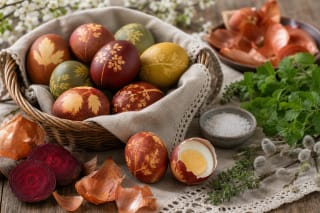
With onion skins, some plant decoctions, or other food-safe dyes.
Why is horseradish eaten with Easter meat?
Horseradish adds sharpness and helps balance richer meat dishes.
What cakes are typical for Easter?
Most often sweet yeasted cakes with eggs, butter, raisins, or glaze, though family traditions differ.
What can be made from leftover eggs?
Salads, stuffed eggs, spreads, or simply serve them with horseradish and bread.
How should Easter dishes be stored safely?
Keep eggs, šaltiena, and meat in the refrigerator, and do not leave them on the table in warmth for long.