
Lithuanian traditional foods
Žirniai su spirgučiais
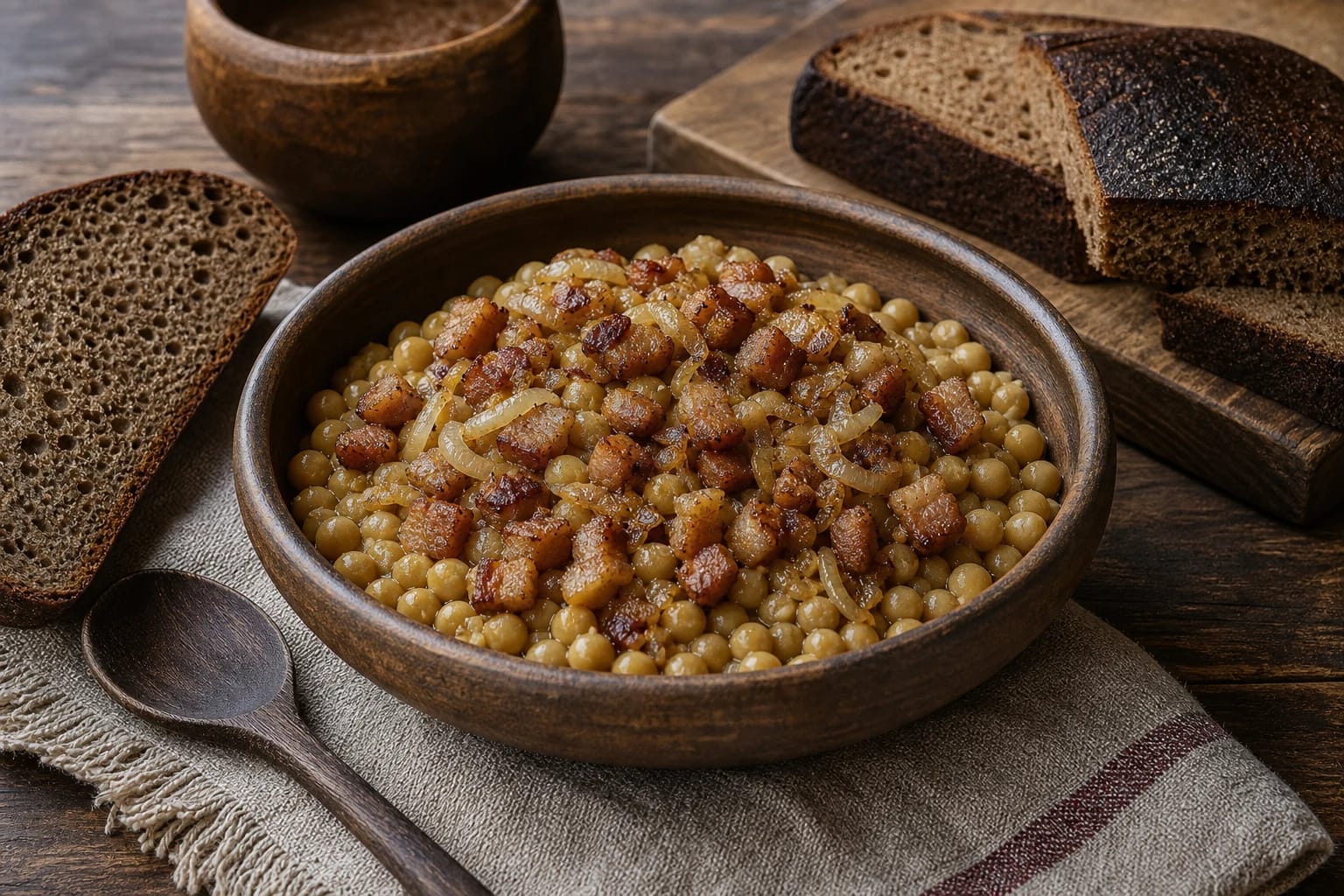
Žirniai su spirgučiais is an old peasant dish: dried peas are soaked, boiled until soft, and left whole or mashed, while spirgučiai, small fried cubes of bacon with onions, are placed on top. The fasting and Kūčios version is made without animal fat.
Food and heritage context
- Category
- Legume dishes
- Type
- boiled or mashed peas with fried-bacon crackling sauce
- Heritage status
- well attested
- Context
- Peas, field pea, legumes, cracklings, bacon, onions, fasting, Kūčios, peasant food
Names and variants
Peas with cracklings, Boiled peas with bacon bits
What are žirniai su spirgučiais?
Žirniai su spirgučiais is a simple, filling peasant dish: dried peas are soaked and boiled until soft, left whole or mashed, and seasoned with spirgučiai, diced fried bacon or pork belly with onions. It is not a soup and not a thick mixed stew, but a unified legume dish in which peas are the base and cracklings are the flavor and fat accent.

The logic of the dish is double. The fatty everyday version relies on cracklings, so it is filling and aromatic. The fasting version, often placed on the Kūčios table, is made without animal fat; peas are then seasoned with onions fried in oil or with mushrooms. Both versions come from the same old custom of eating peas.
Peas in Lithuanian peasant food
Peas, the field pea Pisum sativum, belong to the legume family and were long one of the more important plants for Lithuanian peasants. In the Universal Lithuanian Encyclopedia's overview of Lithuanian foods, vegetable and legume dishes are described with the clear note that people ate peas and beans; this shows peas were part of the everyday table, not a rare treat.
According to the Universal Lithuanian Encyclopedia, ripe pea grains were eaten boiled, preserved, and ground into groats and flour, while unripe green peas were eaten fresh, boiled, and preserved. Peas contain much protein and other nutrients, so in legume-growing regions they were long an inexpensive source of protein, especially during fasting periods when meat was not eaten.
An interesting detail from the same source is that when peasants made malt for beer from barley, they sometimes mixed in pea flour so the beer would foam better. Peas therefore appeared in Lithuanian daily life not only on the plate but also in the brewer's tub.
Spirgučiai: the flavor base
Spirgučiai are made by cutting bacon or smoked pork belly into cubes and frying them until the fat renders and the meat pieces brown. Chopped onions are often added to the rendered fat and fried until golden. This kind of bacon, onion, and sour-cream or milk sauce is mentioned in the Universal Lithuanian Encyclopedia's overview of Lithuanian foods as a typical accompaniment to potato and legume dishes, with cracklings specifically named among them.
Spirgučiai give the dish three things at once: fat that makes the peas more filling; the aroma of salted or smoked pork; and crispness that contrasts with the soft pea mass. Without this element there would only be boiled peas, nutritious but modest. With cracklings they become a full lunch or supper dish.
In Samogitia, related roles were played by spirginė and mirkalas, seasonings made from crushed heated flaxseed or cracklings, onions, flour, and milk, used to dress potatoes and groats. Žirniai su spirgučiais belongs to the same logic: a modest grain or legume base enlivened by a fatty, aromatic topping.
How peas are boiled and mashed
Dried peas are soaked before cooking, usually overnight for several hours. Soaking shortens cooking and helps the peas cook evenly. After soaking, the water is usually poured off, and the peas are cooked in fresh water over low heat until soft; older, longer-stored peas may take much longer.
One important detail is salt. If added at the beginning of cooking, it leaves the pea skins hard, so salt is added near the end. For the same reason, baking soda is not recommended for speeding up cooking: although it softens faster, it damages the peas' flavor and nutritional value.
Cooked peas are left whole or mashed into a thick, almost porridge-like mass. Whole peas resemble a vegetable side dish more, while mashed peas become a thick puree in which the cracklings distribute evenly. The choice depends on family custom and on how soft the peas cooked.
Kūčios and fasting peas
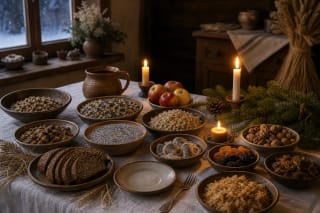
Peas also had ritual meaning. In the Universal Lithuanian Encyclopedia's overview of Lithuanian foods, surviving sacred Kūčios-table foods include prėskučiai, poppy milk, and cranberry or oat kisielius, part of an old circle of fasting foods made without meat or fat, to which beans or peas traditionally belong.
Kūčios and Lenten peas are strictly fasting foods: made without animal fat, so cracklings are replaced by onions fried in oil or by mushrooms. This is the essential difference from the everyday version. The pea-cooking technique stays the same, but the topping changes so the dish fits fasting rules.
The Kūčios table is traditionally built from twelve fasting dishes, and peas and beans on it are traces of old ritual foods, even pre-Christian in origin. Ethnologists connect legumes on the festive table with wishes for fertility and abundance in the coming year.
How žirniai su spirgučiais differ from šiupinys
Žirniai su spirgučiais and šiupinys both rely on peas, but they are two different dishes. Žirniai su spirgučiais is a unified legume dish: one main product, peas, and one topping, cracklings. The pea remains at the center of the flavor.
Šiupinys, by contrast, is a mixed pot dish. According to the Universal Lithuanian Encyclopedia, it was cooked from barley groats, peas and beans, potatoes, and pig's head, feet, and ears. It is a thick stew joining several products, known already from Kristijonas Donelaitis's The Seasons and closely associated with Užgavėnės and Samogitia. In it, peas are only one ingredient.
In short: in žirniai su spirgučiais the pea is the dish, while in šiupinys the pea is an ingredient. The first is a modest everyday or fasting food; the second is a rich, fatty, often festive mixed stew.
Serving and pairings
Žirniai su spirgučiais are served warm, generously topped with cracklings and rendered fat. The classic companion is black rye bread, which catches the fatty topping well. For the rich version, the acidity of sauerkraut or pickled cucumbers also works well, balancing the fullness of the bacon.
The dish can serve as an independent lunch or supper, or as a rich side for meat. Leftover pea mass is often fried the next day in a pan with cracklings, becoming even richer and gaining a lightly toasted flavor.
How to make it today
Today žirniai su spirgučiais are easy to recreate at home: all that is needed is dried field peas, bacon or smoked pork belly, and onions. The key is not to hurry: soak the peas overnight, cook over low heat, and add salt only at the end. The cracklings are best fried slowly so they brown rather than burn.
For an authentic fasting version, simply skip the bacon and season the peas with onions fried in oil or with mushrooms; this recreates the old Kūčios and Lenten food. Lithuanian pea varieties such as 'Ieva DS' or 'Kiblukai' provide a convenient local raw material, though any food-grade dried peas suit the dish.
Recipe
How are žirniai su spirgučiais made?
The essence of the dish is well-soaked, softly boiled peas and aromatic cracklings. The peas can be left whole or mashed into a thick mass; the cracklings are spooned on top or mixed in. A fasting version can be made without animal fat at all.
Ingredients
Method
- Sort the peas, rinse them, and cover with cold water. Soak overnight, about 8-12 hours.
- Pour off the soaking water, cover the peas with fresh water, add the bay leaf and, if desired, a whole onion. Simmer until the peas soften; older peas may take an hour and a half.
- Add salt near the end of cooking. Salt added too early leaves the pea skins hard. Pour off excess water.
- Leave the peas whole or mash them into a thick mass, as preferred.
- For the cracklings, fry diced bacon or pork belly in a pan until the fat renders and the pieces brown; add chopped onions and fry until golden.
- Season the peas with salt and pepper and pour over the cracklings with the rendered fat, or mix them in. Serve warm with black rye bread.
Notes
For a fasting or Kūčios version, skip animal fat: season the peas with onions fried in oil or with mushrooms.
Hard water slows cooking; if the peas resist softening, add a little oil or cook longer rather than adding baking soda, which damages flavor and nutritional value.
Leftover pea mass can be fried in a pan with cracklings the next day; it becomes even richer.
Žirniai su spirgučiais in Lithuanian traditions
Explore the celebrations and customs associated with this food.
Related pages about Žirniai su spirgučiais
Beans with cracklings
Beans with cracklings are a closely related legume dish, often mentioned together with peas on the Kūčios table.
Spirgai
Spirgučiai, diced and fried bacon, are the flavor base of this dish.
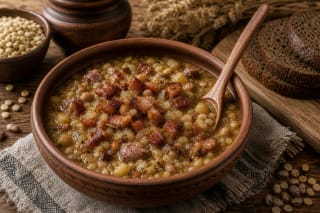
Šiupinys
In šiupinys, peas are combined with groats and meat into one thick pot dish.
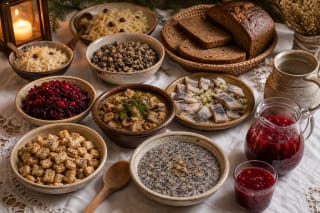
Kūčios supper dishes
Peas belong to the circle of old fasting Kūčios foods.
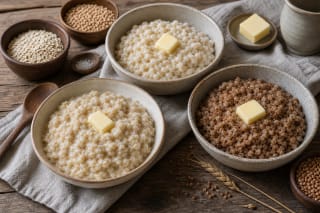
Porridges
Mashed peas move toward a porridge form, making them related to groat porridges.
Žirniai su spirgučiais: frequently asked questions
How are žirniai su spirgučiais different from šiupinys?
Žirniai su spirgučiais are a unified legume dish in which peas are the base and cracklings are the topping. Šiupinys is a mixed pot stew made from peas, beans, groats, and pork parts, where peas are only one ingredient.
Do peas have to be soaked before cooking?
Dried peas should be soaked overnight, about 8-12 hours. Soaking shortens cooking and helps the peas cook evenly and softly.
Why are the peas hard to cook soft?
Usually because the peas are old and long-stored, the water is hard, or salt was added too early. Salt keeps the pea skins firm, so it should be added only near the end.
Can the peas be made without bacon?
Yes. In the fasting and Kūčios version, animal fat is omitted and the peas are seasoned with onions fried in oil or with mushrooms. This is an old, authentic variant.
What exactly are spirgučiai?
Spirgučiai are diced and fried bacon or smoked pork belly, often with fried onions. Frying renders the fat while the meat pieces brown and become crisp.
Should the peas be mashed or left whole?
Both are suitable. Whole peas resemble a vegetable side, while mashed peas become a thick porridge-like mass in which the cracklings distribute evenly. The choice depends on family custom.
Are peas with cracklings placed on the Kūčios table?
Yes. Beans or peas were traditionally placed on the Kūčios table in a fasting version made without animal fat. This is an old trace of ritual foods, even pre-Christian in origin.
What are žirniai su spirgučiais traditionally eaten with?
Most often with black rye bread, which absorbs the fatty crackling topping. For the rich version, sauerkraut or pickled cucumbers also pair well.
How should leftover peas be reheated?
Leftover pea mass is easiest to fry in a pan with cracklings or reheat with a little water, because it thickens when cold. Fried peas gain a richer, lightly toasted flavor.