
Lithuanian traditional foods
Kūčių vakarienės patiekalai
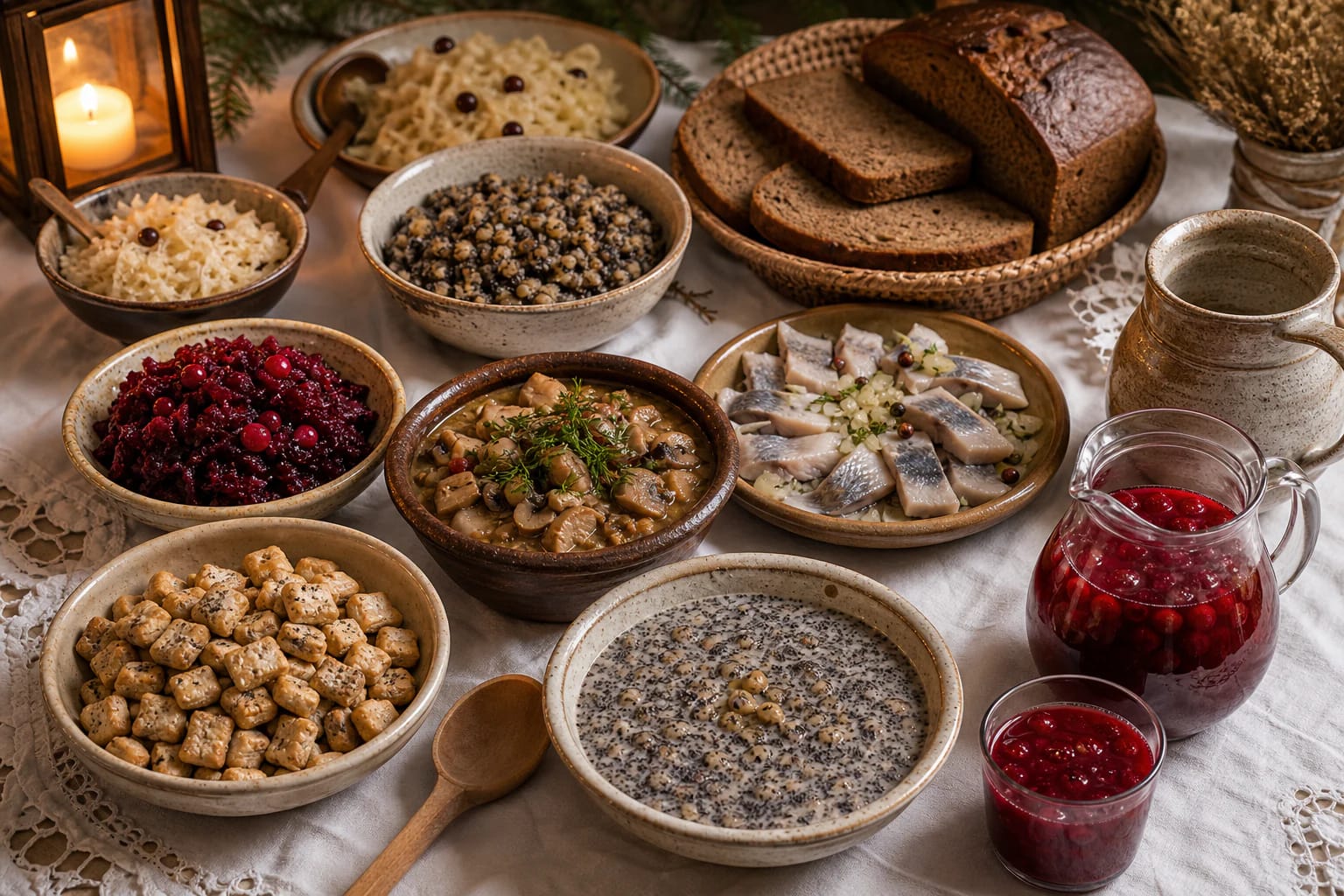
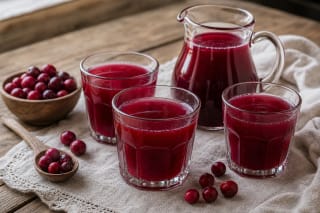
Kūčių vakarienės patiekalai, the dishes of the Lithuanian Christmas Eve dinner, make up a meat- and dairy-free Christmas Eve meal: herring, mushrooms, beans, peas, fermented vegetables, kūčiukai, poppy milk, and cranberry kisielius. Twelve dishes work as a customary sign of fullness.
Food and heritage context
- Category
- Kūčios dishes
- Type
- Christmas Eve meal of twelve meat- and dairy-free dishes
- Heritage status
- living calendar tradition
- Context
- Kūčios, 12 dishes, herring, mushrooms, kūčiukai, poppy milk, kisielius, fermented vegetables, ancestral spirits
Names and variants
Kūčios table, Twelve Kūčios dishes
What makes a Kūčios meal
Kūčios is the family dinner on the evening of December 24. The meal traditionally excludes meat, dairy, and eggs, and features fish, mushrooms, grains, vegetables, poppy seeds, honey, and fruit. According to the Universal Lithuanian Encyclopedia's overview of Lithuanian foods, surviving sacred dishes of the Kūčios table include prėskučiai or kūčiukai, poppy milk, and cranberry or oat kisielius.
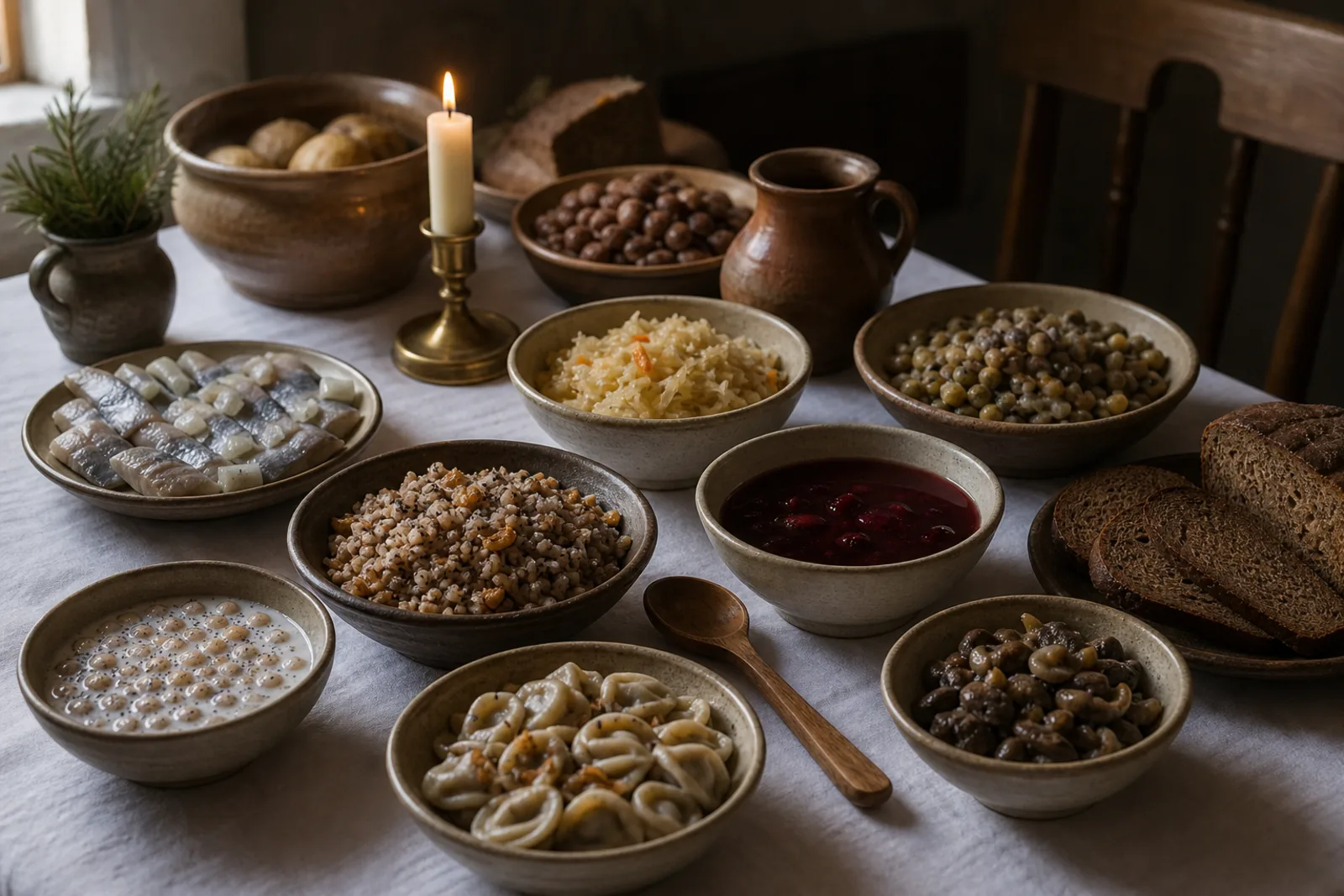
Twelve dishes are often connected with the months of the year or the Christian interpretation of the twelve apostles, but the list can differ among families.
Main foods
Common Kūčios foods include herring, mushroom soup or sauce, beans, peas, boiled potatoes, fermented vegetables, bread, honey, kūčiukai, poppy milk, and kisielius.
This table is substantial not through fat but through variety and the symbolic tasting of each dish.
Ancestral spirits and restraint
The Kūčios dinner is connected with remembrance of ancestors, an empty place at the table, and leaving food for the dead. Food here therefore has a more solemn tone.
Festiveness is created not by luxury but by calm, the tablecloth, a candle, hay under the tablecloth, and family reconciliation.
Menu guide
How to assemble a traditional Kūčios dinner table
The Kūčios table is not a single recipe, so this is a practical menu framework: twelve fasting dishes from fish, mushrooms, grains, vegetables, poppy seeds, and berries.
Suggested dishes
Planning and serving
- Soak the poppy seeds, beans, peas, and dried mushrooms in advance.
- Prepare the kūčiukai, poppy milk, and kisielius, because they can be chilled.
- Place herring, vegetables, and mushroom dishes in smaller dishes so the table remains restrained.
- Combine twelve different fasting dishes on the table, but tasting and togetherness matter more than quantity.
- Begin the dinner calmly, sharing the Christmas wafer if your family follows that custom.
Notes
In tradition, Kūčios foods are without meat, dairy, and eggs.
The list of twelve dishes differs by family and region.
Kūčių vakarienės patiekalai in Lithuanian traditions
Explore the celebrations and customs associated with this food.
Related pages about Kūčių vakarienės patiekalai
Kūčių vakarienės patiekalai: frequently asked questions
Why is meat not eaten on Kūčios?
The Kūčios dinner is traditionally a fasting meal, so meat, dairy, and eggs are avoided.
Are twelve dishes required?
It is a strong customary number, but family lists differ. The meaning of the dinner and the shared table matter more.
What can replace fish?
If you do not eat fish, the table can rely on mushrooms, beans, peas, grains, vegetables, and poppy-seed dishes.
How are kūčiukai and prėskučiai different?
The names can differ regionally. Most often they refer to small plain baked pieces with poppy seeds.
Are Kūčios dishes suitable for vegans?
Most traditional Kūčios foods are plant-based except fish and honey, so the menu is easy to adapt.
How long can cranberry kisielius be kept?
A few days in the refrigerator, tightly covered. If the smell changes or fermentation appears, do not use it.
Why taste every dish?
In custom this is connected with fullness of the year and good fortune, but today it is often understood as part of the shared ritual.