
Lithuanian traditional foods
Pupos su spirgučiais
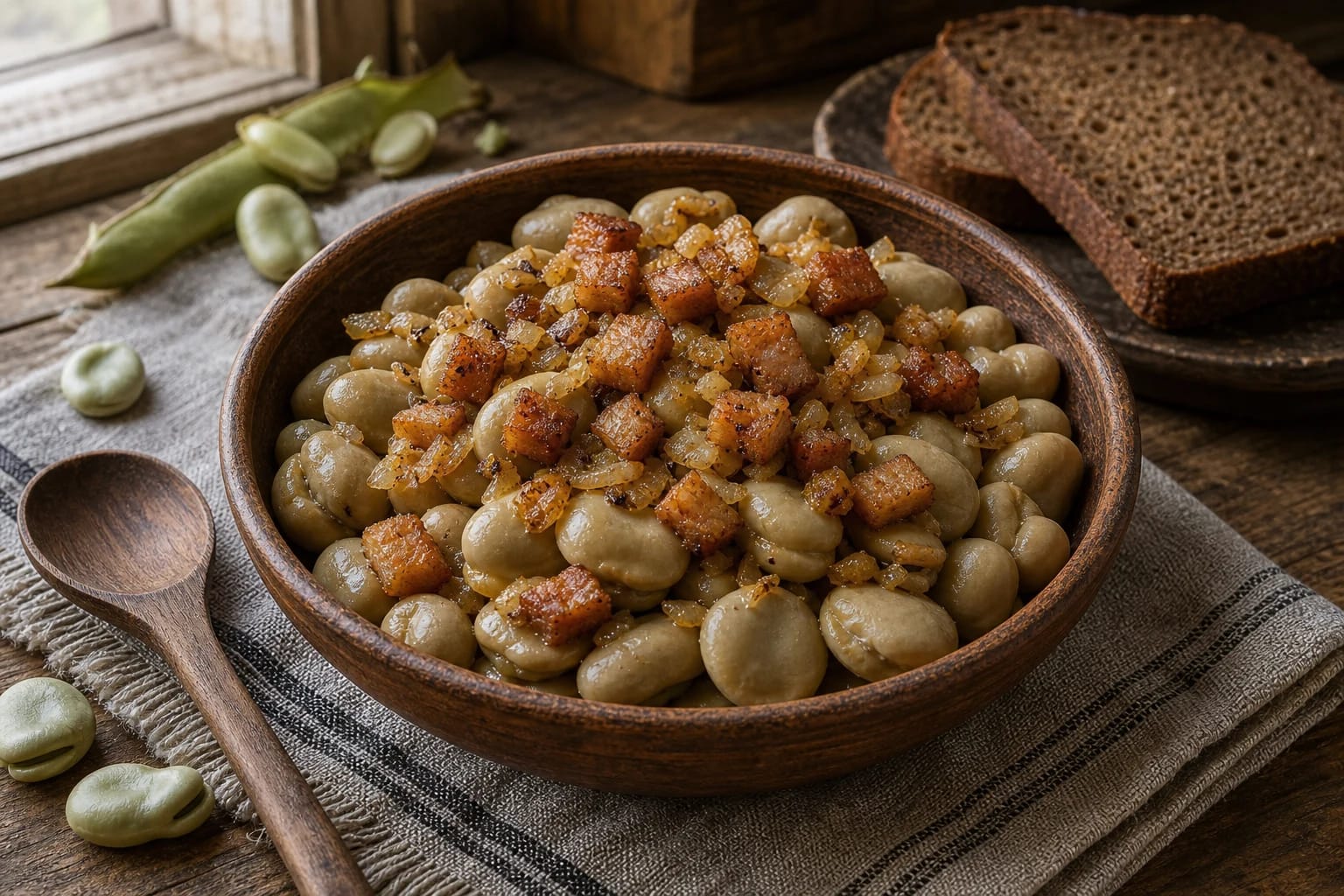
Pupos su spirgučiais are an old Lithuanian peasant food made from boiled large-seeded garden fava beans (Vicia faba), seasoned with a sauce of fried bacon cracklings and onions. Fava beans were grown in Lithuania already in the 10th-13th centuries, so they are much older than American common beans (Phaseolus).
Food and heritage context
- Category
- Groat and legume dishes
- Type
- boiled large-seeded fava beans with a fried bacon-crackling sauce
- Heritage status
- well attested
- Context
- Fava beans, Vicia faba, large-seeded garden beans, cracklings, bacon, onions, legumes, Kūčios, fasting
Names and variants
Boiled fava beans with cracklings, Fava beans with cracklings
What are pupos su spirgučiais?
Pupos su spirgučiais are a simple, filling peasant food: boiled large-seeded garden fava beans topped with a hot sauce of fried pork-fat cracklings and onions. It combines one legume with one meaty seasoning, giving protein, richness, and aroma.
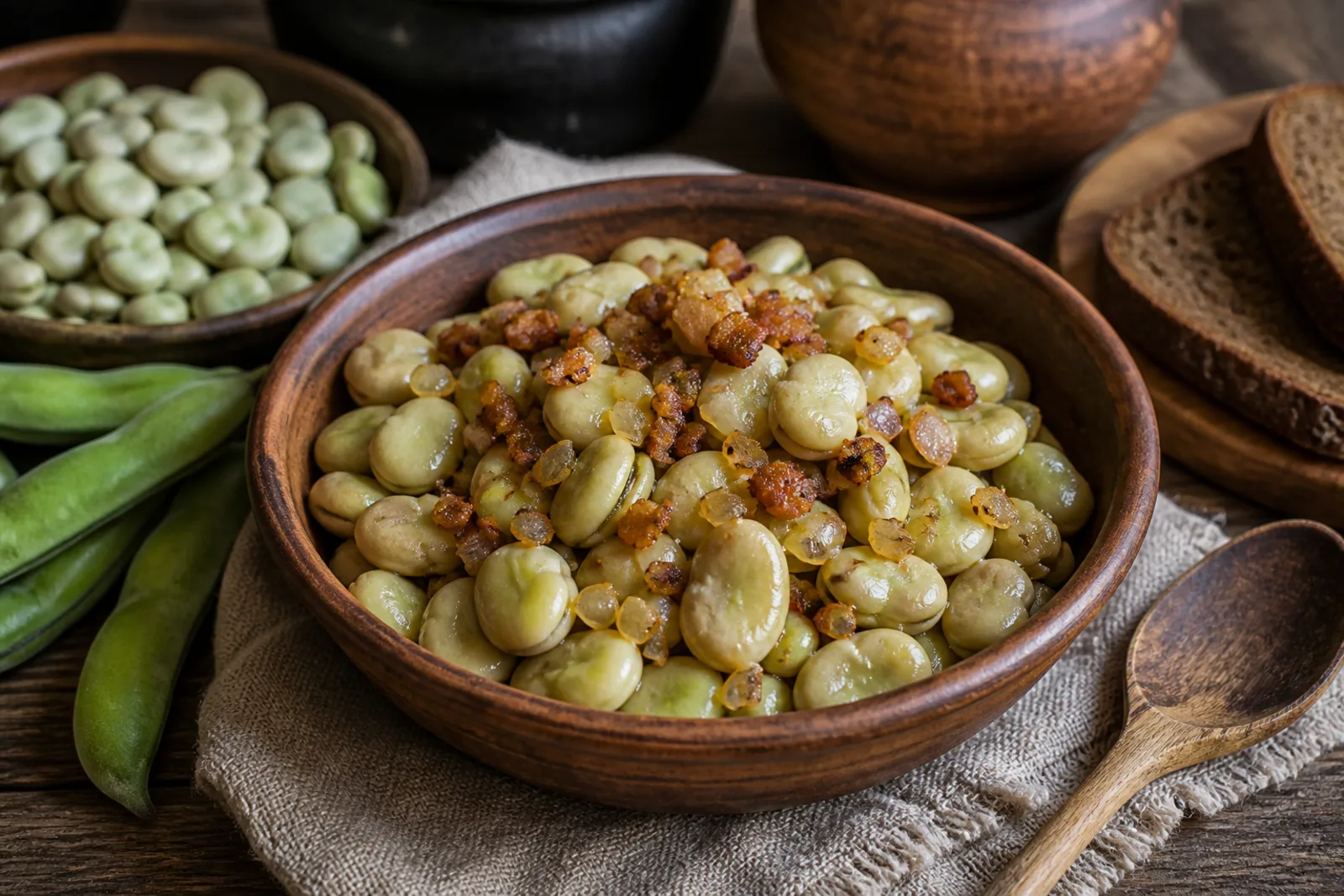
The structure is the same as the related dish of peas with cracklings; only the legume changes. Spirgučiai, finely cut fried pork fat or bacon with onions, follow the same classic Lithuanian seasoning logic used for potato and legume dishes.
It is important not to confuse the ingredient: this page is about garden fava beans (Vicia faba), not common beans (Phaseolus). They are different plants with different histories, and that distinction is central to the dish.
Pupos, not pupelės: the difference
According to the Universal Lithuanian Encyclopedia, fava beans, Vicia faba, belong to the Fabaceae family and the vetch genus and originated in Mediterranean countries. Edible garden fava beans are large-seeded, while fodder types are small-seeded; the seeds contain a lot of protein, 28-35%. This is an old plant well adapted to Lithuania's climate.
Common beans, Phaseolus, are a completely different plant, native to tropical America and reaching Europe only after the Age of Discovery. In Lithuania, common beans have been grown only since the 18th century. Therefore, when old sources or Kūčios descriptions mention pupos, they mean garden fava beans, not white or mottled common beans from a shop.
This distinction matters linguistically and culinarily. In old ethnographic texts, the word pupos always means Vicia faba; common beans have a separate name. In this dish, replacing fava beans with common beans is only a modern free interpretation, not an authentic tradition.
An old Lithuanian crop: the 10th-13th centuries
The age of fava beans in Lithuania is the strongest authoritative fact behind this dish. The Universal Lithuanian Encyclopedia states that fava beans were grown in Lithuania already in the 10th-13th centuries. That means fava-bean food reaches deep prehistory, much older than potatoes from the late 17th century or American common beans from the 18th century.
The Universal Lithuanian Encyclopedia's overview of Lithuanian foods mentions fava beans among everyday peasant vegetables: people ate peas, fava beans, turnips, and similar foods. Together with peas and turnips, fava beans formed one of the oldest sources of plant protein on the Lithuanian table, especially in winter and during fasts when meat was restricted.
This longevity places fava beans among sacred and ritual foods. In older times, all holidays had ritual dishes made for that day, and legumes - fava beans and peas - held an important place among them, especially on the Kūčios table.
Raw material: large-seeded garden fava beans
The dish uses edible, large-seeded garden fava beans. According to the Universal Lithuanian Encyclopedia, fava beans are divided into three varieties, var. faba, var. equina, and var. minuta, and by seed size into large-, medium-, and small-seeded forms; the large-seeded forms are grown for food. Small-seeded fodder beans are for animals.
A fava bean plant is tall, up to 100-150 cm, with an upright four-sided stem and white or pinkish flowers. The fruit is a 5-20 cm pod with 3-5 seeds. The plant tolerates cold down to -5 or -6 °C and likes non-acidic, moist clay and loam soils, making it a typical plant of Lithuania's lowlands.
The Universal Lithuanian Encyclopedia mentions varieties grown or still grown in Lithuania, including 'Ada,' 'Aušra,' 'Kupa,' and 'Ukko.' Mature fava beans are dried for winter and soaked before cooking; young green fava beans are also eaten fresh, but the traditional crackling dish is based on stores of dried fava beans.
How they are boiled
Dry fava beans are soaked first, usually overnight. Soaking returns water, shortens cooking, and lets the beans cook evenly. After soaking, the water is discarded, the beans are rinsed, and they are cooked in fresh water.
They are simmered over low heat until soft, which can take from one hour to an hour and a half depending on age and variety. Older beans have thicker skins and cook longer; sometimes softened beans are peeled or partly mashed for a gentler dish.
One detail matters: salt and acids, such as vinegar or tomatoes, should be added only near the end of cooking. If added too early, they toughen the skins and the beans remain hard even after long cooking. This simple rule often determines whether the dish succeeds.
Cracklings and the fasting version
Spirgučiai are made from finely cut pork fat or smoked bacon: they are fried until golden and the fat renders, then onions are added. The hot cracklings with all their fat are poured over the boiled fava beans, spreading richness through the dish. This is the same seasoning technique Lithuanians used for potatoes and other legumes.
Alongside the rich everyday version, a fasting version exists. During Lent and Kūčios, pork fat is omitted; the fava beans are seasoned with onions fried in oil or with mushrooms. The same dish thus becomes suitable for fasting days when meat fats are forbidden.
This fasting version is the one connected with the Kūčios table. In the Universal Lithuanian Encyclopedia's Lithuanian foods overview, legumes are listed among preserved sacred Kūčios dishes; the Kūčios table traditionally included 'fava beans or peas' without meat as one of the fasting dishes.
Place in Lithuanian cuisine
Pupos su spirgučiais belong to the same old legume-food family as peas with cracklings and thick Samogitian šiupinys. In šiupinys, fava beans are no longer an independent dish; they are cooked together with peas, groats, and pork into one thick pot. Pupos su spirgučiais remain a simpler one-crop dish.
Today garden fava beans as a separate dish have moved into the background; most often they are mentioned as an ingredient in šiupinys or as a detail of the Kūčios table. Still, as an old, protein-rich, inexpensive food, pupos su spirgučiais remain an authentic example of Lithuanian village cooking.
A separate fava-bean dish also reminds us what fed the Lithuanian table before potatoes: legumes, groats, and turnips. Pupos su spirgučiais are a window into pre-potato cuisine, where plant protein and bacon richness formed the basis of a filling meal.
Recipe
How are pupos su spirgučiais made?
The traditional home version is simple: large-seeded garden fava beans are soaked and boiled until tender, then hot cracklings - fried bacon or pork fat with onions - are spooned on top. In the fasting or Kūčios version, the animal fat is replaced with oil or mushrooms.
Ingredients
Method
- Put the fava beans in a bowl, cover with cold water, and soak overnight, 8-12 hours; their volume will almost double.
- Discard the soaking water, rinse the beans, and cover with fresh water. Bring to a boil, skim the foam, and add the bay leaf.
- Cook over low heat for 1-1.5 hours, until the beans soften. Add salt only near the end so the skins do not stay hard.
- Older beans with thicker skins cook longer; for a gentler texture, softened beans can be peeled or partly mashed.
- For the cracklings, cut pork fat or bacon into small cubes and fry over medium heat until golden and the fat has rendered.
- Add chopped onions and fry together until they soften and turn golden.
- Put the drained warm beans in a bowl, pour the hot cracklings and all their fat over them, and season with pepper and dill to taste.
Notes
For Kūčios and Lenten fasting versions, omit the pork fat: season the beans with onions fried in oil or with fried mushrooms.
Do not add salt or acids, such as vinegar or tomatoes, to the cooking water early; they slow softening and leave the beans hard.
Pupos su spirgučiais in Lithuanian traditions
Explore the celebrations and customs associated with this food.

Related pages about Pupos su spirgučiais
Peas with cracklings
The closest relative: the same crackling sauce, but with peas instead of fava beans.
Spirgai
Cracklings are the heart of the dish: finely cut, fried pork fat with onions.
Šiupinys
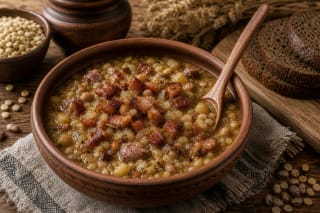
In thick Samogitian šiupinys, fava beans are cooked together with peas, groats, and meat.
Kūčios supper dishes
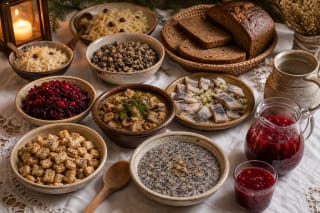
Fava beans or peas are one of the old sacred legume foods of the Kūčios table.
Bean soup
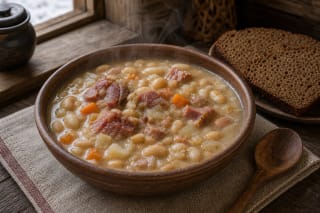
Helps avoid confusion: pupelės (Phaseolus) are a later American crop, not fava beans.
Pupos su spirgučiais: frequently asked questions
How do pupos differ from pupelės?
Pupos, Vicia faba, are an old Mediterranean-origin plant grown in Lithuania already in the 10th-13th centuries. Pupelės, Phaseolus, are a completely different American plant grown in Lithuania only since the 18th century. This dish uses garden fava beans, not common beans.
Are fava beans really that old in Lithuania?
Yes. According to the Universal Lithuanian Encyclopedia, garden fava beans were grown in Lithuania already in the 10th-13th centuries, much earlier than potatoes from the late 17th century or common beans from the 18th century.
What are spirgučiai?
Spirgučiai are finely cut and fried pork fat or smoked bacon, usually with fried onions. Hot, with the rendered fat, they are poured over boiled fava beans and give the dish richness.
Do fava beans need soaking before cooking?
Yes. Dry fava beans are worth soaking overnight, 8-12 hours. Soaking shortens cooking and helps them cook evenly; it is especially important for older beans with thicker skins.
Why do fava beans stay hard even after long cooking?
Most often because salt or acid, such as vinegar or tomatoes, was added too early, toughening the skins. Add salt only near the end. Old, long-stored beans can also be harder.
Can a fasting version be made?
Yes. During Lent and Kūčios, pork fat is omitted and the beans are seasoned with onions fried in oil or with mushrooms. That makes the dish suitable for fasting days.
Are pupos su spirgučiais eaten at Kūčios?
The fasting version, yes. The Kūčios table traditionally included 'fava beans or peas' as one of the old meatless sacred foods. The bacon-crackling version is an everyday, non-Kūčios variant.
How do pupos su spirgučiais differ from šiupinys?
Pupos su spirgučiais are a simple one-legume dish. Šiupinys is a thick stew in which fava beans are cooked together with peas, groats, and pork into one rich pot.
Can fava beans be replaced with common beans?
They can be used as a free modern interpretation, but it will no longer be the authentic traditional dish. Garden fava beans, Vicia faba, have a different texture and flavor from American common beans.