
Lithuanian traditional foods
Martyno žąsis
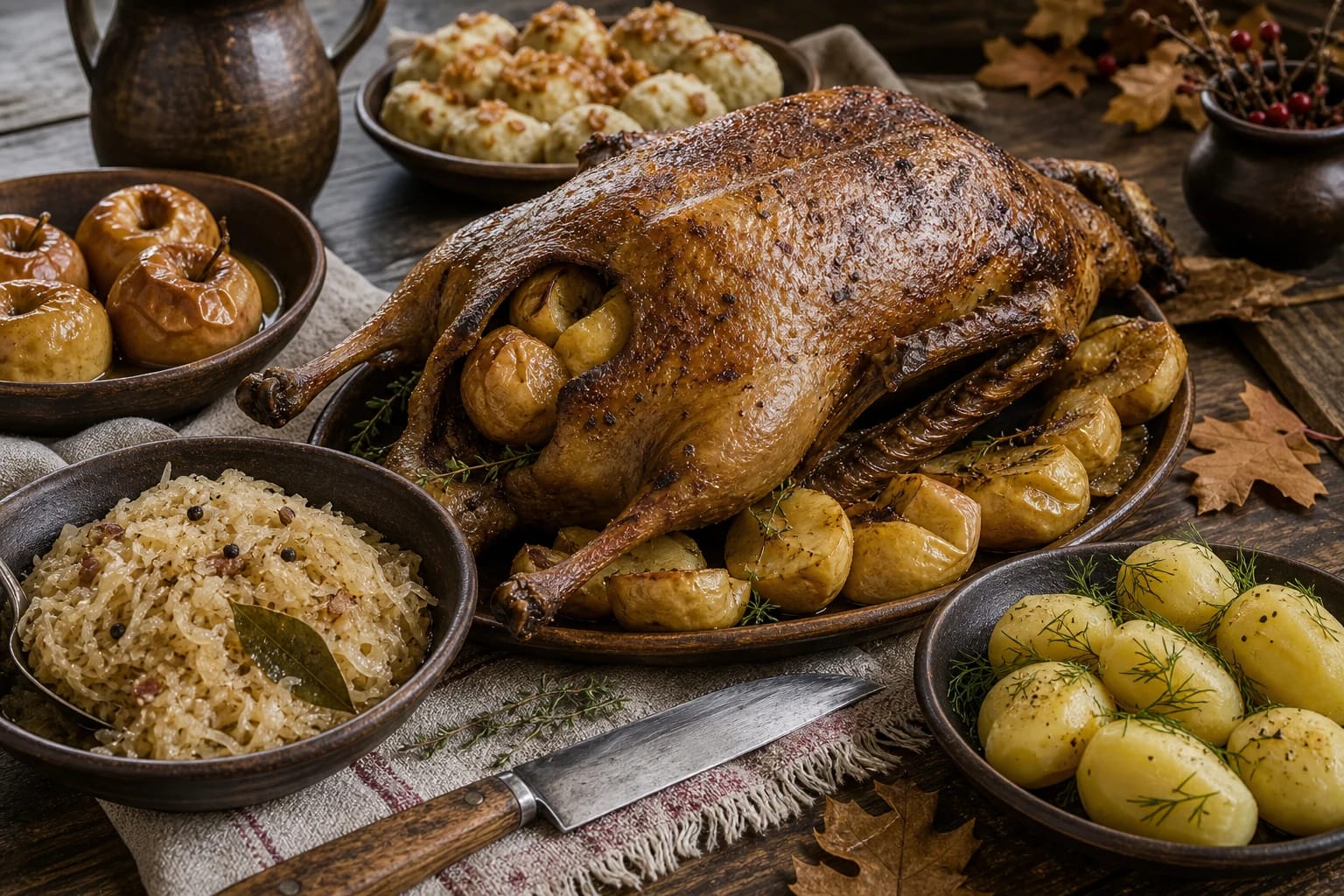
Martyno žąsis is a goose roasted for St. Martin's Day on November 11. In Samogitia it was the food of the last larger autumn feast; the future winter was foretold from the goose breastbone, and Christmas weather from the weather of the day.
Food and heritage context
- Category
- Calendar holiday dishes
- Type
- roast goose for St. Martin's Day
- Heritage status
- calendar tradition
- Context
- St. Martin's Day, November 11, roast goose, breastbone divination, weather predictions, Samogitia, Lithuania Minor, autumn feast
Names and variants
St. Martin's goose, Martin's Day goose
What is Martyno žąsis?
Martyno žąsis is roast goose eaten on St. Martin's Day, marked on November 11. Ethnographers know the day as the last larger autumn feast: field work and the grazing season end, and a quieter, more abundant period begins before Advent.
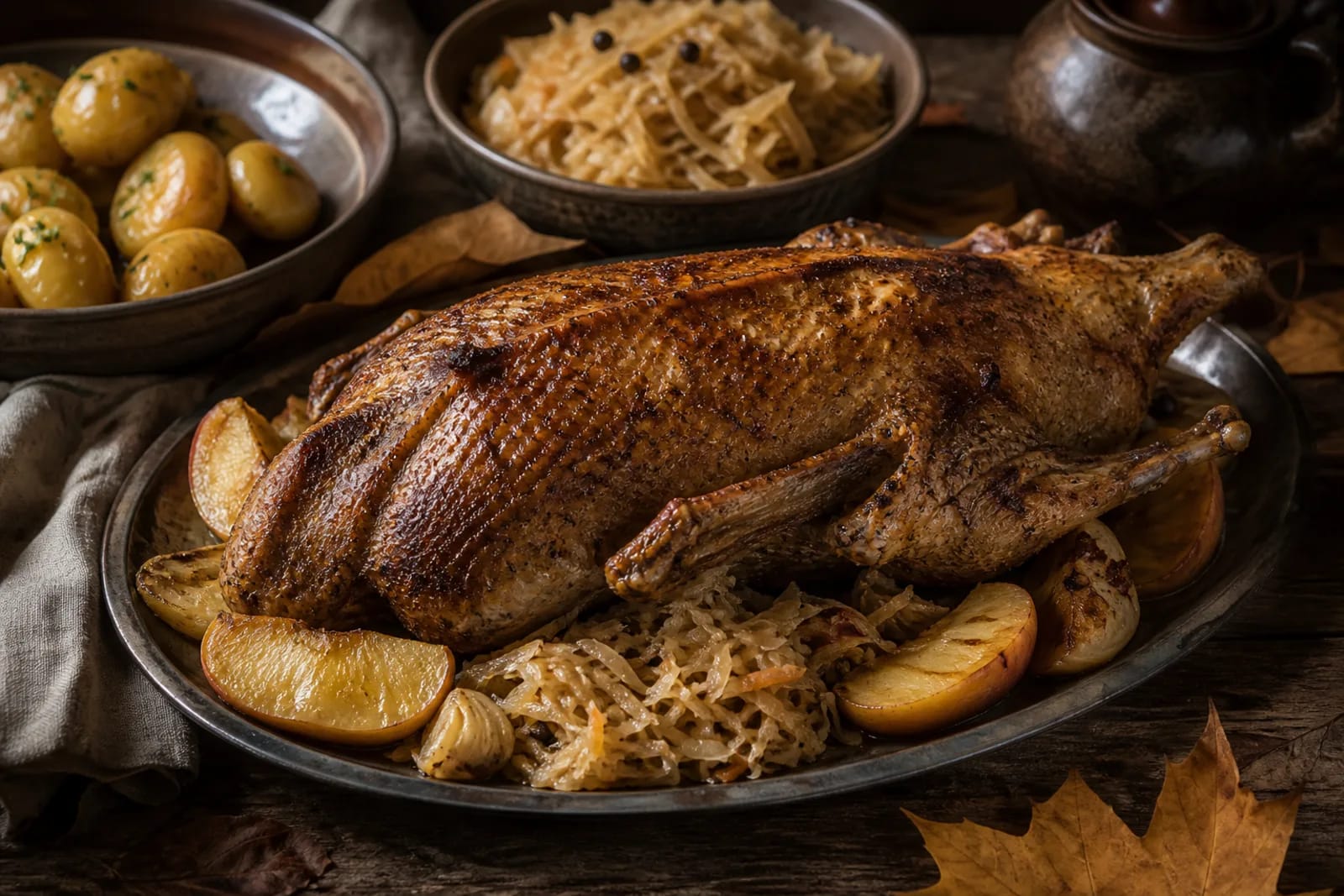
In Lithuania, goose as a St. Martin's Day food is most clearly attested in Samogitia, while the feast of St. Martin itself was especially alive in Lithuania Minor, where German cultural heritage remained strong. Here the goose is not everyday food but a solemn sign of the feast.
Alongside the meal, the day is connected with weather and fate predictions: the coming winter was foretold from the goose breastbone, and the weather of Christmas from the day's weather. Martyno žąsis is therefore not only a dish but also a calendar divination rite.
St. Martin's Day and its origin
St. Martin's Day is the Catholic feast day of Saint Martin. Saint Martin was a 4th-century bishop in France, famous for acts of mercy, especially helping the poor; in iconography he is shown, while still a soldier, giving half of his cloak to a beggar.
It is no accident that the church reformer Martin Luther is linked with the same saint: he was born on November 10, 1483, and received St. Martin's name. In folk understanding, St. Martin was seen as a prophet of fate and weather.
In the Middle Ages and early modern period this feast was important in many European regions, especially German-speaking lands. In Lithuania it was celebrated most strongly in Lithuania Minor; since 2009, Klaipėda has held lantern processions initiated by the Klaipėda German community.
Why goose
The goose appears on the Martinmas table for a practical reason. November is the time when geese fattened through summer and autumn have reached their best weight, and the approaching winter forces a decision about which birds not to keep through the cold season. St. Martin's Day became a natural date for this autumn meal.
According to the Universal Lithuanian Encyclopedia, peasants ate poultry rarely, usually during holidays or illness, so roast goose was a clear sign of ceremony. This explains why Martyno žąsis equaled the autumn culmination of the year rather than an everyday dish.
Goose meat is fatty and nourishing, containing about 16-18% protein and a significant amount of fat; goose liver, fat, feathers, and down were also valued. The fat was saved and used in the kitchen, so roasting a goose also meant practical autumn provisioning.
Raising geese in Lithuania
Domestic geese, except Chinese geese, descend from wild greylag geese and were domesticated around 3000-2500 BCE. In Lithuania geese were raised already in the 16th century, and more were kept in the 19th century as exports grew, mostly to Germany.
Geese were convenient to raise because three-field crop rotation left many fallows and other pastures suitable for them. In autumn, geese raised in Užnemunė were driven in flocks to be sold in East Prussia, showing how closely goose keeping was tied to borderland and Lithuania Minor farming.
At the end of the 19th and beginning of the 20th century, two breed groups formed: vištinės and pulkinės, or Lithuanian, geese. In 1933-1937 Lithuania raised about 500,000 geese each year. Geese were widely raised until the middle of the 20th century, later mostly on individual farms.
Breastbone divination
The most important custom around Martyno žąsis is divination from the breastbone, or goose bone. In Samogitia, every household ate roast goose on this day and foretold the coming winter from its breastbone.
The interpretation went like this: if the bone is clear and white at first but dirty toward the end, the beginning of winter will be cold and the end not cold; if the clear part is near the end, then a cold late winter was expected. A single meal thus became a household weather forecast for the whole season.
This breastbone divination is firmly attested in Lithuania specifically in Samogitia, so it should not be tied only to Lithuania Minor. It is a vivid example of how a calendar feast, a saint's commemoration, and folk prediction intertwined at one table.
Weather predictions and sayings
Beyond the breastbone, people also foretold the future from the weather on St. Martin's Day itself. Village people judged from the weather of November 11 what the weather at Christmas would be, and this entered proverbs.
The best-known sayings are: 'If Martin comes with ice, Christmas comes with mud; if Martin comes with mud, Christmas comes with ice,' 'Martin on ice, Christmas on water,' and 'If it crackles at Martin, it will splash at Christmas; if it crackles at Christmas, it will splash at Martin.'
It was also believed that if November 11 was clear, the winter would be very cold. Such predictions show that in the folk calendar St. Martin was first of all a prophet of weather and fate, while the goose was the ritual tool of that prophecy.
How it is roasted and served
A fatty goose should be roasted slowly: covered at first so the tough poultry softens, then uncovered so the skin turns golden and crisp. The roasting goose is often basted with its own rendered fat, so it effectively bastes itself and stays juicy.
A widespread version is goose stuffed with apples, sometimes with plums. The filling adds acidity that balances the fat, but there is no single mandatory stuffing, and families use different variants. Specific spices or grain-stuffing details should not be treated as the only correct rule.
Martyno žąsis is served with sauerkraut and potatoes; the sour side suits the rich meat. Rendered goose fat is valuable in the kitchen and is used to flavor cabbage, potatoes, or bread.
Martinmas goose in Europe and its place in Lithuanian cuisine
Lithuanian Martyno žąsis is a local branch of a broader European tradition. In many Central and Western European regions, especially German-speaking ones, St. Martin's goose, or Martinsgans, is an established feast food; this tradition reached Lithuania primarily through Lithuania Minor and German cultural heritage.
In Lithuanian cuisine, Martyno žąsis stands beside other calendar meat dishes: Easter ham, the rich Užgavėnės table, and festive sausages. All mark turning points in the year when the modest everyday peasant meal was replaced by solemn meat.
Today Martyno žąsis in Lithuania is more often revived as a sign of local history and Lithuania Minor heritage than practiced as a widely celebrated custom. Still, the November 11 goose with apples and breastbone divination remains a vivid example of autumn calendar culture.
Recipe
How is Martyno žąsis roasted?
Traditional Martyno žąsis is roasted slowly so the fatty bird softens, the skin becomes crisp, and the goose bastes in its own fat. The classic filling is apples, sometimes with plums; the seasonings are simple: salt, caraway, and marjoram. It is served with sauerkraut and potatoes.
Ingredients
Method
- Rinse the goose, dry it, and remove any remaining feathers. The evening before, rub it inside and outside with salt, caraway, marjoram, and pepper, then keep cold.
- Cut the apples into quarters and remove the cores. Fill the goose cavity with them, adding plums if desired. Pin the opening with wooden skewers or sew it closed.
- Prick the skin lightly at the breast and thighs so excess fat can render during roasting.
- Place the goose breast-side down in a roasting dish and add a glass of water or stock. At first, roast covered in a preheated oven at about 180 °C.
- Every 30-40 minutes, baste the goose with its own rendered fat. After about an hour and a half, turn it breast-side up.
- Near the end, for the last 20-30 minutes, remove the lid and raise the temperature so the skin becomes golden and crisp. The goose is done when juices from a pierced thigh run clear.
- Let the roasted goose rest for 15-20 minutes, then carve. Serve with sauerkraut and potatoes spooned with goose fat.
Notes
Goose is fatty, with fat sometimes making up as much as a third of its mass, so it is worth pouring off and saving excess rendered fat; it flavors cabbage or potatoes well.
Slow roasting with an initial covered phase helps tough poultry soften; high heat at the start leaves goose dry and hard.
Apple stuffing is a widespread version; there is no single required 'correct' stuffing, and families also use groats or breadcrumbs.
Martyno žąsis in Lithuanian traditions
Explore the celebrations and customs associated with this food.

Related pages about Martyno žąsis
Easter table dishes
Another calendar-holiday meat table where solemn roast meat marks a seasonal turning point.
Braised sauerkraut
A sour sauerkraut side traditionally balances rich goose meat.
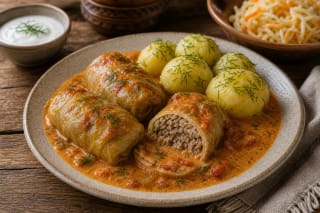
Balandėliai
An autumn cabbage and meat dish common in the same season as Martyno žąsis.
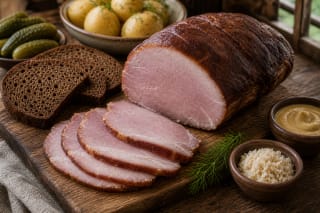
Smoked ham
Another festive meat example that helps explain how solemn roast goose differed from the everyday peasant table.
Martyno žąsis: frequently asked questions
When is Martyno žąsis eaten?
On St. Martin's Day, November 11. Ethnographers treat it as the last larger autumn feast before Advent.
Why is goose roasted specifically for St. Martin's Day?
In November, geese are fattened and at their best weight, while winter forces decisions about which birds not to keep. Because peasants rarely ate poultry, roast goose was a clear feast sign.
What is goose breastbone divination?
In Samogitia, people foretold the coming winter from the breastbone of the roasted goose: a clear white beginning and dirty end meant a cold early winter and milder end; the reverse meant a cold late winter.
Is Martyno žąsis only a Lithuania Minor custom?
No. The feast of St. Martin was most alive in Lithuania Minor, but goose eating and breastbone divination are firmly attested in Samogitia, so the custom should not be tied only to Lithuania Minor.
How is Martyno žąsis connected with European tradition?
It is a local branch of a broader European custom: in German-speaking lands St. Martin's goose, or Martinsgans, is an established feast food, and it reached Lithuania through Lithuania Minor and German heritage.
What is Martyno žąsis served with?
Traditionally with sauerkraut and potatoes. The sour side balances rich goose meat, and rendered goose fat flavors cabbage or potatoes.
How do you roast goose so it is not dry and tough?
Roast slowly: covered at first with a little water or stock, baste often with goose fat, and uncover at the end so the skin crisps. Too much heat at the start leaves the meat tough.
What stuffing goes into Martyno žąsis?
The most widespread stuffing is apples, sometimes with plums. There is no single required stuffing; families also use groats or breadcrumbs.
What did St. Martin's Day weather predict?
People judged Christmas weather from November 11: 'If Martin comes with ice, Christmas comes with mud; if Martin comes with mud, Christmas comes with ice.' A clear St. Martin's Day meant a very cold winter.