
Lithuanian traditional foods
Balandėliai
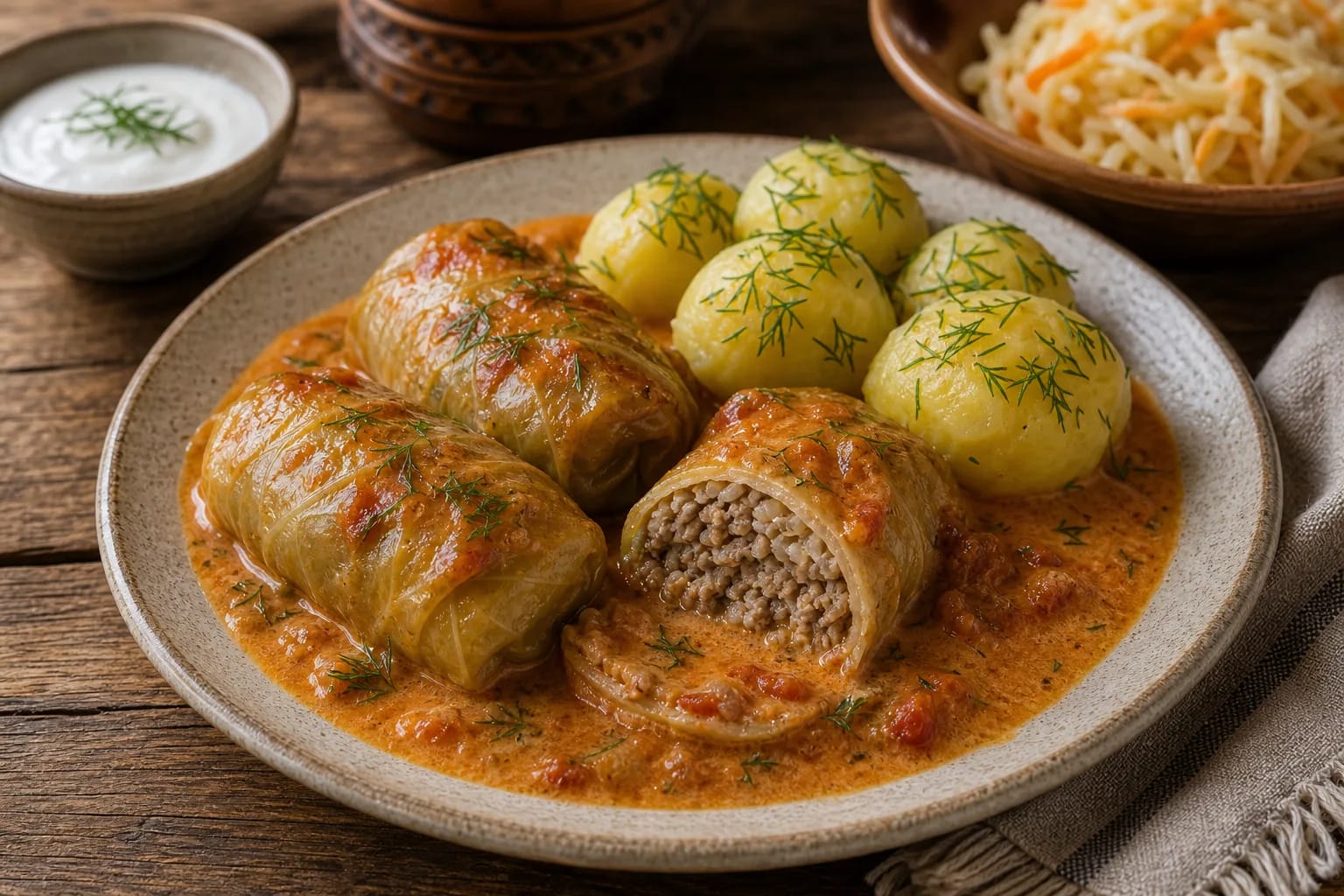
Balandėliai are cabbage leaves wrapped around ground meat with rice or groats and braised in tomato, sour cream, or broth-based sauce. They are shared across the region, but in Lithuania they are a very familiar family-lunch classic.
Food and heritage context
- Category
- Meat and vegetable dishes
- Type
- meat rolls braised in cabbage leaves
- Heritage status
- living tradition
- Context
- Cabbage, ground meat, rice, tomato and sour cream sauce, braising, family lunch
Names and variants
Cabbage rolls, Stuffed cabbage
What are balandėliai?
Balandėliai are a meat and rice filling wrapped in a cabbage leaf. They are braised in sauce, so the leaf softens while the filling stays juicy.
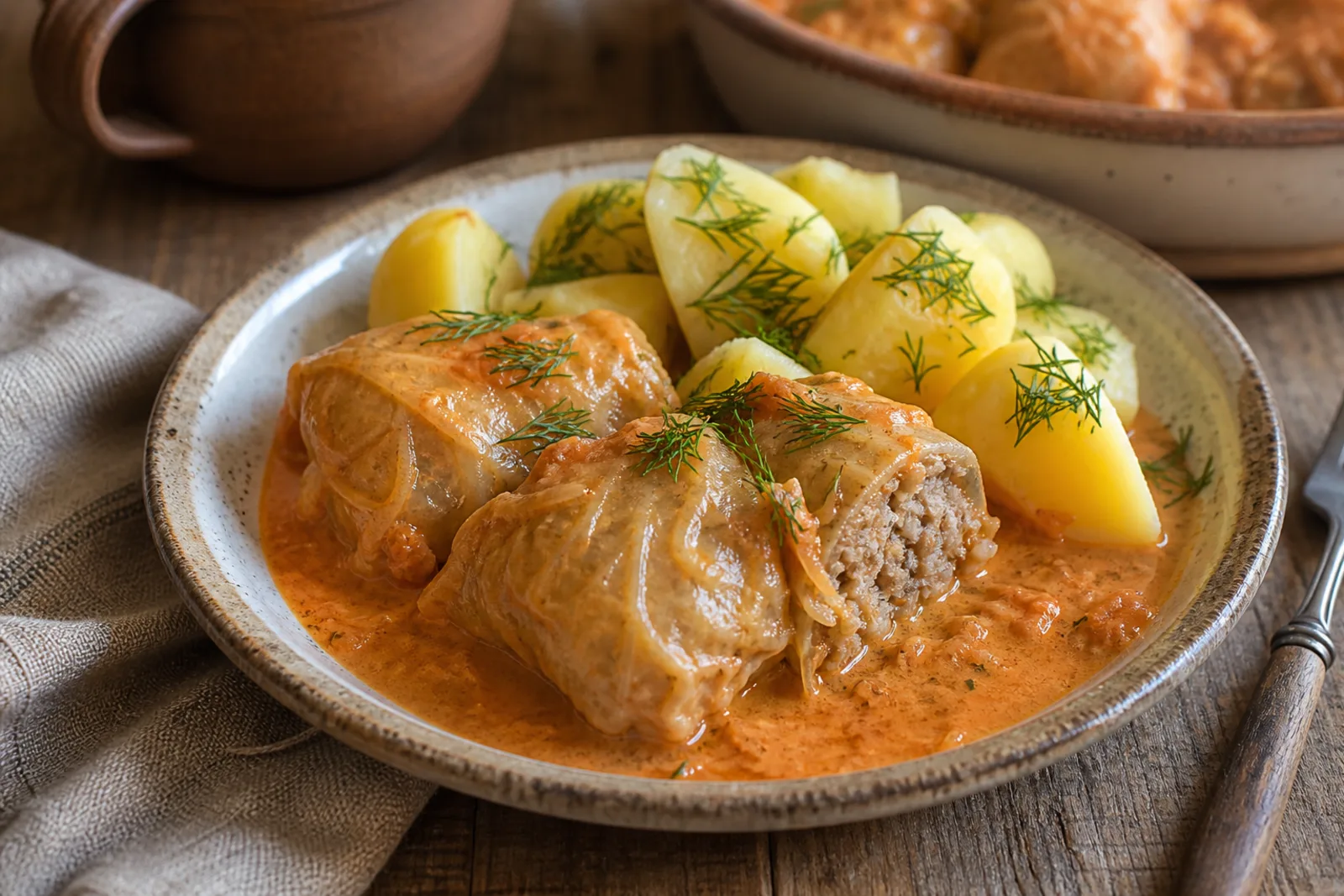
The name is associated with the image of small wrapped bundles and a regional linguistic imagination, but the idea of the dish is widespread in many Eastern European cuisines.
Balandėliai in Lithuania
In Lithuania, balandėliai became a classic of family lunches, canteens, and a slightly more festive everyday table. They are not a dish of one single region, but they fit naturally into a cuisine of cabbage, pork, and potatoes.
Their place in the Lithuanian table repertoire is more practical than ritual: cabbage encloses the filling, rice or groats stretch the meat, and braising makes a filling dish for a larger family.
They are often served with boiled potatoes, sour cream, and dill.
Preparing the Cabbage
Success starts with the leaves. They need to be soft and flexible, so the cabbage is briefly boiled, frozen, or the leaves are removed gradually.
It is worth thinning the hard rib of each leaf so the roll does not tear and folds neatly.
Sauce
A common sauce combines tomato acidity and the softness of sour cream. Some versions use only broth, only tomato, or more sour cream.
The sauce should be gently tart, because it balances the meat and cabbage.
Recipe
How are balandėliai made?
Classic balandėliai depend on soft, unbroken cabbage leaves and a juicy meat filling. The sauce can be tomato-based, sour-cream-based, or a mixture of both.
Ingredients
Method
- Parboil the rice until half tender. Parboil the cabbage and carefully remove the leaves.
- Chop the onion; fry part of it with the carrot for the sauce and add the rest to the meat.
- Mix the meat with rice, onion, salt, and pepper.
- Place filling on each cabbage leaf, fold in the sides, and roll up.
- Arrange the rolls in a pot, cover with broth or water mixed with tomato paste, add a bay leaf, and braise for about 45 minutes.
- Stir in sour cream at the end or serve it separately.
Notes
Thick cabbage leaf ribs can be thinned with a knife so the rolls fold more easily.
Rice is best parboiled but not overcooked, because it continues to swell while braising.
Balandėliai: frequently asked questions
Why are they called balandėliai?
The name is linked with the image of small wrapped bundles. Its exact everyday origin is not entirely unambiguous.
How should cabbage leaves be prepared?
The cabbage should be boiled briefly and the leaves removed carefully, or softened by another method. Thick ribs are worth thinning.
Should the rice be cooked first?
It is best parboiled until half tender. It continues to swell while the rolls braise.
What meat works for balandėliai?
Pork or a pork and beef mixture is most common. Poultry and vegetarian versions are also possible.
Can balandėliai be baked in the oven?
Yes. They can be braised in a covered oven dish with sauce.
Can balandėliai be frozen?
Yes, either shaped before cooking or already braised. It is convenient to freeze them with sauce.
What should balandėliai be served with?
With boiled potatoes, sour cream, dill, and the same braising sauce.