
Lithuanian traditional foods
Pupelių sriuba
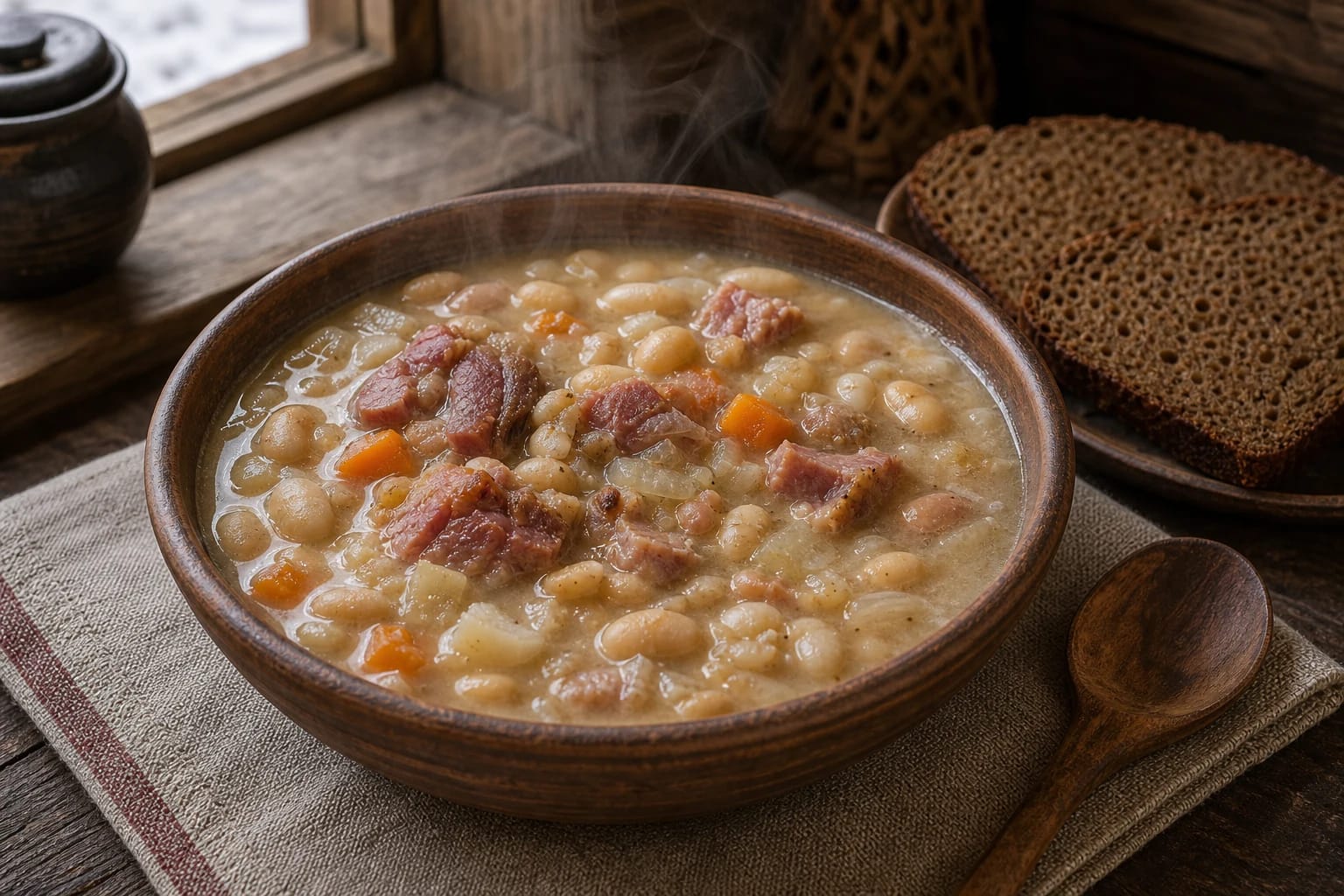
Pupelių sriuba is a thick winter soup made from soaked common beans (Phaseolus vulgaris), usually cooked with smoked pork or bones, onions, and root vegetables. It is a late 19th-20th century peasant-kitchen dish, because common beans are an American crop grown in Lithuania only from the 18th century.
Food and heritage context
- Category
- Soups
- Type
- thick white bean and smoked meat soup
- Heritage status
- well attested
- Context
- Common beans, white beans, smoked pork, root vegetables, winter cooking, legumes
Names and variants
White bean soup, Pupelienė
What is pupelių sriuba?
Pupelių sriuba is a thick, filling soup based on cooked common beans (Phaseolus vulgaris), usually white-seeded. The classic version is cooked with smoked pork or smoked bones, onions, carrots, and potatoes, and thickness comes as the beans break down or as part of them are mashed.
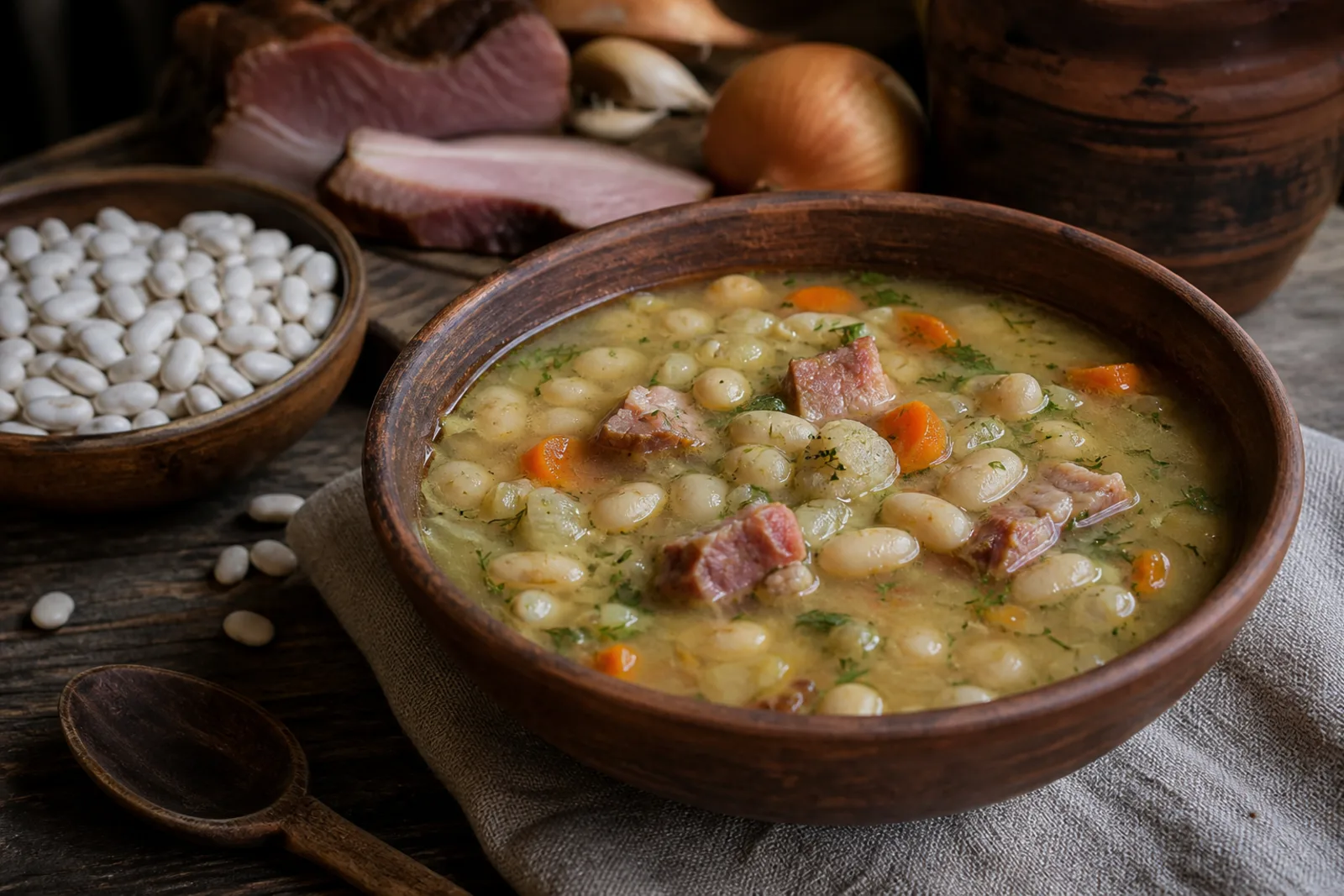
It is a typical winter and cold-season food: dry beans store well, so the soup can be cooked when few fresh vegetables are available. Beans are a protein-rich raw material; the Universal Lithuanian Encyclopedia states that bean seeds contain 30-40% protein, so the soup fills much like meat or legume dishes.
Despite its rustic image, bean soup is relatively new in the kitchen. It must be distinguished from older legume foods, especially fava-bean and pea dishes, which were known in Lithuania much earlier.
Common beans are an American crop
Common beans belong to the Fabaceae family and the Phaseolus genus; they come not from Europe but from tropical regions of North and South America. The Universal Lithuanian Encyclopedia notes that the Phaseolus genus has about 50 species growing naturally in the American tropics; several are grown for food, and the most widespread is the common bean, Phaseolus vulgaris.
Beans reached Lithuania only after the discovery of the Americas, together with other New World crops. The Universal Lithuanian Encyclopedia notes that in Lithuania common beans have been grown since the 18th century and are mentioned in the 1796 inventory of Dirvėnai Manor in Šiauliai County, clearly dating their appearance in manor and peasant farming.
Bean soup therefore cannot be an ancient or medieval dish: the ingredient itself spread in Lithuania late. It is correct to treat it as traditional in the 19th-20th century sense, a dish that took root in late peasant and small-town cuisine rather than in archaic Baltic cooking.
How pupelės differ from pupos and peas
In Lithuanian, pupelės and pupos sound similar, but they are different plants. Pupos, Vicia faba, are large-seeded fava beans of the vetch genus, originating in the Mediterranean; the Universal Lithuanian Encyclopedia states that in Lithuania they were grown already in the 10th-13th centuries. Pupelės, Phaseolus, are American beans that arrived a millennium later.
This difference also explains the age of the dishes. Fava-bean and pea foods, including the 'pupos or peas' with cracklings cooked for Kūčios, belong to the older legume-food layer that the Universal Lithuanian Encyclopedia's Lithuanian foods overview attests with the formula 'they ate peas, fava beans.' Bean soup joined this tradition later, once the new vegetable had become established in gardens.
In practice, common beans and fava beans are cooked similarly, both needing soaking and long cooking, but common beans have thinner skins and a milder flavor, so they suit thick, smooth soup better, while large fava beans are more often eaten whole with cracklings.
Bean varieties and raw material
For soup, white-seeded shelling beans are usually chosen because they cook down nicely and naturally thicken the liquid. The Universal Lithuanian Encyclopedia notes that with shelling beans only the seeds are eaten, while by pod structure beans are also divided into snap beans, where the whole pod is eaten, and shelling beans.
Lithuania has bred its own bean varieties. The Universal Lithuanian Encyclopedia mentions white-grain bush varieties 'Snieguolė' and 'Baltija' and the snap bean variety 'Saksa be pluošto.' For soup, the white-seeded bush beans are most suitable, with their white seeds and soft texture.
Seeds vary in shape and color: elliptical, round, kidney-shaped, white, brown, black, or mottled. Mottled or brown beans also suit soup, but the traditional version is most often white, giving a pale, gentle broth.
How it is cooked: soaking and smoked broth
Bean soup technique rests on two pillars. The first is soaking: dry beans should be soaked overnight in cold water so they soften and cook evenly. The soaking water is best discarded and cooking started in fresh water.
The second is broth. Traditionally, bean soup is cooked with smoked pork: smoked ribs, trotter, bacon, or bones that give smoke flavor and fat. This links it with other winter Lithuanian smoked-meat soups, such as sauerkraut soup.
One detail matters: salt. Beans should be salted only when they are already nearly soft, because early salt or acid, such as tomatoes, toughens the skins and greatly lengthens cooking. Thickness is adjusted simply by mashing part of the beans and potatoes against the bottom of the pot.
Fasting and meatless version
Because beans are protein-rich and filling, the soup works well without meat. A fasting or leaner version is commonly cooked with dried mushrooms and vegetable oil instead of smoked pork, following the same principle as in other Lithuanian soups where mushroom broth replaces meat.
The mushroom and bean combination is not accidental: dried boletes give a rich, almost meaty aroma, so meatless bean soup remains hearty. For that reason, bean soup naturally sits beside mushroom soup and baravykienė.
This fasting version suits Advent or Lent tables and also those who simply choose plant-based food. Beans do the main filling work, while vegetables and mushrooms add depth of flavor.
Serving and place in winter cooking
Pupelių sriuba is served hot, often with fresh dill or parsley and black rye bread. Thick and filling, it is often an independent lunch dish rather than only a starter before a main course.
In winter cooking, bean soup occupies the same niche as sauerkraut soup or pea dishes: a filling, inexpensive dish made from long-keeping stores. Dry beans, smoked meat, and root vegetables are exactly the ingredients available in the cold season.
Like many thick soups, pupelių sriuba is often considered tastier the next day, after the beans and smoke flavor have had time to meld. It thickens on reheating, so a little water or broth may be needed.
How to recognize and make it today
Good bean soup is thick but not a puree: some beans remain whole, while some break down and naturally thicken the liquid. The flavor is gently smoky from the smoked meat, with light vegetable sweetness and no bitterness or overly hard beans.
At home, the most important points are not forgetting to soak and patiently simmering until the beans are completely soft. Unsoaked beans stay hard or cook unevenly, and salt added too early deepens the problem.
For the most authentic result, choose white-seeded bush beans and truly smoked pork with bone rather than smoke-flavor additives. That gives the hearty winter soup that became established in Lithuanian cuisine over the last couple of centuries.
Recipe
How is pupelių sriuba made?
Classic home bean soup rests on two things: well-soaked white common beans and a fragrant smoked pork broth. Beans must be soaked ahead and cooked until tender before salt is added, because early salt toughens the skins.
Ingredients
Method
- Soak the beans overnight, 8-12 hours, in plenty of cold water. Discard the soaking water.
- Cover the smoked meat and bone with fresh water, bring to a boil, and skim the foam. Cook for about 30 minutes until the broth becomes aromatic.
- Add the soaked beans, bay leaves, and peppercorns. Simmer for another 50-60 minutes, until the beans are almost tender.
- Add diced potatoes and carrots. Cook until the vegetables and beans are completely soft.
- Fry the chopped onion and add it to the soup. For thicker soup, mash part of the beans and potatoes against the bottom of the pot with a spoon.
- Only now salt to taste. Remove the meat, separate it from the bones, chop it, and return it to the soup.
- Serve hot with fresh dill or parsley and black rye bread.
Notes
Add salt and any acidic ingredient, such as tomatoes, only when the beans are already soft; early salt or acid lengthens cooking and leaves tough skins.
For a fasting or meatless version, cook with dried mushrooms and vegetable oil instead of smoked pork; the soup remains hearty and aromatic.
The soup is often better the next day, when the beans and smoke flavor have had time to meld; when reheating, you may need to add water because it thickens.
Related pages about Pupelių sriuba
Pupos su spirgučiais
The older large-seeded fava beans, Vicia faba, help distinguish them from later American common beans.
Peas with cracklings
Peas are another old legume that bean soup joined in the kitchen rather than replacing.
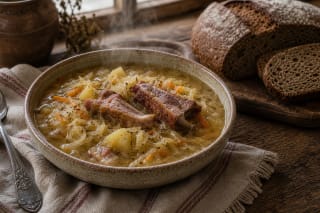
Sauerkraut soup
Another hearty winter smoked-meat soup based on stored foods.
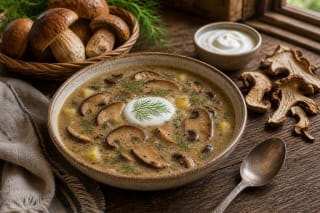
Baravykienė
Mushroom broth is a common fasting substitute for smoked meat in bean soup.
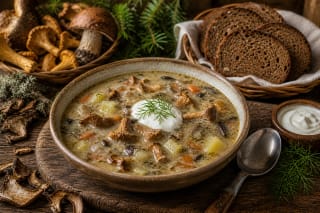
Mushroom soup
Dried mushrooms are often added to a meatless version of bean soup.
Pupelių sriuba: frequently asked questions
Is bean soup an old Lithuanian dish?
Not to the extent often assumed. Common beans, Phaseolus vulgaris, are an American crop; according to the Universal Lithuanian Encyclopedia they have been grown in Lithuania only since the 18th century and are mentioned in the 1796 Dirvėnai Manor inventory. Bean soup is therefore a late 19th-20th century peasant-kitchen dish, not an ancient food.
How do pupelės differ from pupos?
They are two different plants. Pupos, Vicia faba, are large-seeded fava beans of Mediterranean origin, grown in Lithuania already in the 10th-13th centuries. Pupelės, Phaseolus, are American common beans that arrived a millennium later. Common beans have thinner skins and milder flavor, so they suit thick soup better.
Do beans have to be soaked before cooking?
Yes. Dry beans should be soaked overnight, 8-12 hours, in cold water so they cook more evenly and faster. It is best to discard the soaking water and cook in fresh water.
Why do beans stay hard even after long cooking?
The most common reason is salt or acid, such as tomatoes, added too early. Salt and acid toughen bean skins, so salt should be added only when the beans are nearly soft. Very old or unsoaked beans can also stay hard.
Which beans are best for soup?
White-seeded shelling bush beans work best because they cook down well and naturally thicken the broth. The Universal Lithuanian Encyclopedia mentions Lithuanian white-grain varieties 'Snieguolė' and 'Baltija.' Mottled or brown beans also work, but the broth is darker.
How can bean soup be thickened?
The simplest way is to mash some of the cooked beans and potatoes against the bottom of the pot. The soup becomes thick and unified while some beans remain whole. Flour or starch is not traditionally needed.
Can bean soup be cooked without meat?
Yes. For a meatless or fasting version, use dried mushrooms, especially boletes, and vegetable oil instead of smoked pork. Beans are rich in protein, 30-40% in the seeds, so the soup remains filling without meat.
How is bean soup different from pea soup?
The ingredient and age differ. Peas are an old legume known together with fava beans; common beans came from America late. The flavor differs too: pea soup is richer and sweeter, while white bean soup is milder and creamier. Both are cooked similarly, by soaking and long simmering.
Is bean soup better the next day?
Often yes. Bean and smoked-meat flavors absorb overnight and the soup becomes richer. Keep in mind that it thickens, so when reheating you may need a little water or broth.